Sourdough English Muffins (Discard-Friendly)
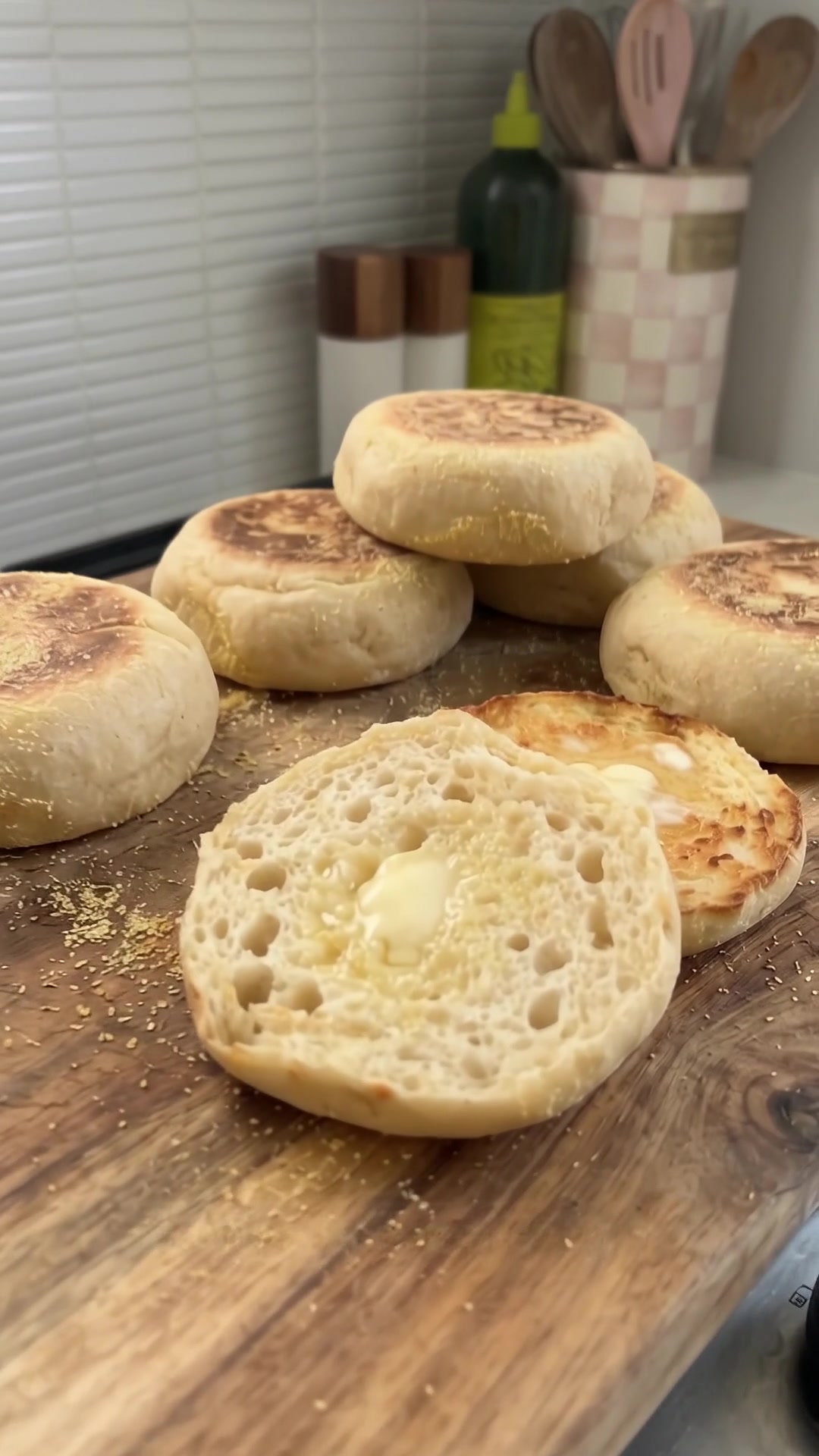
Soft, lightly tangy English muffins with golden skillet-browned faces and a crumb made for butter.
Sourdough English muffins are a satisfying way to turn mature discard into breakfast bread. This version includes instant yeast for a manageable same-day rise, so the discard contributes flavor without carrying all the leavening. The muffins cook gently in a skillet, with an oven finish available if their centers need more time. Split with a fork after cooling to preserve the irregular interior.
Why You’ll Love These English Muffins
- Uses refrigerated discard from an established starter.
- No special rings are required.
- A skillet gives the familiar browned surfaces.
- Extras freeze well for quick toasted breakfasts.
Sourdough English Muffins Recipe
Prep: 30 minutes
Rising: About 1½–2½ hours
Cooking: 14–18 minutes per skillet batch, plus an oven finish if needed
Yield: 12 muffins
Skillet: Low to medium-low heat
Ingredients
- ½ cup 100%-hydration sourdough discard, about 4 ounces by weight
- 1 cup whole milk, lukewarm
- 1 tablespoon granulated sugar
- 1 teaspoon instant yeast
- 2¾ cups bread flour, plus up to ¼ cup only if needed
- 1 teaspoon fine salt
- 2 tablespoons unsalted butter, softened
- ¼ cup cornmeal or semolina, for dusting
- A little neutral oil, for the bowl and skillet
Cooking Tip: Moderate heat is essential. A dark crust can form long before a thick muffin is cooked inside, so use temperature and texture rather than browning alone.
How to Make Sourdough English Muffins
Step 1: Mix the Dough
Stir the discard, milk, sugar, and yeast in a large bowl. Add the 2¾ cups flour, salt, and softened butter. Mix until a rough dough forms, then rest for 15 minutes. Knead for 5–7 minutes by hand, until smooth and elastic.
The dough should be soft and slightly sticky, not a stiff bagel dough. Add the reserved flour a tablespoon at a time only if it remains too loose to handle after kneading. Stir discard before measuring so trapped bubbles do not create an unusually small portion.
Step 2: Let Rise
Put in a lightly oiled bowl, cover, and leave around 75–80°F for 60–90 minutes, until puffy and roughly doubled. Cold discard may lengthen the timing. The teaspoon of yeast is intentional and should remain in the recipe even if your discard shows a few bubbles.
Line a tray with parchment and dust with cornmeal or semolina. Choose a tray large enough that the shaped muffins have space to expand without sticking together. A thin coating on both faces helps prevent sticking during proofing and cooking.
Step 3: Shape the Muffins
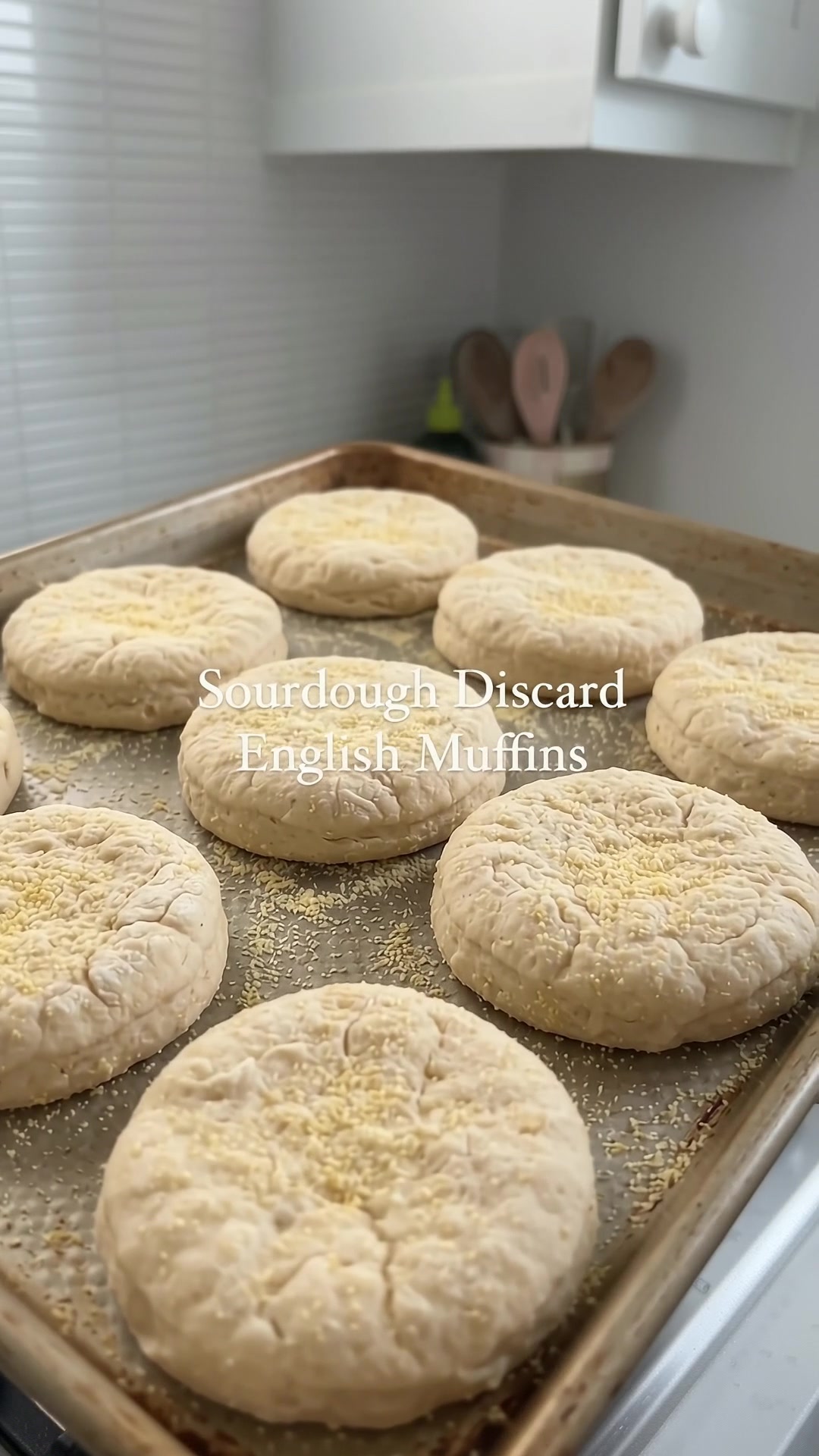
Gently deflate the dough and divide into 12 equal pieces. Tuck the edges under to make balls, then flatten each into a disk about 3 inches wide and ½ inch thick. If the dough resists, cover and rest for 5 minutes before flattening further.
Place on the dusted tray, sprinkle the tops lightly with cornmeal, and cover loosely. Proof for 30–60 minutes, until the disks look expanded and feel lighter. Do not wait until they are extremely fragile; they still need to be transferred into the skillet.
Step 4: Cook Gently
Heat a heavy skillet or griddle over low to medium-low heat for several minutes. Brush with a very thin film of oil, wiping away excess. Transfer a few muffins carefully with a wide spatula, leaving space around each. Cook about 7–9 minutes per side, turning once, until both faces are golden.
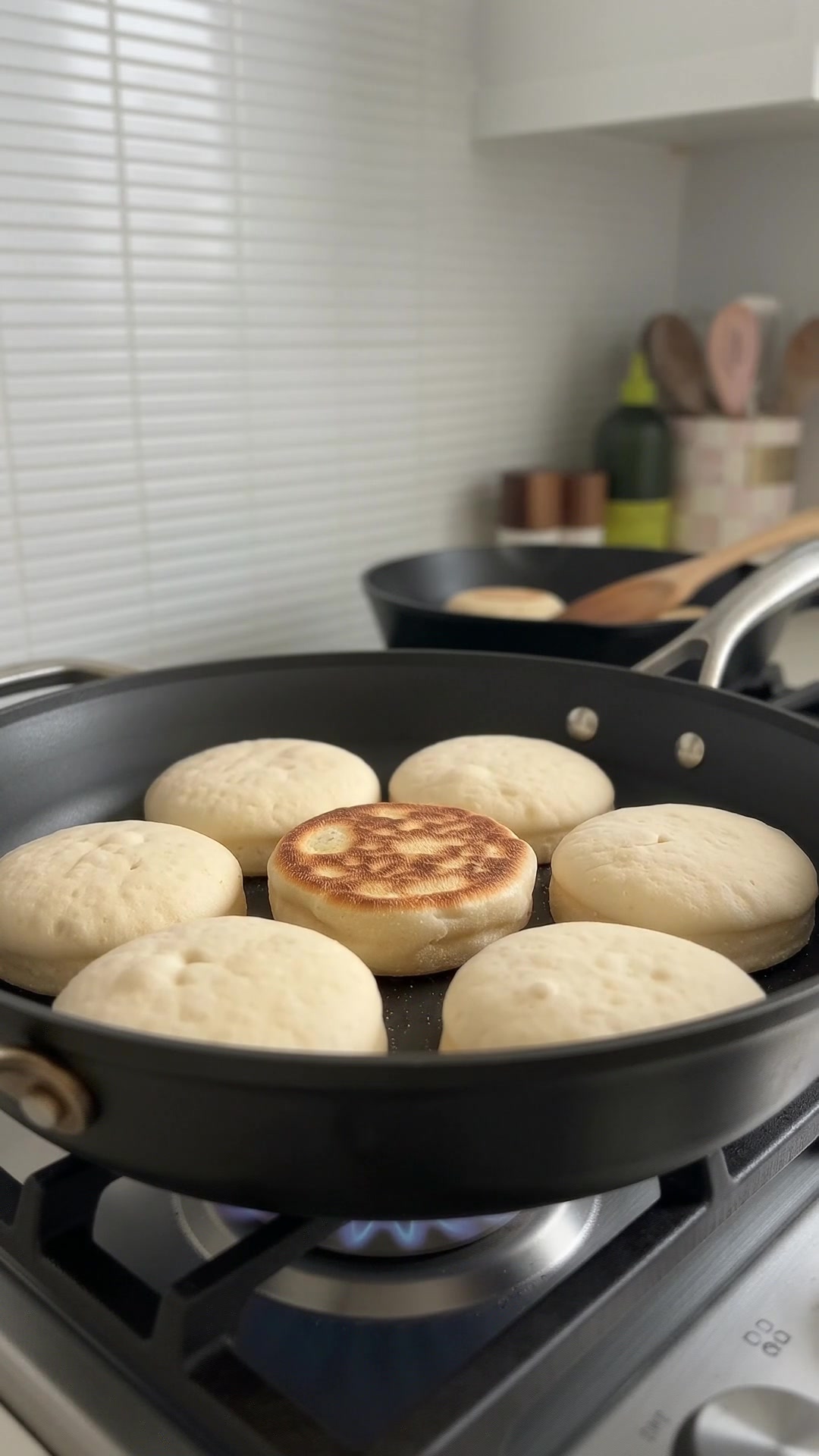
Adjust the heat downward if they brown in only a few minutes. Brush burnt cornmeal out of the pan between batches. Avoid pressing down with the spatula, which squeezes out air and makes the centers denser.
Step 5: Check the Centers
A cooked center should register about 200–205°F on an instant-read thermometer. If both faces are brown but the interior is still below that range, move the muffins to a baking sheet and finish at 350°F for 5–10 minutes, checking as needed.
Let cool on a rack for at least 30 minutes. Skipping this rest can make the crumb seem gummy. To split, poke the tines of a fork around the middle edge and gently pull the halves apart rather than making a smooth knife cut.
Tips for the Best Texture
Keep the dough soft, use evenly sized portions, and allow a visible final rise. Too much flour can create a tight crumb. A heavy pan holds a more even temperature than thin metal, but it also retains heat, so reduce the burner before the surfaces become too dark. Plan on cooking in batches rather than crowding every muffin into one skillet.
Serving Ideas and Variations
Toast split halves and add butter, jam, or honey. Use them for breakfast sandwiches with cooked egg and cheese. For a savory dough, add 1 tablespoon chopped chives and a little black pepper. Keep additions small so the muffins still flatten and cook evenly. Active 100%-hydration starter can replace the discard, but keep the yeast and watch the rise.
Storage Guidance
Cool fully and store airtight at room temperature for up to 3 days. Fork-split before freezing so the halves separate easily. Freeze for up to 2 months, with parchment between pairs, and toast directly from frozen. Avoid sealing warm muffins, which traps steam and softens the cornmeal-dusted surfaces.
Short FAQ
Why are the insides gummy?
The muffins may need more cooking time or cooling before splitting. Check the center temperature.
Can I omit the yeast?
Not without changing the fermentation method and timing. This recipe is designed as a discard-and-yeast version.
Can I use all-purpose flour?
Yes, though the dough may need a little less milk or a small amount of the reserved flour.