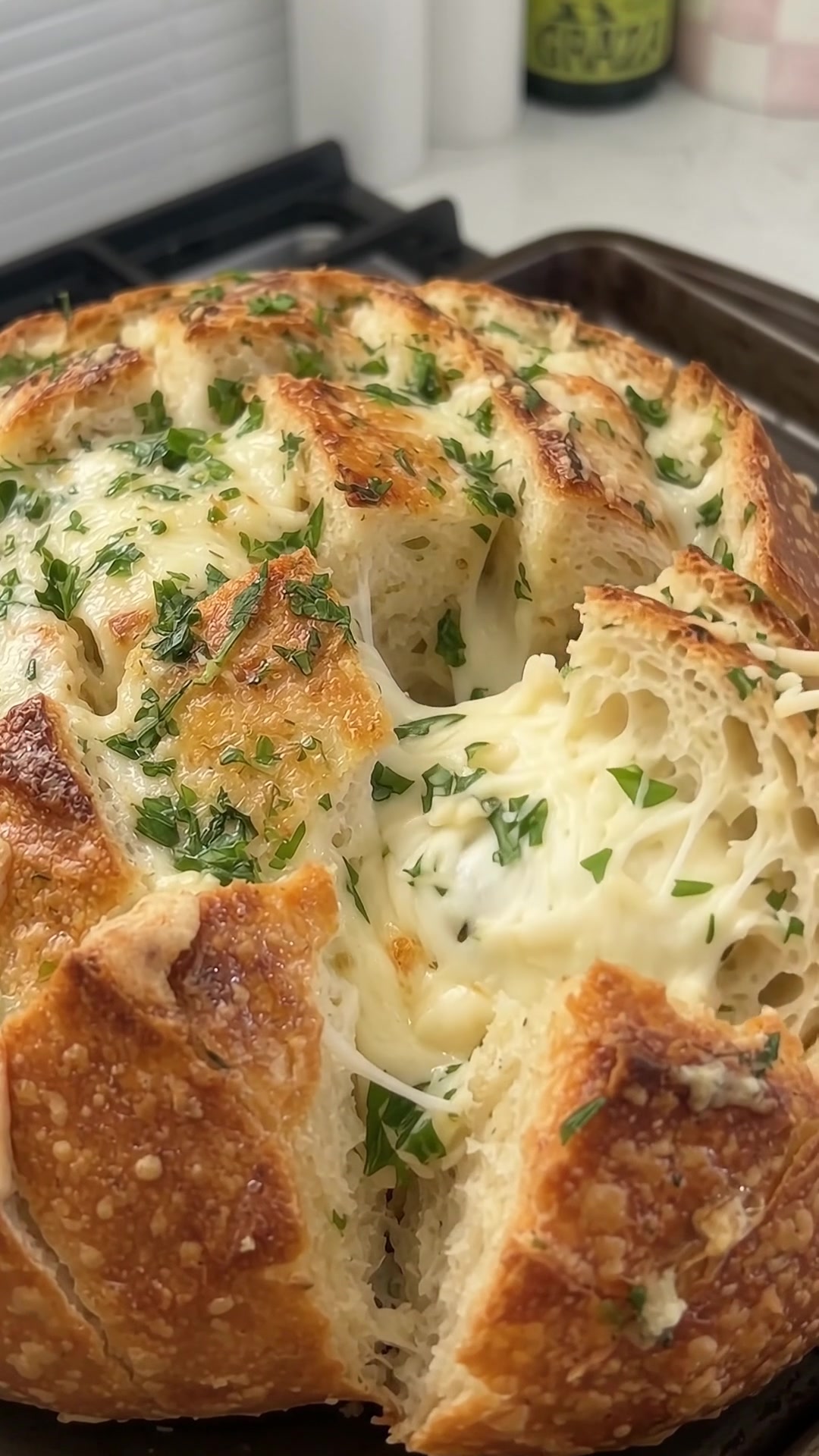
Cheesy Sourdough Garlic Bread (Crosshatch Loaf)
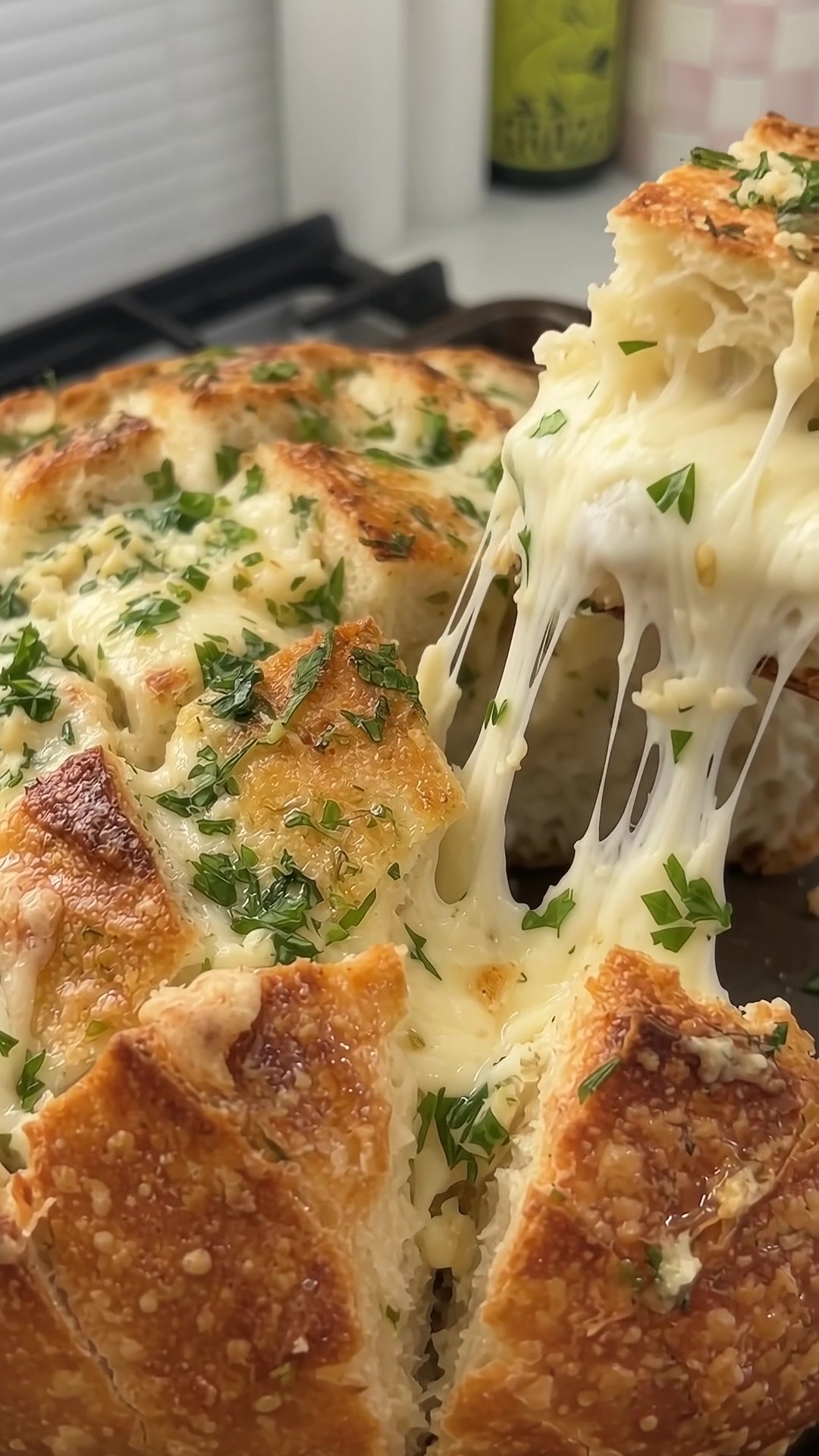
A crusty sourdough boule filled with garlic butter, mozzarella, and parsley, then baked until warm and melty.
Sourdough garlic bread turns a finished loaf into a generous side dish without mixing fresh dough. Crosshatch cuts create little sections that catch the butter and cheese, while the bottom crust keeps everything together. This recipe begins with a baked sourdough boule, either homemade or purchased. It is especially useful with pasta, tomato soup, or a casual dinner where everyone can pull off a warm piece.
Why You’ll Love This Garlic Bread
- Uses a ready-baked loaf rather than a new bread dough.
- Garlic butter reaches between the slices.
- Mozzarella provides a creamy, stretchy finish.
- Covered and uncovered baking warms the center without drying the crust.
Sourdough Garlic Bread Recipe
Prep: 20 minutes
Bake: 25–30 minutes
Rest: 5 minutes
Yield: 6–8 side servings
Oven: 375°F
Ingredients
- 1 round sourdough boule, about 1 pound
- ½ cup unsalted butter, softened
- 4 medium garlic cloves, finely minced
- 2 tablespoons chopped fresh parsley
- ¼ teaspoon fine salt, or less if the loaf is salty
- ⅛ teaspoon black pepper
- 1½ cups shredded low-moisture mozzarella
- ¼ cup finely grated Parmesan
Baking Tip: Choose a sturdy loaf with a well-baked base. A very soft or thin-bottomed bread can fall apart as you open the cuts and add the filling.
How to Make Sourdough Garlic Bread
Step 1: Prepare the Loaf
Heat the oven to 375°F. Line a rimmed baking sheet with parchment and set out a large sheet of foil. Place the boule on a stable cutting board. A loaf baked earlier in the day should be completely cool before cutting so its crumb does not compress.
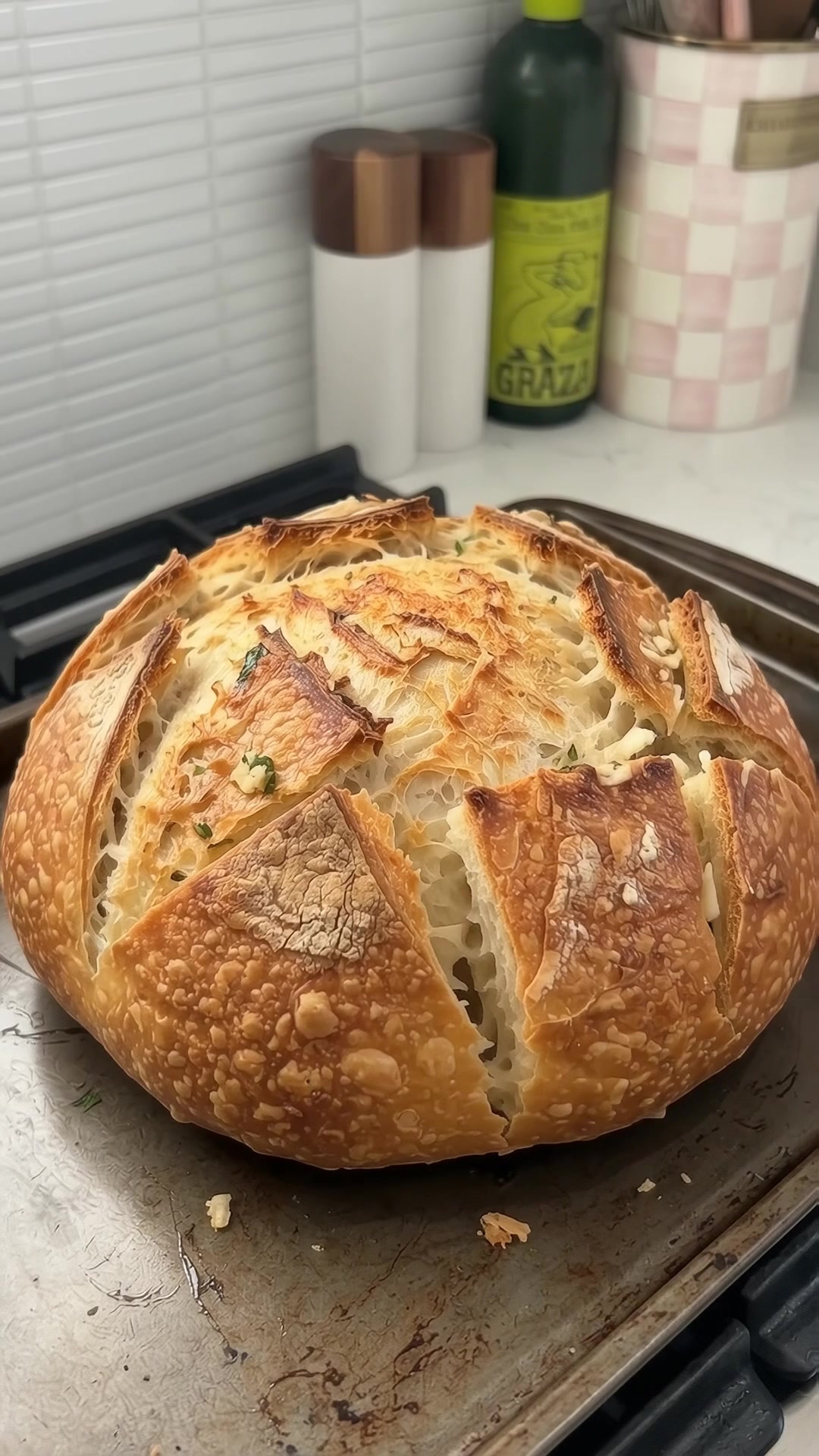
Using a serrated bread knife, make parallel cuts about 1 inch apart, stopping approximately ½ inch above the bottom crust. Rotate the loaf and cut across the first set to create a crosshatch pattern. Use a gentle sawing motion, keeping the base intact.
Do not force the knife straight down. If the crust is especially hard, begin each cut with short strokes and support the loaf with your other hand away from the blade. The intact bottom holds the sections together for filling and serving.
Step 2: Make Garlic Butter
Stir the softened butter, minced garlic, parsley, salt, and pepper until evenly combined. The butter should spread easily but not be liquid. Finely minced garlic distributes more evenly and is less likely to leave a strong raw pocket inside one section.
Mix the mozzarella and Parmesan in a separate bowl. Low-moisture mozzarella is useful here because it melts without releasing as much water as fresh mozzarella. If using freshly grated cheese, break up large clumps before filling the loaf.
Step 3: Fill the Cuts
Set the bread on the foil. Gently open a few cuts at a time and spread garlic butter along the exposed crumb with a small butter knife or spoon. Work in both directions so the center receives filling as well as the outer edge. Reserve a little butter for the top.
Tuck the cheese mixture into the gaps in small pinches. Support the loaf rather than pulling the sections far apart. Brush or spread the remaining butter over the surface. If a section loosens, press it back into place; the foil will help hold the loaf together while it heats.
Step 4: Bake Covered
Wrap the foil loosely around the loaf, leaving a little space above the top rather than pressing foil into the cheese. Transfer to the baking sheet. Bake for 15–20 minutes, until the center is warming and the cheese between the deeper cuts begins to melt.
A particularly dense loaf may need a few extra minutes covered. This first stage protects the crust while the butter warms the interior. Do not skip straight to uncovered baking, which can brown the top before the middle becomes warm.
Step 5: Uncover and Finish
Open the foil carefully, keeping clear of trapped steam. Bake uncovered for another 8–10 minutes, until the cheese is fully melted and the exposed edges are lightly golden. Watch the garlic and parsley so they do not scorch. If needed, tent the darkest area loosely with foil.
Rest for 5 minutes before serving. Move to a board or platter with the base supported, then pull sections away gently or cut through the bottom to make individual portions. The cheese will be hot, so let each piece cool enough to eat comfortably.
Tips for the Best Garlic Bread
Fill gradually rather than stuffing all the cheese into a few wide gaps. A loaf with an open crumb may absorb butter differently from a close-textured one, so spread it as evenly as possible. Use fresh garlic for the fullest flavor, or substitute 1 teaspoon garlic powder for a milder, more even seasoning. Do not add both at full strength unless you want an especially intense result.
Delicious Variations
Replace half the mozzarella with Monterey Jack for a different melt. Add 1 tablespoon chopped chives to the butter, or a pinch of crushed red pepper for warmth. For a plain garlic version, omit the cheese and shorten uncovered baking if the crust is already crisp. Avoid watery vegetables inside the cuts.
Storage Guidance
Refrigerate leftovers in a covered container within 2 hours and use within 3 days. Reheat wrapped in foil at 350°F until hot throughout, then uncover briefly to crisp. Freeze well-wrapped portions for up to 1 month. Thaw in the refrigerator before reheating rather than repeatedly warming the entire loaf.
Short FAQ
Can I prepare it ahead?
Yes. Fill, wrap, and refrigerate for up to 1 day. Allow extra covered baking time from cold.
Can I use a long loaf?
Yes. Make deep crosswise cuts and distribute the filling evenly, checking the center as it heats.
Do I need active starter?
No. This recipe starts with baked sourdough bread, not raw dough.