Italian Pignoli Cookies (Old-Fashioned Bakery Recipe)
Old-Fashioned Italian Pignoli Cookies (Brooklyn Bakery Recipe)
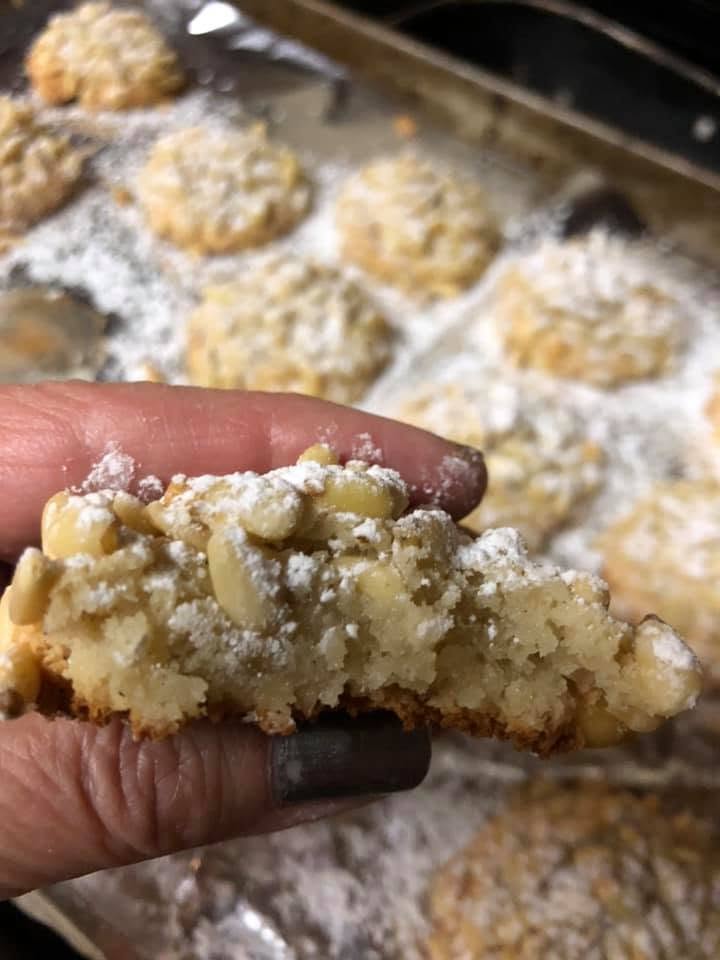
There’s something special about old-fashioned Italian Pignoli Cookies, especially when they’re made from a recipe that’s been passed around for decades. These traditional Italian almond cookies have a soft, chewy center, lightly golden edges, and a generous coating of pine nuts that gives them their unmistakable flavor.
This particular recipe comes with a lovely bit of history. It was originally purchased in a small recipe booklet from a Brooklyn bakery about 35 years ago. The bakery’s name may have been forgotten, but thankfully, the recipe was saved!
If you grew up in an Italian-American family, you might remember seeing these cookies on Christmas cookie trays, at Sunday family gatherings, or in the display cases of neighborhood Italian bakeries.
And once you’ve tasted a homemade pignoli cookie, it’s easy to understand why they’ve remained such a favorite.
Unlike traditional butter cookies, these are made with almond paste and egg whites. There’s no flour or butter in the original recipe, just a handful of ingredients that come together to create something wonderful.
Why You’ll Love These Italian Pignoli Cookies
These cookies are a wonderful addition to any holiday baking tradition.
- Classic Italian-American flavor: Almond paste gives these cookies their rich, distinctive taste.
- Soft and chewy: The centers stay tender while the edges become lightly golden.
- Naturally flourless: The original recipe doesn’t require all-purpose flour.
- Perfect for Christmas: These beautiful pine nut cookies look lovely on holiday dessert trays.
- Bakery-style results: A generous coating of pine nuts makes them look just like traditional Italian bakery cookies.
They’re especially delicious alongside a strong cup of coffee or espresso.
Ingredients You’ll Need
You only need a few ingredients to make these traditional Italian almond cookies.
- 16 ounces almond paste
- 1⅛ cups granulated sugar
- 1 tablespoon honey
- ⅛ teaspoon ground cinnamon
- ¼ teaspoon lemon extract
- ½ teaspoon vanilla extract
- 3 large egg whites
- Pine nuts (pignoli), for coating
- Powdered sugar, for dusting
Almond Paste: This is the most important ingredient. Be sure to use almond paste rather than marzipan, which has a different sugar content and texture.
Pine Nuts: These give pignoli cookies their traditional appearance and delicate nutty flavor.
Egg Whites: They help bind the almond paste mixture and create the cookies’ signature chewy texture.
Important Note: The original recipe recommends using five egg whites rather than six when doubling the batch.
How to Make Old-Fashioned Pignoli Cookies
Making these cookies is easier than you might think, although the dough is quite sticky. That’s completely normal!
Step 1: Mix the Almond Paste and Sugar
Break the almond paste into small pieces and place it in a food processor.
Add the granulated sugar and process until the mixture becomes finely blended.
You can also use a stand mixer, although a food processor makes breaking down the almond paste much easier.
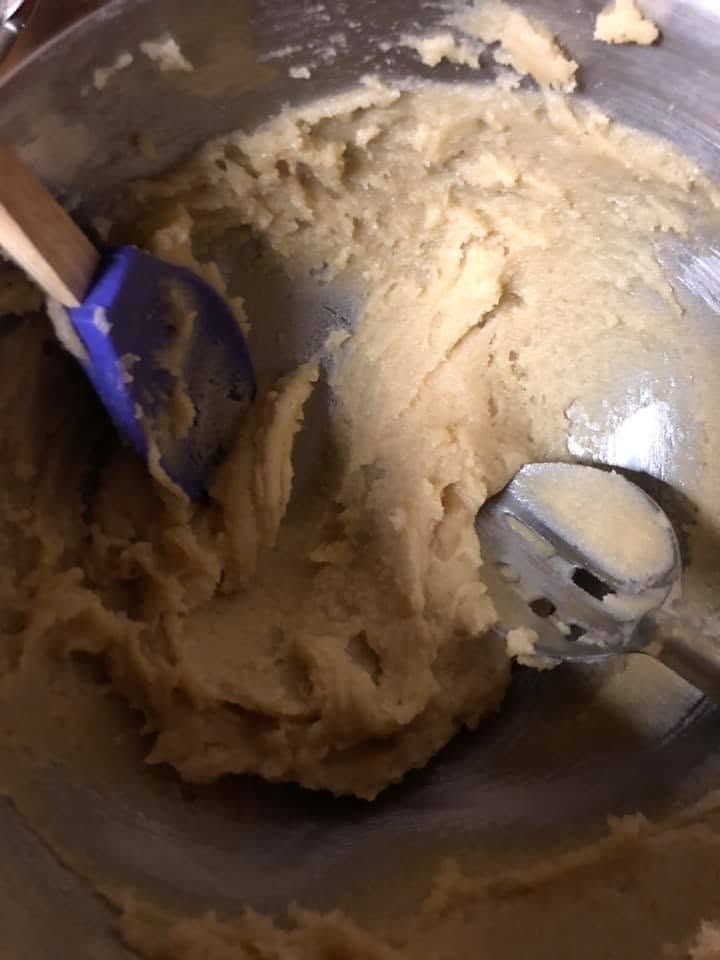
The mixture should look thick and slightly crumbly at first.
Step 2: Add the Flavorings
Add the honey, ground cinnamon, lemon extract, and vanilla extract.
Mix until the ingredients are evenly incorporated.
Gradually add the egg whites, mixing after each addition.
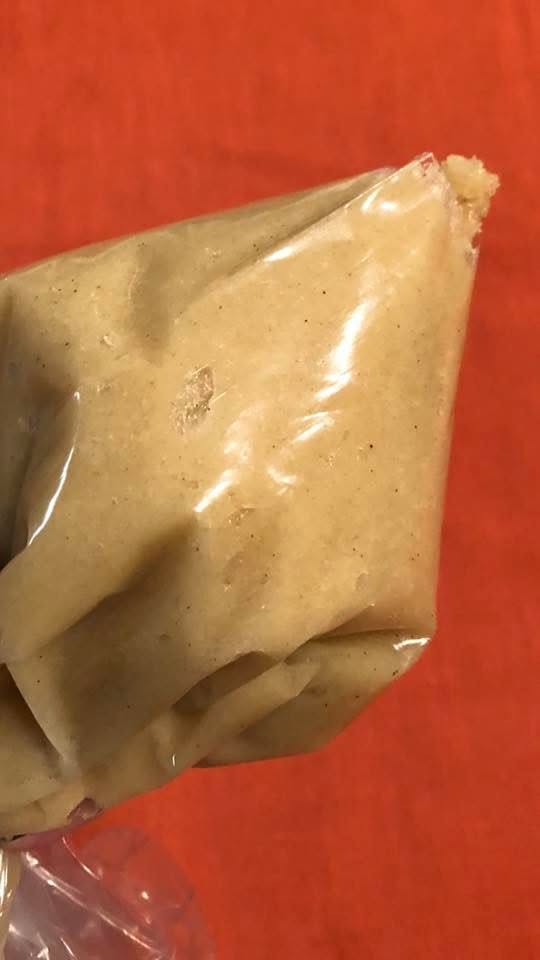
The finished dough will be thick, sticky, and soft. It won’t resemble ordinary sugar cookie dough.
Step 3: Prepare the Baking Sheets
Preheat your oven to 325°F (163°C).
Line your baking sheets with parchment paper.
Transfer the sticky dough into a pastry bag or a sturdy zip-top bag with one corner snipped off.
A piping bag makes portioning the cookies much easier.
Step 4: Pipe the Cookies
Pipe small, silver-dollar-sized rounds onto the prepared baking sheets.
Leave some space between each cookie to allow for slight spreading during baking.
Try to keep the rounds approximately the same size so they bake evenly.
Step 5: Add the Pine Nuts
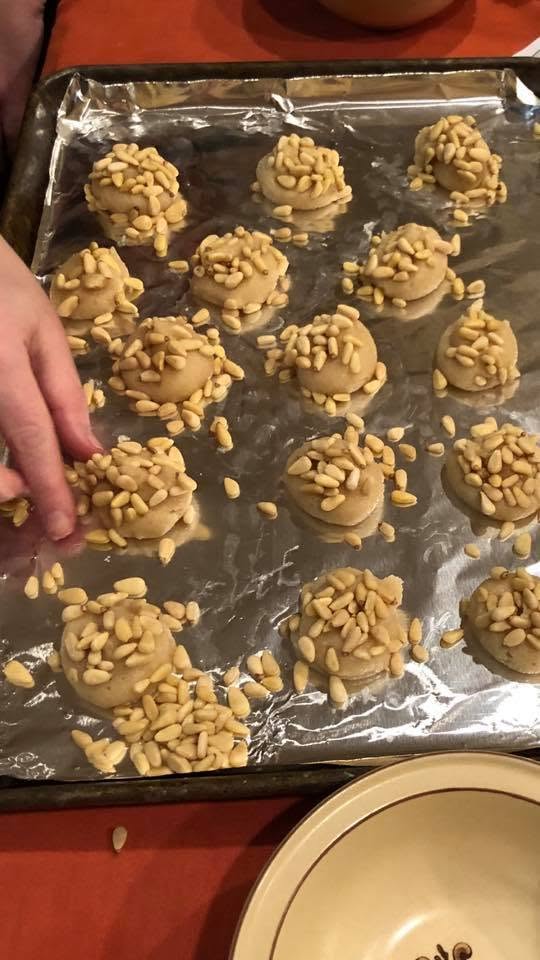
Generously cover the tops of the unbaked cookies with pine nuts.
Press the nuts gently into the sticky dough so they stay attached.
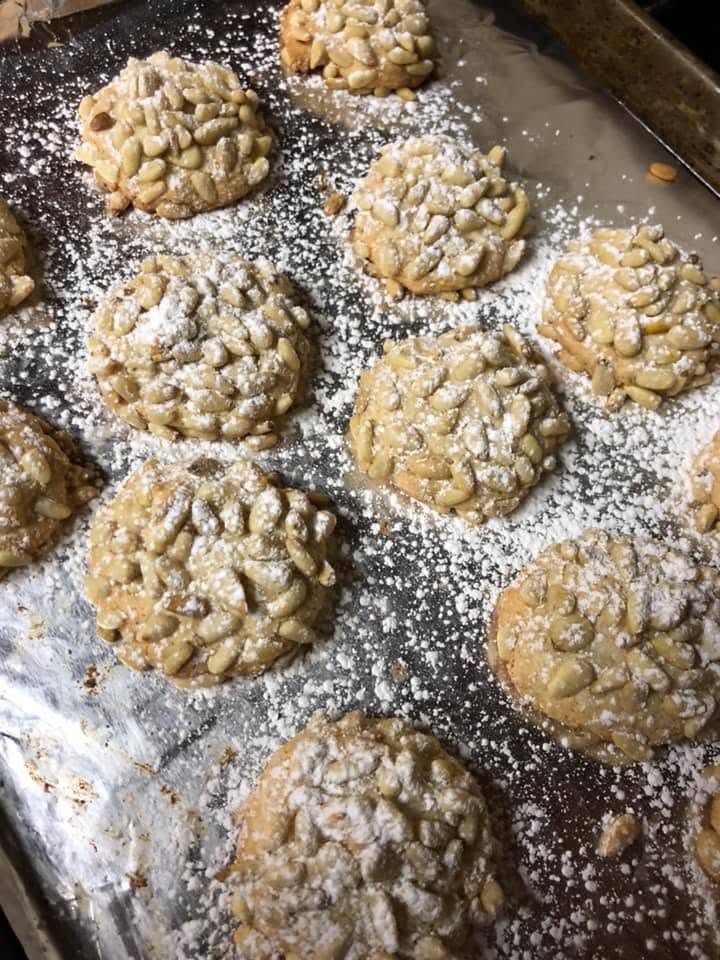
Dust the tops lightly with powdered sugar.
Step 6: Bake Until Lightly Golden
Bake at 325°F for approximately 18–20 minutes.
Begin checking the cookies at the 18-minute mark.
The edges should be lightly golden, while the centers remain soft.
Avoid overbaking, since these cookies are meant to have a chewy almond center.
Step 7: Cool Before Removing
Allow the cookies to cool on their baking sheets for approximately one hour.
The original recipe also recommends placing the cooled cookies in the freezer for about 30 minutes to make them easier to remove from the parchment paper.
Use a thin spatula to lift them gently.
Tips for Perfect Italian Pignoli Cookies
Use real almond paste. Almond paste provides the proper flavor and texture. Don’t substitute marzipan without adjusting the recipe.
Expect sticky dough. Pignoli cookie dough is naturally sticky because of the almond paste and egg whites.
Add egg whites gradually. This helps you achieve a smooth mixture without making it too loose.
Don’t overbake. The cookies should be lightly golden around the edges but still tender inside.
Allow plenty of cooling time. Freshly baked pignoli cookies are delicate and may stick to the parchment if removed too early.
How to Store Pignoli Cookies
These cookies are wonderful for preparing ahead of the holidays.
Room Temperature: Store completely cooled cookies in an airtight container for approximately 3–4 days.
Refrigerator: Keep them in a tightly sealed container for up to one week.
Freezer: Freeze cooled cookies in a freezer-safe container for up to 2 months, placing parchment paper between layers.
Let frozen cookies thaw at room temperature before serving.
Frequently Asked Questions
Are pignoli cookies gluten-free?
The recipe contains no flour, but check the labels on your almond paste and extracts if you’re baking for someone who needs to avoid gluten. Cross-contact is also important to consider.
Can I make pignoli cookies without a food processor?
Yes! A stand mixer can work, although breaking the almond paste into smaller pieces first makes mixing easier.
Why are my pignoli cookies sticky?
That’s normal. Almond paste, sugar, and egg whites create a naturally sticky dough. A pastry bag makes handling it much easier.
Why did my cookies stick to the parchment paper?
These cookies are soft and delicate when warm. Let them cool completely before removing them. The original bakery recipe also recommends a short stay in the freezer.
Can I double the recipe?
Yes. The original recipe specifically recommends using five egg whites when doubling the ingredients.
A Little Taste of an Italian Bakery
Some recipes are worth keeping simply because they bring back wonderful memories.
These old-fashioned Italian Pignoli Cookies are one of those recipes. With their chewy almond centers, golden pine nut topping, and delicate sweetness, they taste like something straight from a neighborhood Italian bakery.
Whether you’re making them for Christmas, a family celebration, or just because you’re craving an old-fashioned Italian treat, they’re a lovely way to keep a baking tradition alive.
And who knows? Maybe someone in your family will still be making this same recipe 35 years from now.
Old-Fashioned Italian Pignoli Cookies
Ingredients
Method
- Preheat oven to 325°F. Line baking sheets with parchment paper.
- Process almond paste and sugar until well combined.
- Add honey, cinnamon, lemon extract, and vanilla extract.
- Gradually mix in the egg whites until a thick, sticky dough forms.
- Transfer dough to a pastry bag or zip-top bag.
- Pipe small, silver-dollar-sized rounds onto prepared baking sheets.
- Cover the tops generously with pine nuts.
- Dust lightly with powdered sugar.
- Bake for 18–20 minutes, checking frequently after 18 minutes.
- Remove when the edges are lightly golden.
- Cool on the baking sheets for approximately one hour.
- If needed, freeze the cooled cookies for 30 minutes to help release them from the parchment.