How to Feed a Sourdough Starter (1:1:1 Ratio)
The simplest way to feed a mature sourdough starter is to mix equal weights of starter, flour, and water. Bakers call this a 1:1:1 feeding. Here, 50 grams of each gives you about 150 grams of fed starter. The mixing takes about five minutes, and a rubber band around the jar makes it easy to see how much the starter rises afterward. When it’s bubbly and near its peak, weigh out what your bread recipe calls for and save a little to feed again.
This routine begins with a mature starter that already rises after feeding. If you’re starting with only flour and water, follow the sourdough starter from scratch guide until your culture rises predictably. Once it’s established, you can use the equal-weight feeding below whenever you need to refresh it for baking.
What the 1:1:1 feeding ratio means
The three numbers refer to the weights of mature starter, fresh flour, and water, in that order. Use about 1.76 ounces (50 grams) of each. Equal weights of flour and water maintain 100% hydration when your starter already uses that same flour-to-water ratio. Many sourdough bread recipes specify a starter at 100% hydration, so this routine gives you a straightforward way to maintain one.
Ingredients for one feeding
- 1.76 ounces mature sourdough starter (50 grams, roughly ¼ cup)
- 1.76 ounces unbleached all-purpose or bread flour (50 grams, about ⅓ cup plus 1 tablespoon)
- 1.76 ounces water by weight (50 grams, about 3 tablespoons plus 1 teaspoon)
Use the cup and spoon measurements as approximations. Flour can settle in the cup, and bubbly starter takes up more room than the same starter after it has fallen. A kitchen scale helps you repeat the same feeding from one batch to the next. You’ll also need a clean jar with room for the starter to more than double, a spoon or small spatula, and a loose-fitting lid.
How to feed a sourdough starter step by step
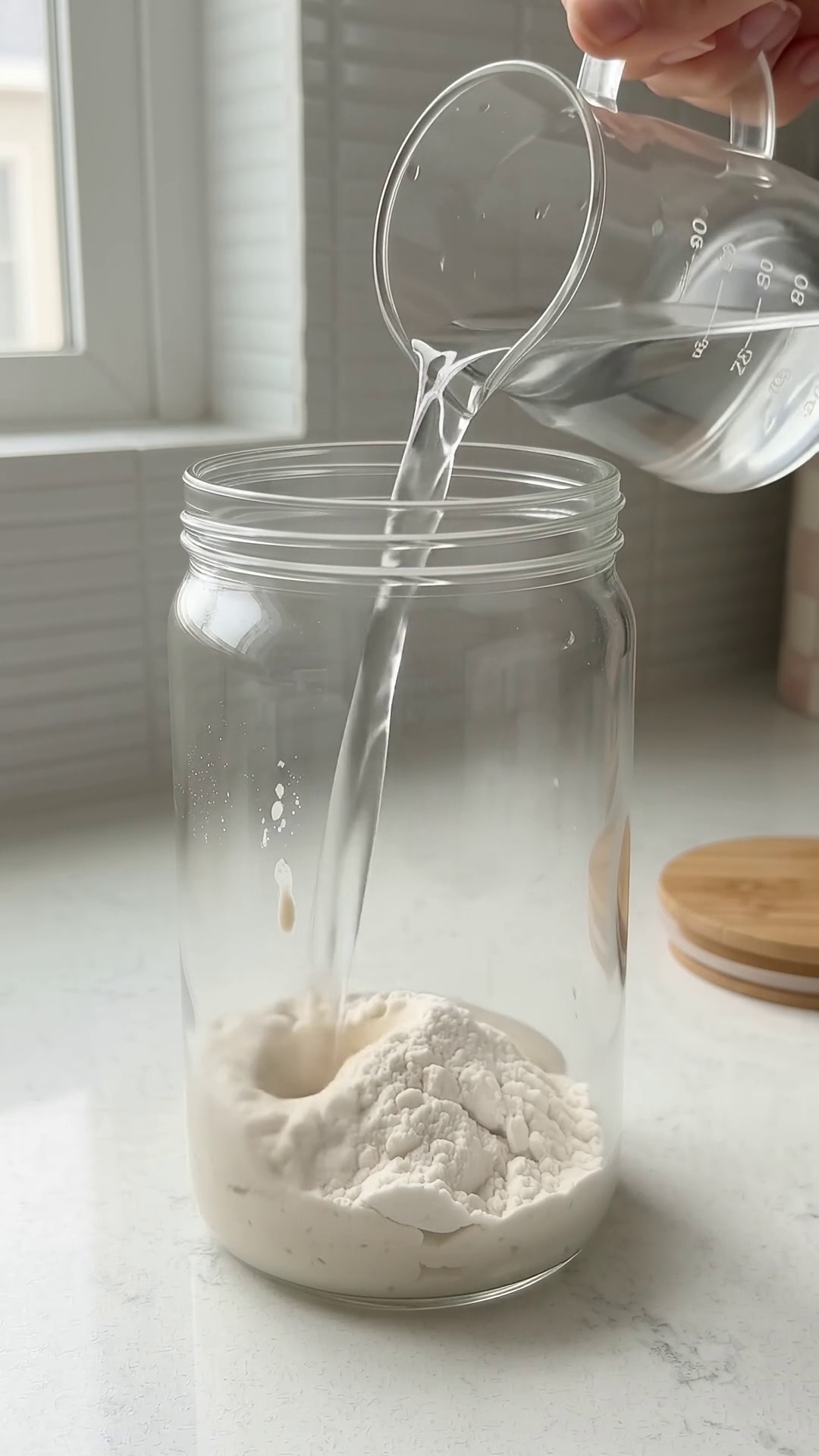
1. Weigh the starter and add the water
Set a clean jar on your scale and zero it before adding the mature starter. Keep the measured portion in the jar and set the rest aside for a cooked discard recipe. Zero the scale again and pour in the water. A quick stir at this stage can help loosen a thick starter before you add the flour.
2. Stir in the flour
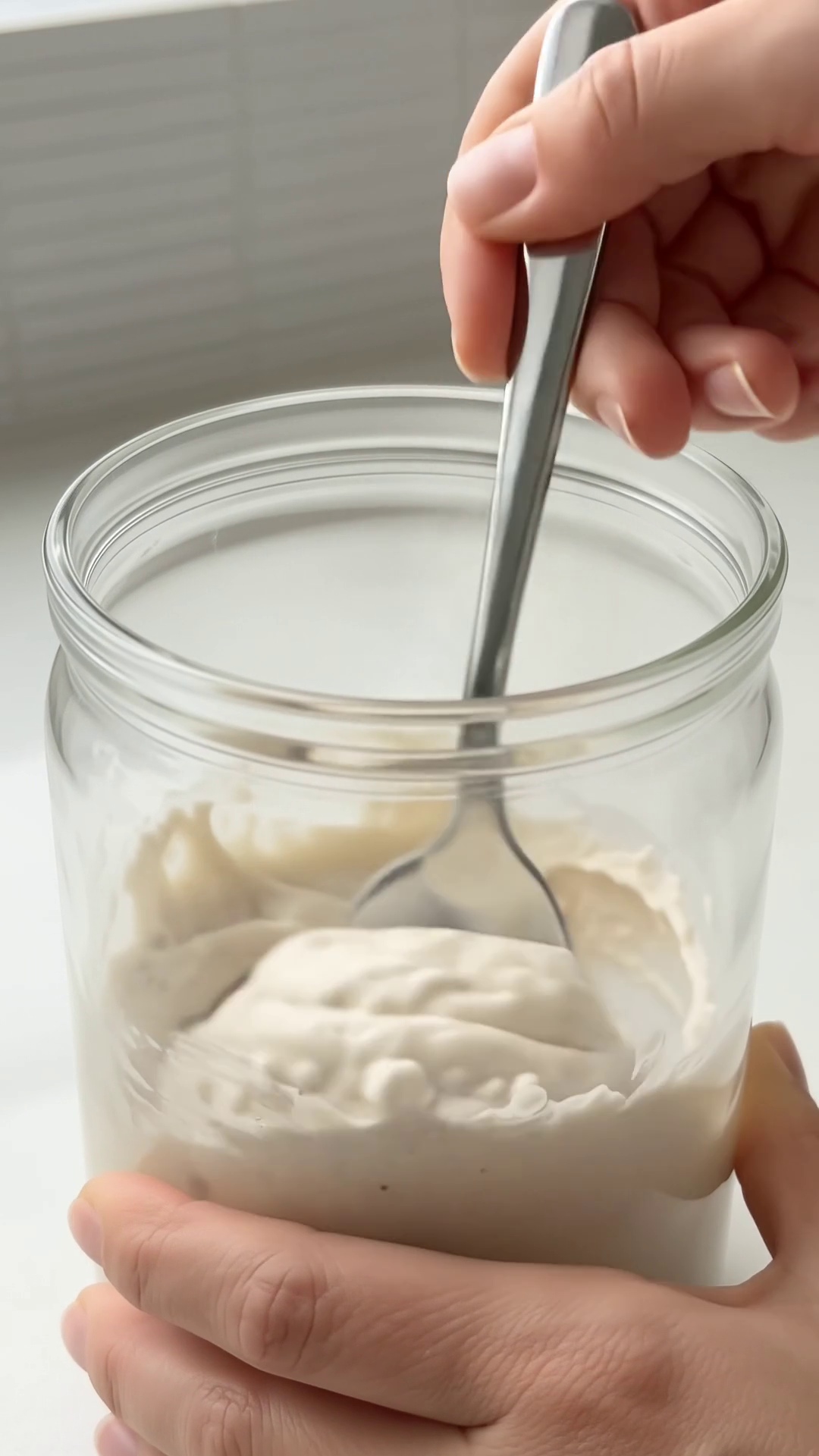
Zero the scale again, add the flour, and stir until you’ve worked in every dry patch. Scrape around the bottom, where flour can hide, then clean the inside walls above the mixture with your spatula. It’s easier to see how far the starter has climbed when the jar is clean above the starting line.
3. Mark the level and cover the jar
Slide a rubber band around the outside of the jar at the top of the freshly mixed starter. Rest the lid loosely on the jar so gas can escape during fermentation. Leave the jar somewhere with a steady room temperature, ideally around 70–78°F, and away from direct sun or a hot appliance.
4. Watch for bubbles and a steady rise
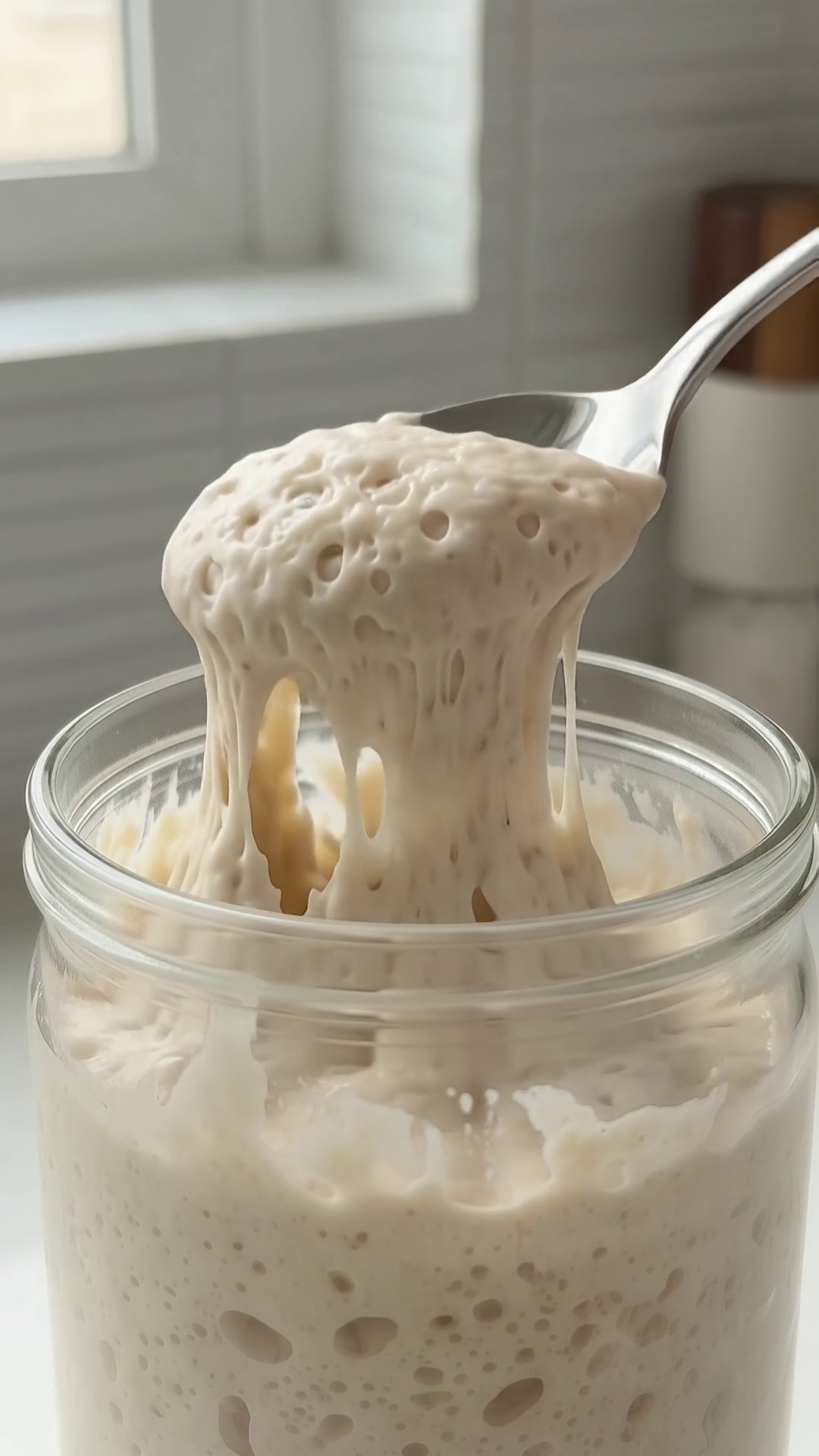
A mature starter may be ready in about 4 to 12 hours, depending on its strength and the temperature of your kitchen. Look for bubbles along the sides and a rise to roughly twice the starting height. The top may dome near peak and flatten as the starter starts to fall. If you see a streak above the current level, the starter may already have climbed higher and begun to recede. Use the starter near peak rise, following the timing and amount called for in your dough recipe.
How often to feed a mature starter
For regular baking, watch the rise and fall over a few feedings and use that pattern to plan when to refresh it. Start checking earlier in a warm kitchen, where the same feeding can peak sooner. If you need a longer window between feeding and mixing your dough, the 1:5:4 feeding guide explains a different ratio with more fresh flour and water relative to the starter.
If you bake occasionally, keep a mature starter covered in the refrigerator and feed it about once a week. Before baking, refresh it at room temperature and give it time to return to its usual rising pattern. Feed it again if it’s slow to regain its activity. Use clean equipment, and discard the entire culture if you spot mold or pink or orange discoloration. For clean handling and storage, see Colorado State University Extension’s starter guidance.
Frequently asked questions
Can I make a smaller batch?
Yes. Use 25 grams each of mature starter, flour, and water for about 75 grams total. Scale up the same way when a dough recipe calls for more starter, and leave a little extra to maintain your jar.
What can I do with the mature discard?
Use it in a cooked sourdough discard recipe, such as pancakes or crackers. Raw starter and uncooked flour mixtures should never be tasted.
What if the starter hasn’t doubled yet?
Give it more time and check how cool the room is. Use the rubber band to track the rise. If a refrigerated starter remains sluggish through the first feeding, let it warm up and give it another refresh before relying on it to raise dough.
Printable Sourdough Starter Feeding Guide
How to Feed a Sourdough Starter (1:1:1 Ratio)
Ingredients
Method
- Transfer 50 grams (1.76 ounces) of mature starter to a clean jar. Set aside the remaining mature discard for a cooked recipe, if desired.
- Add 50 grams each of flour and water. Stir until no dry flour remains and scrape down the jar.
- Mark the starting level with a rubber band and cover the jar loosely with a lid.
- Leave at room temperature, ideally 70–78°F, until bubbly and roughly doubled. Allow about 4 to 12 hours, depending on your starter and room temperature.
- Use the starter near peak rise for bread, following the amount called for in your dough recipe. Reserve a little to feed again.