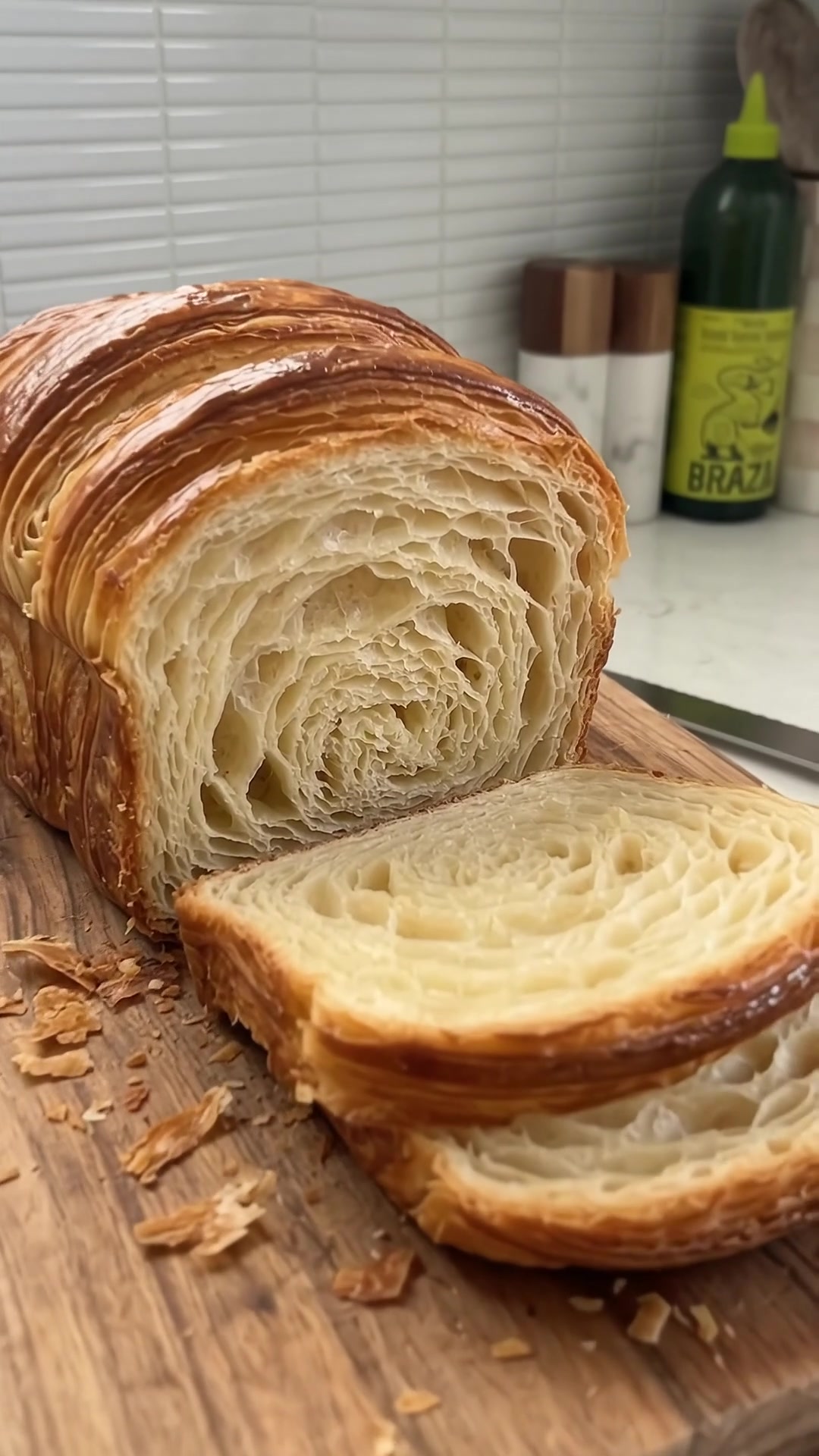
Croissant Sourdough Loaf (Buttery Layered Bread)
A golden sourdough loaf with buttery folds, delicate layers, and slices that toast beautifully.
This croissant sourdough loaf brings a laminated dough into a familiar bread pan. It needs more attention than an everyday sandwich loaf, but the process is manageable when divided into mixing, chilling, folding, and proofing. Use a vigorous starter and keep the butter cool throughout the folds. The goal is distinct sheets of butter inside the dough rather than butter kneaded into it.
Why You’ll Love This Loaf
- A dramatic layered crumb without shaping individual croissants.
- A lightly sweet dough suited to breakfast or dessert.
- A schedule that can be split over two days.
- Excellent toast from leftover slices.
Croissant Sourdough Loaf Recipe
Hands-on: About 1 hour
Fermentation and chilling: About 14–24 hours, depending on starter and temperature
Bake: 45–55 minutes
Yield: One 9-by-5-inch loaf
Oven: 375°F
Ingredients
- ½ cup active 100%-hydration sourdough starter, about 4 ounces by weight
- ¾ cup whole milk, cool
- 1 large egg
- 3 tablespoons granulated sugar
- 3 cups bread flour, spooned and leveled
- 1 teaspoon fine salt
- 2 tablespoons unsalted butter, softened
- ¾ cup unsalted butter, cool, for the butter block
- 1 additional egg beaten with 1 teaspoon water, for brushing
Baking Tip: Feed your starter so it is expanded, bubbly, and near its peak when mixing. A recently fed but inactive starter will not lift this rich dough reliably.
How to Make Croissant Sourdough Loaf
Step 1: Mix and Develop the Dough
Stir the starter, milk, egg, and sugar in a large bowl. Add the flour and salt and mix until no dry patches remain. Rest 20 minutes. Knead in the 2 tablespoons softened butter, then continue kneading for 8–10 minutes by hand, until smooth and elastic. The dough should be soft but firm enough to roll, not a loose batter.
Cover and let ferment around 75°F for 3–5 hours, until visibly aerated and roughly 50% larger. A weak starter or cooler room takes longer. Flatten into a rectangle, wrap, and refrigerate at least 2 hours or overnight. Cold dough makes the butter easier to enclose.
Step 2: Enclose the Butter
Place the ¾ cup butter between parchment sheets and tap or roll into a 6-inch square. Chill until cool but bendable. If it cracks when flexed, let it soften briefly; if it shines or smears, chill again. The butter and dough should have similar firmness.
Roll the cold dough to about 8 by 14 inches. Place the butter on one half, leaving a narrow border. Fold the uncovered dough over it and pinch the edges closed. Dust the surface lightly with flour, brushing away excess before each fold.
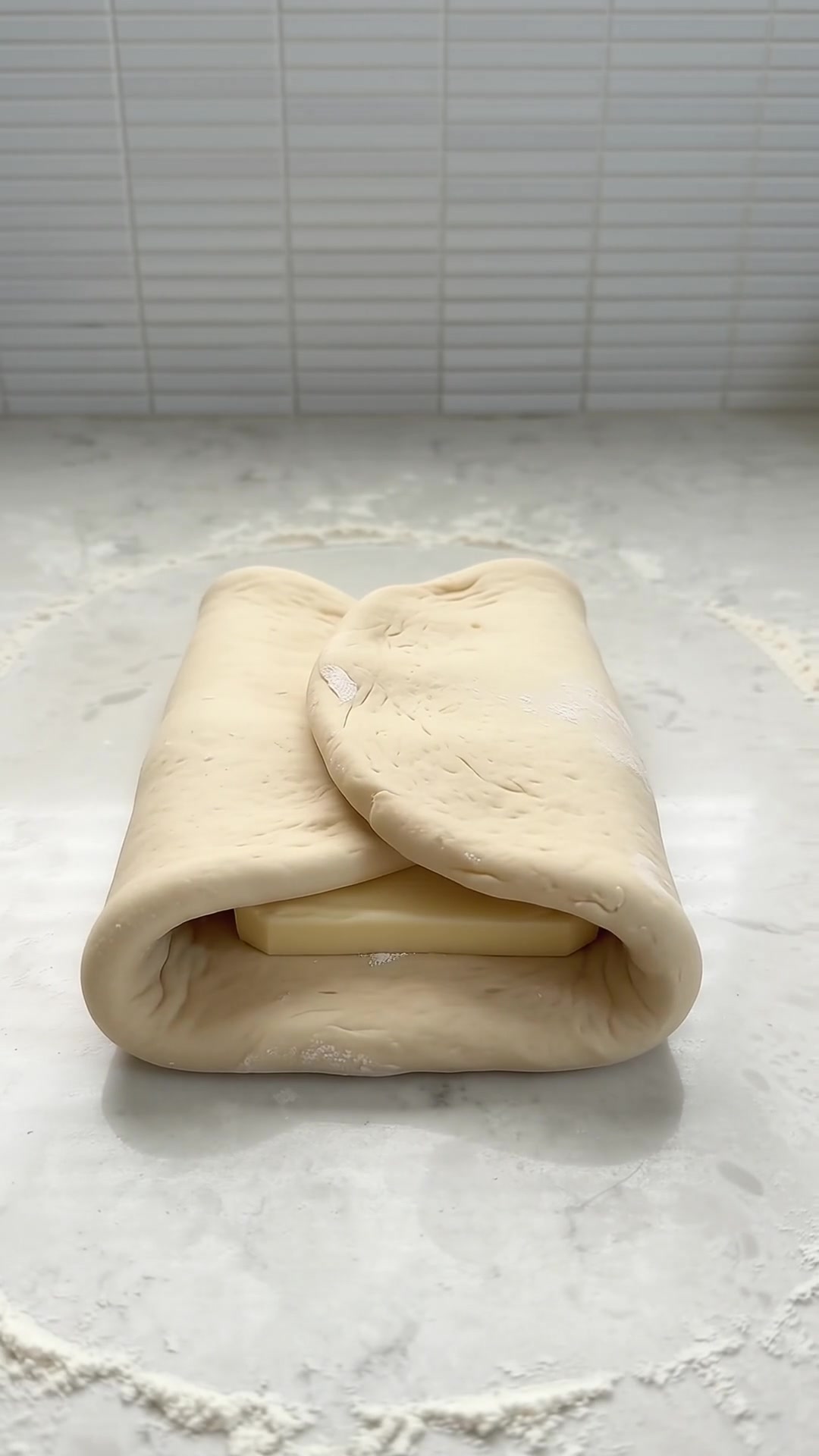
Step 3: Make Three Letter Folds
Gently roll the packet into a rectangle about 8 by 18 inches. Fold the lower third up and the upper third down, like a letter. Wrap and refrigerate 30–45 minutes. Repeat this roll-and-fold twice more, chilling between turns. Keep the rolling pressure gentle so the butter does not burst through the dough.
If you see exposed butter, patch with a little flour and chill before continuing. Do not force very cold butter into a long rectangle: give it a few minutes to become pliable. If the dough resists stretching, a covered rest is more useful than extra pressure.
Step 4: Shape and Proof
After the final chill, roll the dough to roughly 8 by 14 inches. Roll from an 8-inch edge into a snug log without crushing the layers. Set seam side down in a greased, parchment-lined 9-by-5-inch metal loaf pan.
Cover loosely and proof at 72–75°F until very puffy, gently jiggly, and close to the pan rim, often 6–10 hours from cold. Follow the expansion rather than a fixed deadline. Avoid a hot proofing spot, which melts the butter and erases the layers. A light touch should leave an indentation that slowly eases back.
Step 5: Bake and Cool
Heat the oven to 375°F. Brush the top lightly with egg wash, avoiding drips down the sides. Bake on the lower-middle rack for 45–55 minutes, until deeply golden and about 200°F in the center. Tent with foil if the top colors before the center is baked. A rimmed sheet underneath catches occasional butter drips.
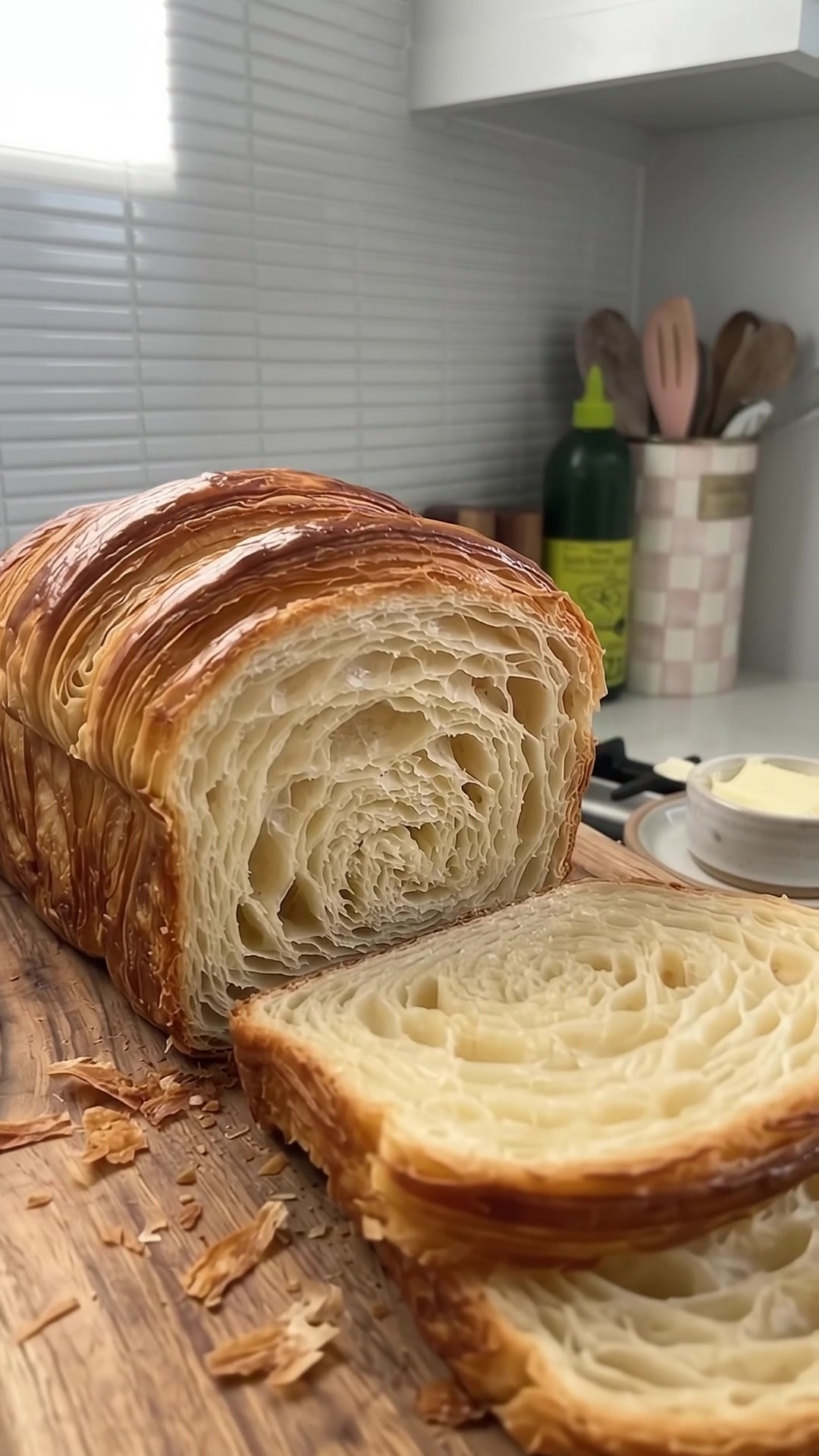
Rest in the pan for 10 minutes, then remove and cool on a rack for at least 2 hours. Slicing early compresses the warm layers and can make the crumb seem gummy. Use a serrated knife with a gentle sawing motion.
Tips and Variations
Use a metal pan for dependable heat transfer. Keep a small amount of flour nearby for rolling, but avoid heavily flouring the dough, which can prevent layers from bonding. For a citrus version, add 1 teaspoon orange zest to the initial dough. Serve with jam or honey rather than stuffing the layers with wet fillings on your first attempt.
Storage Guidance
Keep completely cooled bread wrapped at room temperature for up to 2 days. Freeze individual slices airtight for up to 2 months. Toast directly from frozen, or thaw wrapped before warming. The crust softens in storage; a few minutes in a 325°F oven helps revive its texture.
Short FAQ
Why did the butter leak?
Some leakage can happen, but heavy pooling suggests warm butter, torn dough, or insufficient proofing.
Can I skip the folds?
No. Those folds create the layered structure that defines this loaf.
Can I use discard?
Use active starter here. Unfed discard does not provide dependable leavening for this enriched dough.