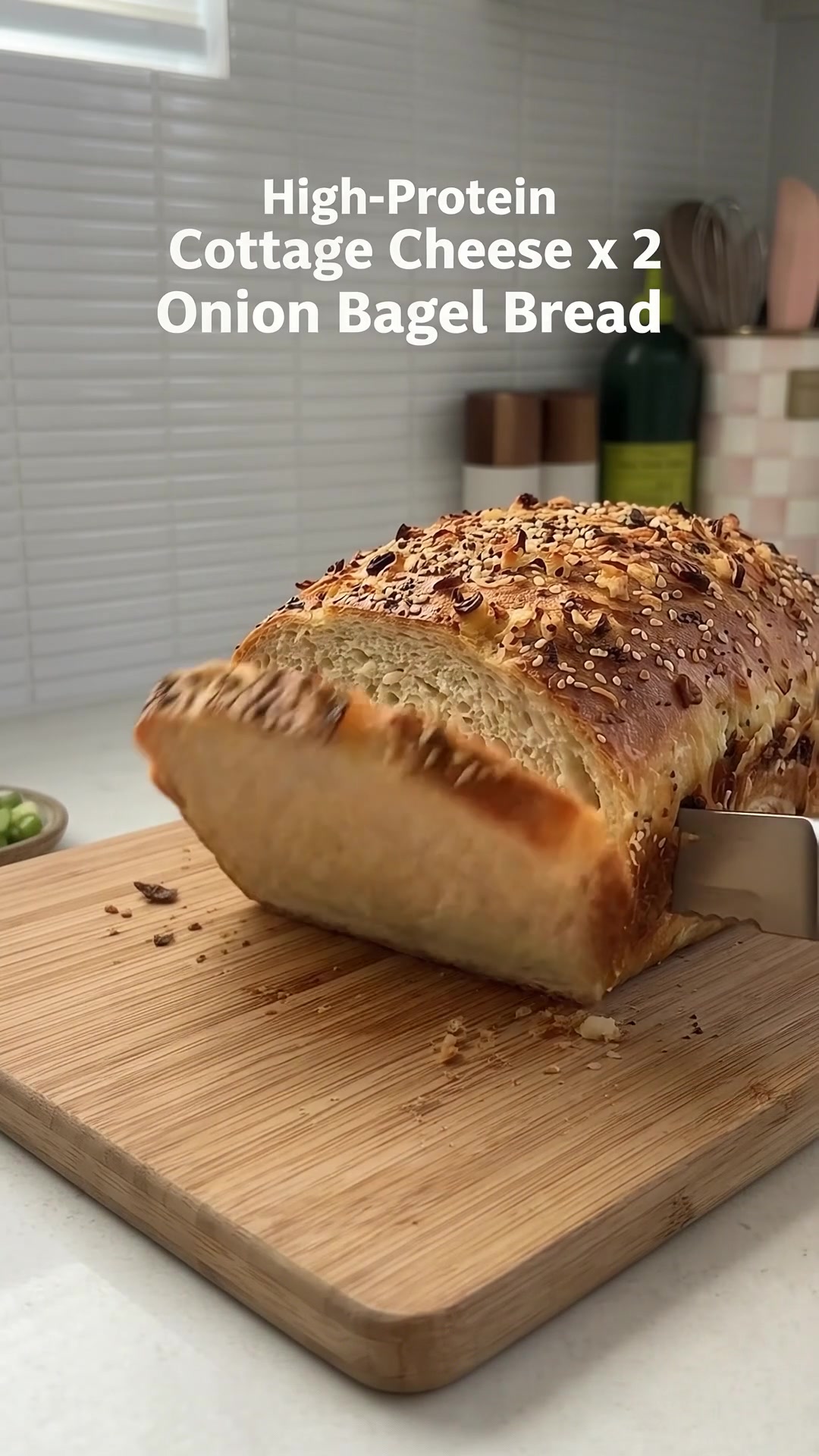
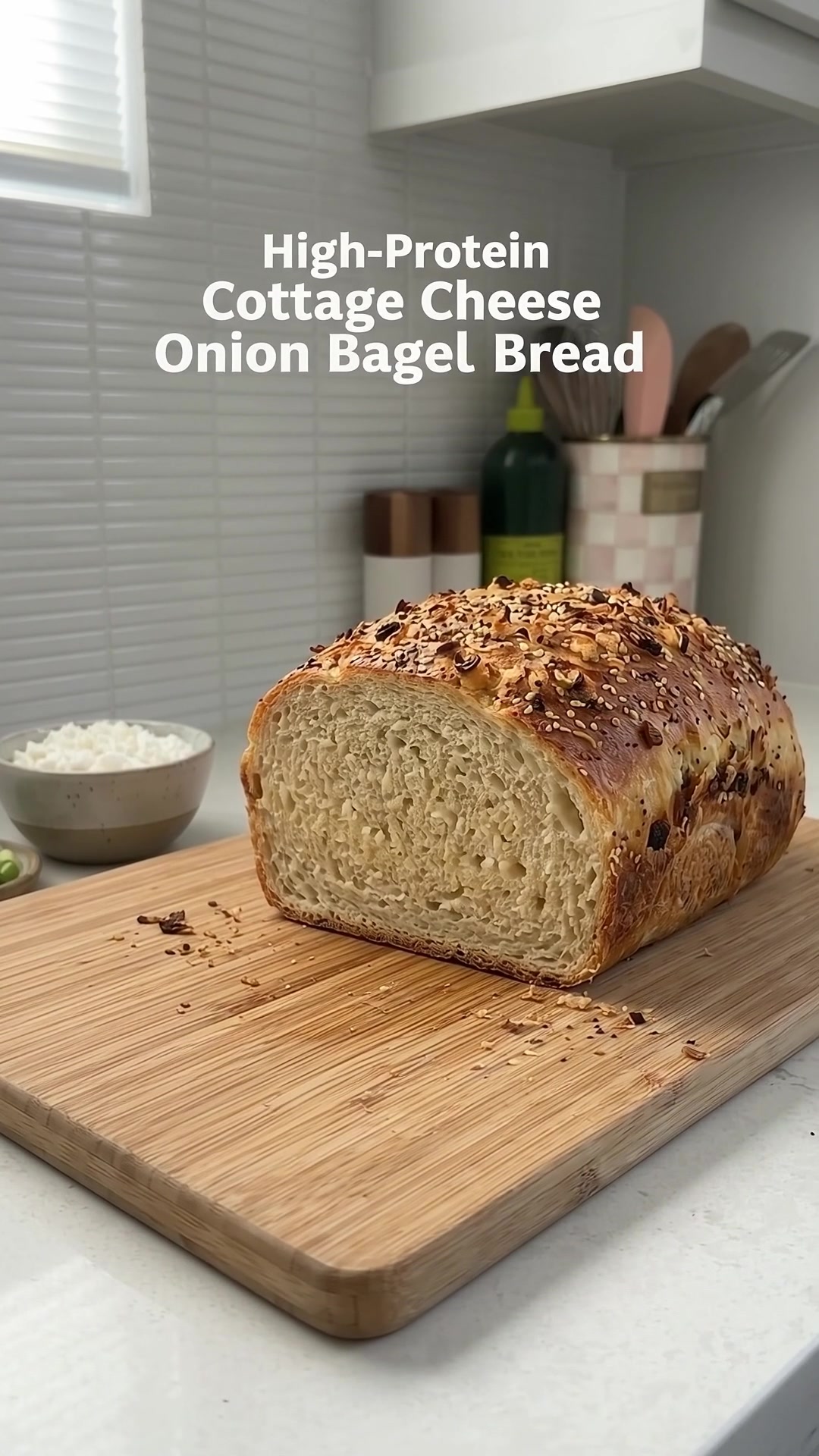
Cottage Cheese Bagel Bread with Onion Topping
A savory, sliceable cottage cheese loaf with a tender center and an onion-and-seed topping inspired by an everything bagel.
Cottage cheese bagel bread brings familiar deli flavors to an easy quick loaf. This version uses baking powder, so there is no starter to feed, dough to boil, or rise to schedule. It is especially good toasted with butter, topped with an egg, or served beside soup. The cottage cheese adds moisture and a gentle tang without making the bread taste strongly cheesy.
Why You’ll Love This Bread
- One bowl for the wet ingredients and one for the dry.
- No kneading or yeast proofing.
- A savory topping that makes simple toast feel special.
- Convenient slices for freezing and reheating.
Cottage Cheese Bagel Bread Recipe
Prep: 15 minutes
Bake: 45–55 minutes
Cooling: 1 hour
Yield: One 8½-by-4½-inch loaf, about 10 slices
Oven: 375°F
Ingredients
- 2 cups all-purpose flour, spooned and leveled
- 1 tablespoon baking powder
- ½ teaspoon fine salt
- 1 cup small-curd cottage cheese, preferably 4% milk fat
- 2 large eggs
- ¼ cup whole milk, plus up to 2 tablespoons if needed
- ¼ cup neutral oil
- 2 tablespoons dried minced onion, divided
- 1 tablespoon everything bagel seasoning
- 1 teaspoon oil for brushing the top
Baking Tip: Cottage cheese brands vary in moisture. Stir the container before measuring and use the curds with their normal creamy liquid, rather than deliberately draining them dry.
How to Make Cottage Cheese Bagel Bread
Step 1: Prepare the Pan
Heat the oven to 375°F. Grease an 8½-by-4½-inch metal loaf pan and line the bottom and long sides with parchment, leaving handles. A metal pan gives the sides a better chance to brown evenly. Set the pan on a baking sheet if its base is very thin.
Check that your baking powder is fresh. It supplies all the lift in this loaf, so an old, inactive tin can produce a heavy center. This is a quick bread with a close, tender crumb rather than the chewy texture of a boiled bagel.
Step 2: Mix the Batter
Whisk the flour, baking powder, salt, and 1 tablespoon dried onion in a large bowl. In a separate bowl, whisk the cottage cheese, eggs, milk, and ¼ cup oil until combined. Small curds can remain; they soften during baking. For a smoother crumb, briefly blend the wet ingredients before adding them.
Pour the wet mixture into the dry ingredients. Fold with a spatula just until no dry pockets remain, scraping the bottom and corners of the bowl. The batter should be thick and scoopable. If it is too dry to combine, add extra milk 1 tablespoon at a time, stopping as soon as it holds together.
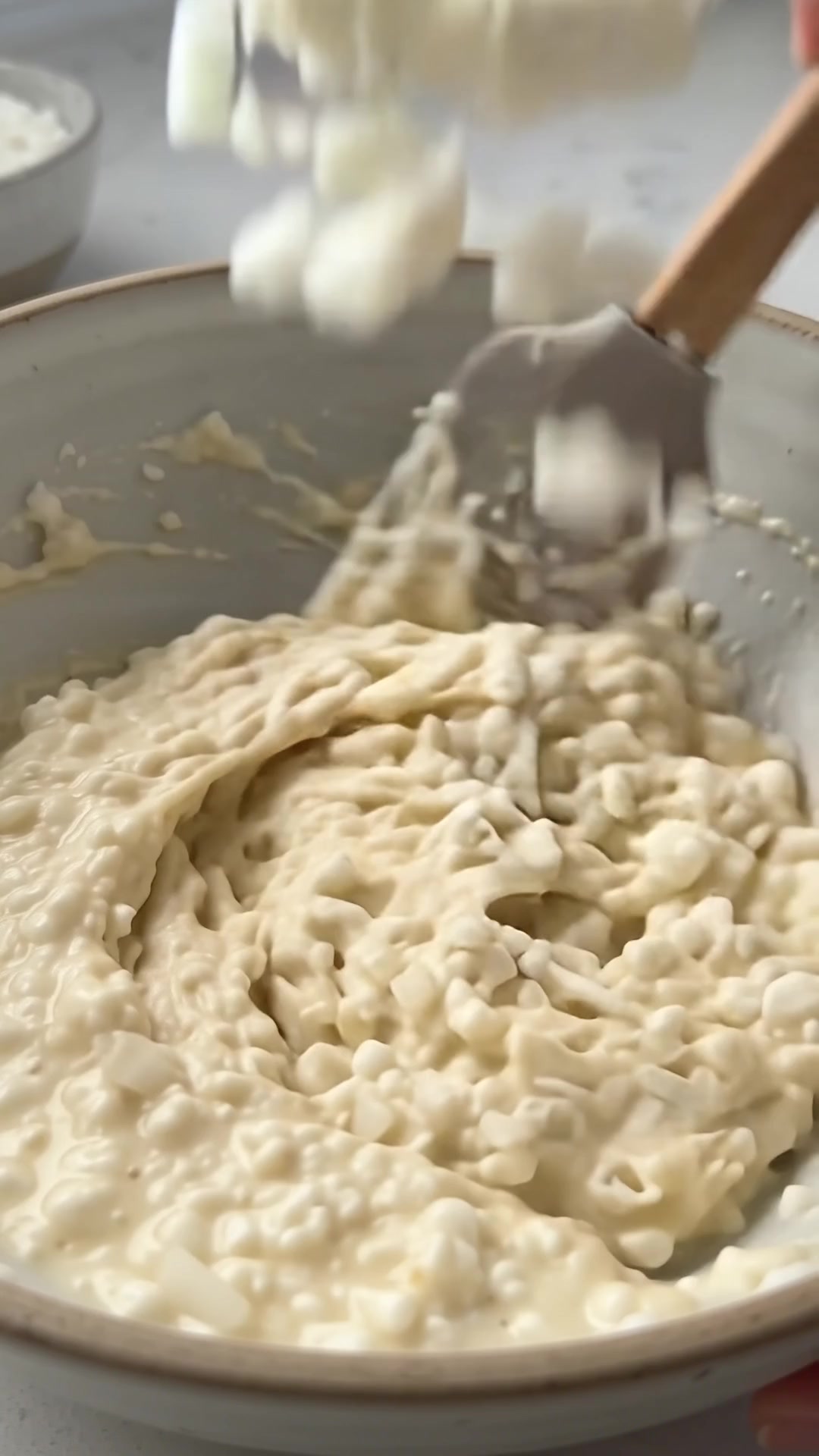
Do not beat until perfectly smooth. Repeated stirring after the flour is moistened develops gluten and can create a tough loaf with tunnels. Have the oven ready so the mixed batter can bake promptly.
Step 3: Fill and Top
Scrape into the prepared pan and smooth the surface with a lightly oiled spatula. Brush with the teaspoon of oil. Combine the remaining dried onion with the everything seasoning, then scatter evenly over the top. Press very gently so the topping adheres without pushing it into the batter.
Everything seasoning often contains salt. If yours is particularly salty, use a lighter coating rather than adding extra salt to the surface. Keep loose onion pieces off the exposed pan edges, where they can scorch before the bread is done.
Step 4: Bake Thoroughly
Bake on the center rack for 45–55 minutes. Begin checking at 45 minutes: a skewer inserted deeply into the center should emerge without wet batter. An instant-read thermometer should register about 200–205°F in the middle. If the topping browns too quickly, tent loosely with foil for the remaining baking time.
Do not rely on the crust alone. A dark top can hide a damp center, especially with a moist dairy batter. If the center is underdone, return the pan to the oven and check again after 5 minutes.
Step 5: Cool and Slice
Rest in the pan for 10 minutes, then lift out using the parchment and cool on a rack for at least 1 hour. Remove the paper so steam can escape. Slice with a serrated knife only after the crumb has set; cutting while hot can make the middle seem gummy.
Tips and Variations
Measure flour by fluffing it, spooning into the cup, and leveling the surface. Packing flour into the cup can make this loaf dry. Add ¼ cup finely chopped chives for another savory note, or replace the topping with sesame seeds if you prefer a gentler flavor. Avoid large additions of wet vegetables, which alter the batter’s moisture balance.
Storage Guidance
Cool completely, then refrigerate airtight for up to 4 days. Toast slices to restore a pleasant crust. Freeze individual slices separated by parchment for up to 2 months; reheat directly from frozen in a toaster or toaster oven. Do not seal a warm loaf, since trapped steam makes the surface soggy.
Short FAQ
Can I use low-fat cottage cheese?
Yes, although the crumb may be less rich. Adjust milk only if the batter needs it.
Is this sourdough?
No. This particular image set represents a baking-powder cottage cheese loaf.
Can I use a larger pan?
A 9-by-5-inch pan makes a lower loaf. Begin checking about 5 minutes earlier.