Best Cast Iron Blackened Chicken Thighs (Quick & Easy)
Best Cast Iron Blackened Chicken Thighs
The Ultimate Cast Iron Staple
If you own a cast iron skillet, knowing how to execute a proper blackened chicken is a mandatory skill. It is one of those back-pocket recipes that requires almost zero prep time but delivers an incredibly intense, smoky, and satisfying flavor profile.
The magic of blackened chicken lies entirely in the technique. It is not about burning the meat; it is about coating the chicken in a heavy layer of spices and hitting it with intense, searing heat. The milk solids in the butter and the spices toast rapidly in the cast iron, creating a deeply dark, savory crust while locking all the juices inside the meat.
Because this method is so fast and utilizes boneless, skinless chicken thighs, it is the ultimate quick-fix dinner. It is also the perfect excuse to push your skillet’s heat limits. Just a fair warning: this cooking method generates a serious amount of smoke. If you don’t have to open a window or turn your exhaust fan on high, you simply aren’t getting the pan hot enough!
Why You’ll Love This Recipe
-
Lightning Fast: From the spice rub to the plate, this entire recipe takes less than 10 minutes.
-
Maximum Juiciness: Using boneless, skinless chicken thighs ensures the meat stays tender and juicy under the extreme heat.
-
Incredible Crust: The combination of hot oil, butter, and cast iron guarantees that signature, deeply spiced crust.
-
Pantry Staples: The rub uses basic spices you likely already have sitting in your cabinet.
-
Highly Versatile: Serve it alongside steamed veggies, slice it over a Caesar salad, or stuff it into a spicy chicken sandwich.
Ingredients
-
Chicken Thighs: 3 boneless, skinless chicken thighs.
-
Paprika: 1/2 teaspoon to provide that beautiful red base color.
-
Cayenne Pepper: 1/4 teaspoon for a sharp, spicy kick.
-
Ground Cumin: 1/4 teaspoon for an earthy depth.
-
Dried Oregano: 1/4 teaspoon for a savory, herbal note.
-
Black Pepper: 1/8 teaspoon of freshly cracked black pepper.
-
Salt: 1/8 teaspoon (see our expert tips below on adjusting this!).
-
Cooking Fat: A splash of high-smoke-point oil (like avocado or canola) and a knob of unsalted butter for the pan.
Step-by-Step Instructions
Step 1: Mix the Blackening Spice
In a small bowl, whisk together the paprika, cayenne pepper, ground cumin, dried oregano, black pepper, and salt until completely uniform.
Step 2: Season the Chicken
Pat your boneless, skinless chicken thighs completely dry with a paper towel. Moisture is the enemy of a good crust! Sprinkle the spice mixture generously over both sides of the chicken, pressing it gently into the meat so it adheres.

Step 3: Get the Pan Smoking Hot
Place your cast iron skillet on the stovetop over high heat. Let it get incredibly hot—you want to see wisps of smoke before you add any fat. Open your kitchen windows and turn on your exhaust fan!
Step 4: The Hard Sear
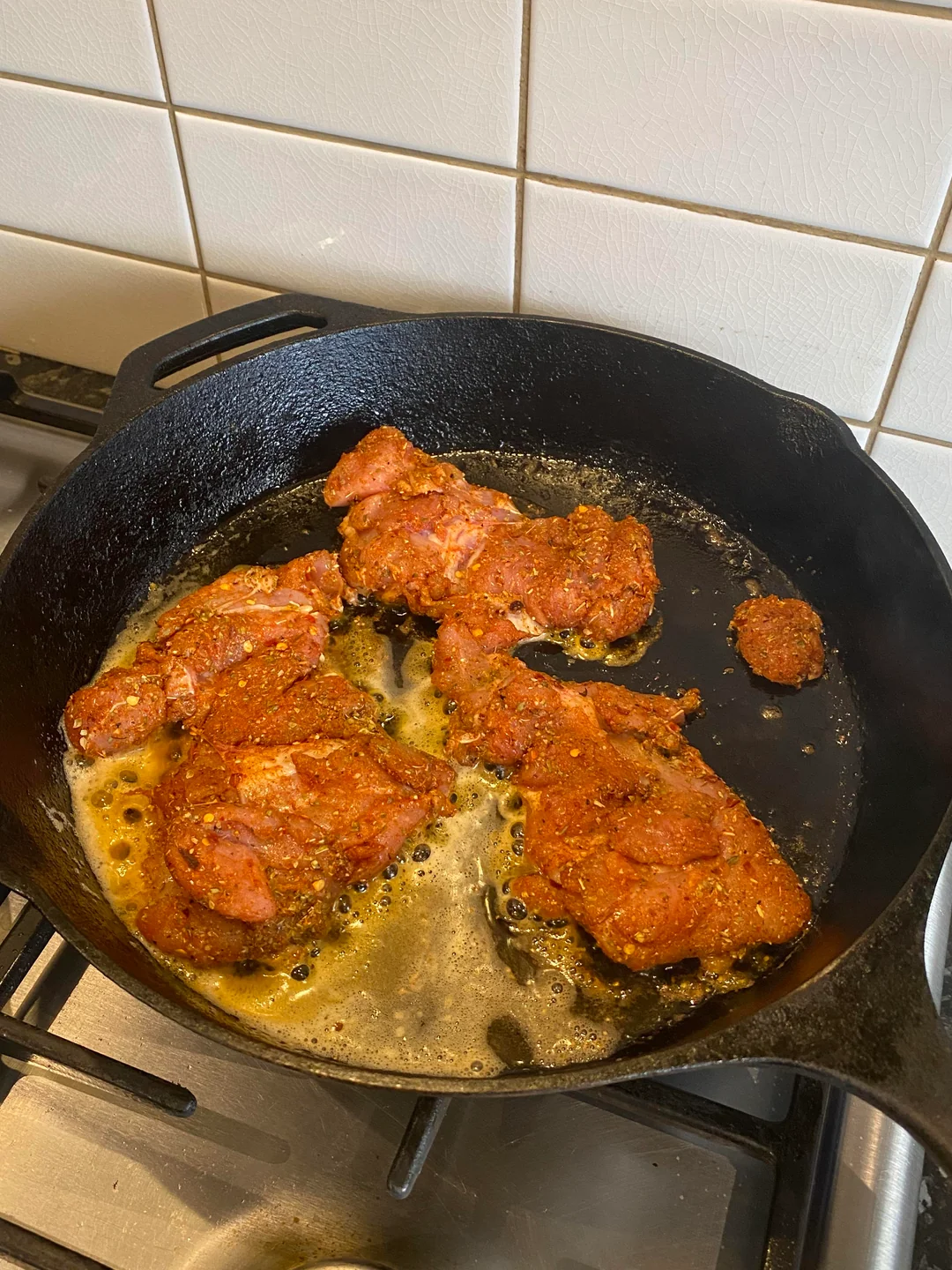
Add a splash of high-smoke-point oil to the hot pan, followed immediately by the knob of butter. As soon as the butter foams, lay the seasoned chicken thighs into the skillet. Do not touch or move them! Let them sear undisturbed for 2 minutes.
Step 5: Flip and Finish
Flip the chicken thighs. You should see a dark, nearly black (but not burnt) crust. Sear the second side for another 2 minutes, or until the chicken is cooked through and reaches an internal temperature of 165°F (74°C). Remove from the pan, let rest for 3 minutes, and serve immediately.
How to Tweak the Seasoning
While the base recipe provided is a fantastic starting point, authentic blackened seasoning usually relies on a slightly wider flavor profile. If you want to tweak this spice blend for maximum impact, here is exactly what you should adjust:
-
Bump Up the Salt: 1/8 teaspoon of salt is a bit too shy for three whole chicken thighs. Bumping it up to 1/2 teaspoon of kosher salt will properly enhance the meat and help build that crust.
-
Add the Alliums: Traditional Cajun blackening spice almost always includes garlic powder and onion powder. Adding 1/2 teaspoon of each will create a much more complex, savory bark on the outside of the chicken.
-
A Touch of Thyme: You have the oregano, but adding 1/4 teaspoon of dried thyme rounds out that authentic, earthy Southern flavor profile perfectly.
-
Smoked vs. Sweet Paprika: Swap standard sweet paprika for smoked paprika. It amplifies the campfire-like char that cast iron provides.
Expert Cooking Tips
-
Pound Them Flat: Since this cooking method is so incredibly fast (2 minutes per side), you need to make sure your chicken thighs are relatively even in thickness. If they are very thick, gently pound them flat before seasoning so the center cooks through before the spices burn.
-
Dry Chicken is Crucial: If your chicken is wet straight out of the package, the spices will steam instead of searing. Always pat the meat completely dry with paper towels.
-
Don’t Fear the Smoke: A proper blackening technique requires smoke. If your pan isn’t smoking, you are just sautéing the chicken. Ensure your ventilation is ready to go!
What to Serve With Blackened Chicken
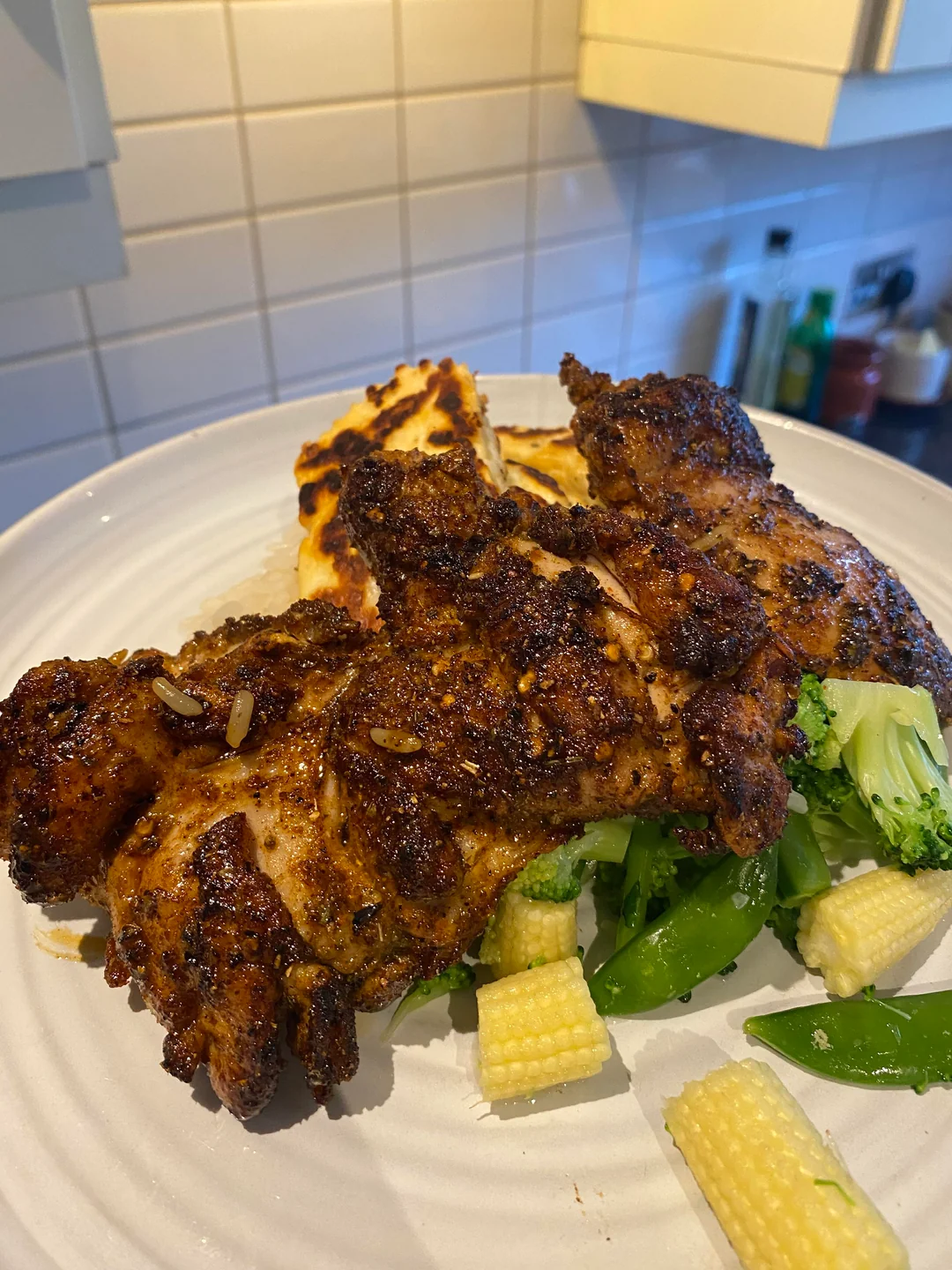
Because the chicken is aggressively seasoned and spicy, it pairs best with fresh, cooling side dishes. Serve it over a bed of fluffy white rice or quinoa to soak up the spicy butter drippings from the pan.
It is also fantastic served with steamed greens, such as snow peas, baby corn, and broccoli, which provide a clean, crisp contrast to the heavy spices. For a true Southern comfort meal, serve it alongside creamy mashed potatoes or a cool, tangy coleslaw.
Storage & Reheating
Refrigerator
Store leftover blackened chicken in an airtight container in the refrigerator for up to 4 days.
Freezer
You can freeze the cooked thighs in a freezer-safe zip-top bag for up to 3 months. Thaw overnight in the fridge before reheating.
Reheating
To reheat without drying out the thighs, place them in a skillet over medium heat with a tiny splash of water or chicken broth. Cover with a lid and let them steam gently for 2 to 3 minutes until warmed all the way through.
Frequently Asked Questions
Is blackened chicken supposed to be burnt?
No! “Blackened” refers to the color of the crust created by the spices and milk solids in the butter toasting at extremely high heat. It should taste deeply roasted and savory, not bitter and burnt.
Can I use chicken breasts instead?
Yes, but you must be careful. Chicken breasts have far less fat than thighs and dry out very quickly. If you use breasts, slice them in half horizontally to make thin cutlets so they cook quickly in the screaming hot pan.
What kind of oil is best for blackening?
You need an oil with a very high smoke point to withstand the heat of the cast iron. Avocado oil, canola oil, or grapeseed oil are all excellent choices. Avoid extra-virgin olive oil, as it will burn instantly and turn bitter.
Why do I need oil and butter?
The oil provides the high-heat protection needed to sear the meat, while the milk solids in the butter are what actually brown and toast the spices to create the signature “blackened” crust. Using both gives you the best of both worlds.
Final Thoughts
This simple, spicy cast iron blackened chicken is proof that you don’t need hours in the kitchen to produce massive flavor. By leaning into the heat of your skillet and utilizing a punchy spice rub, you can have a restaurant-quality protein ready in mere minutes. Mix up your spices, turn on your vent fan, and get ready for a phenomenal meal!
Best Cast Iron Blackened Chicken Thighs
A lightning-fast, incredibly flavorful recipe for blackened chicken thighs. Cooked in a smoking hot cast iron skillet for the perfect spicy crust.
Ingredients
Equipment
Method
- In a small bowl, combine the paprika, cayenne, cumin, oregano, black pepper, and salt.
- Pat the chicken thighs completely dry with paper towels. Season generously on both sides with the spice mixture.
- Place a cast iron skillet over high heat and let it get extremely hot (open your windows and turn on your vent fan!).
- Add the oil, followed immediately by the butter.
- As soon as the butter foams, lay the chicken in the skillet. Do not move them. Sear for 2 minutes.
- Flip the chicken thighs and sear for another 2 to 3 minutes, or until a dark crust forms and the internal temperature reaches 165°F (74°C).
- Remove from the skillet, let rest for 3 minutes, and serve hot.
Notes
Flavor Upgrade: For an authentic, punchier crust, add 1/2 tsp of garlic powder, 1/2 tsp of onion powder, and 1/4 tsp of dried thyme to your spice mix.