Bigos — Polish Hunter’s Stew
This home-style bigos combines pork shoulder, smoked kielbasa, sauerkraut, fresh cabbage, and mushrooms in a savory, gently simmered stew.
Bigos is a dish to make when you have time to let a pot work quietly on the stove. In this version, browning the pork and sausage builds a savory base before two kinds of cabbage and a modest amount of broth go in. Fresh cabbage softens into the stew while sauerkraut supplies tang. Mushrooms, tomato paste, bay leaves, and marjoram round out the flavor. This is a slow-simmer home preparation; the pork’s tenderness, rather than the clock alone, determines when it is ready to serve.

Why You’ll Love This Recipe
- Pork and smoked kielbasa bring contrasting textures.
- Fresh cabbage and sauerkraut balance sweetness and tang.
- One Dutch oven handles browning and simmering.
- The stew is convenient to portion and reheat the next day.
Recipe Details
Serves 6. Prep: about 20 minutes. Cook: about 1 hour 40 minutes to 2 hours, including browning and a 75–90-minute simmer. Total: about 2 hours to 2 hours 20 minutes. Allow extra time if the pork is not yet tender. Stovetop: medium-high for browning, then low for a gentle covered simmer.
Ingredients
- 1 pound pork shoulder, cut into bite-size pieces
- 12 ounces smoked kielbasa, sliced
- 1 pound sauerkraut, drained
- ½ small green cabbage, shredded
- 1 medium onion, diced
- 4 ounces mushrooms, sliced
- 2 tablespoons tomato paste
- 1½ cups beef broth
- 2 tablespoons butter or oil
- 2 bay leaves
- ½ teaspoon dried marjoram
- ½ teaspoon black pepper
- Salt, to taste
Pork shoulder suits a simmered stew because it has time to become tender. Keep the pieces fairly even rather than leaving a few large chunks. Drain the sauerkraut and loosen its strands before adding it. Use fully cooked smoked kielbasa and taste your broth and kraut before deciding how much final salt is needed. The measured broth produces a stew with moisture around the ingredients, not a large pot of thin soup.
Numbered Instructions
- Brown the pork. Heat the butter or oil in a Dutch oven over medium-high heat. Add the pork and cook for 5–7 minutes, turning to brown several surfaces. Work in batches if necessary rather than crowding the pot into a steaming pile.
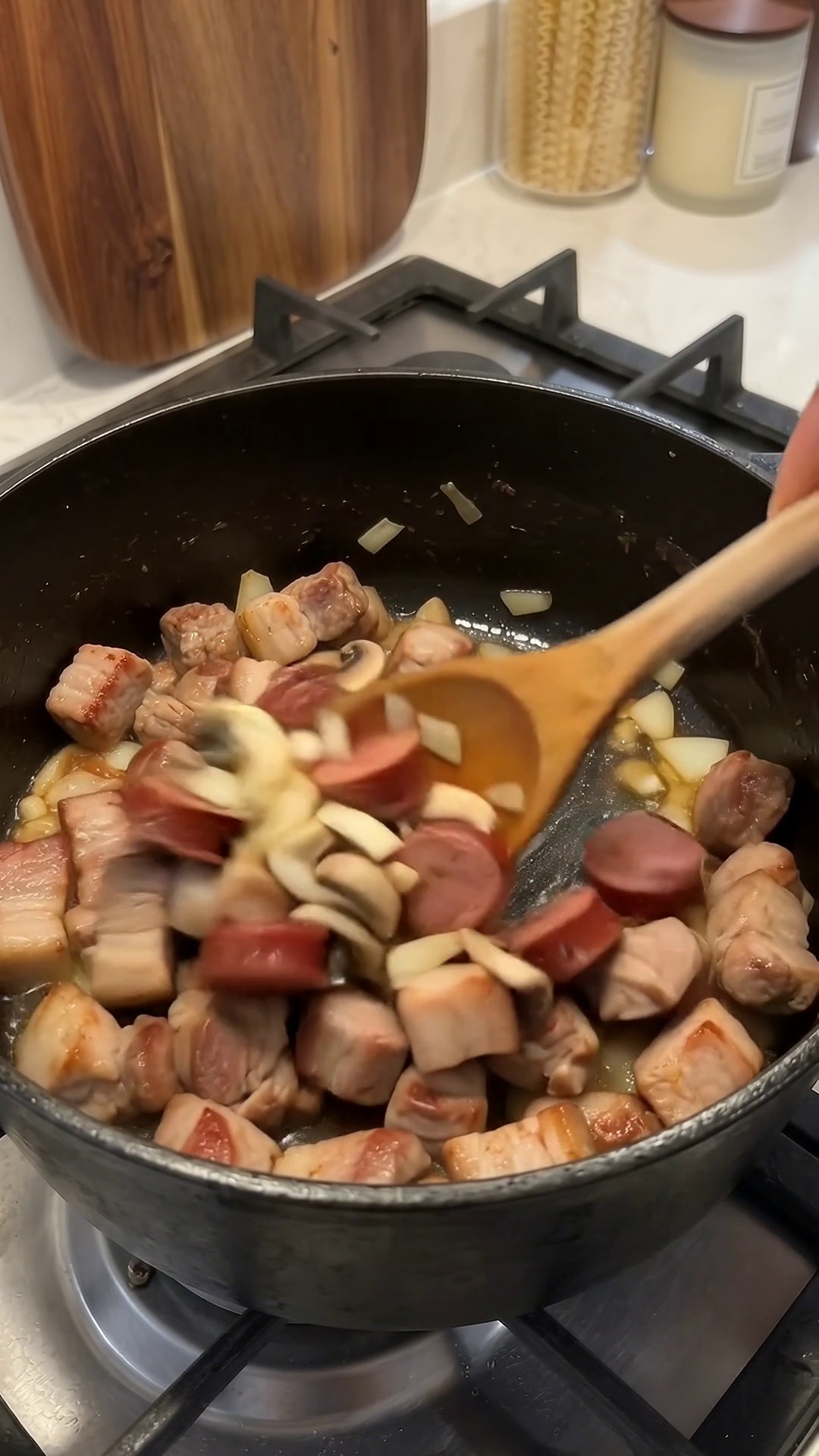
- Add sausage and vegetables. Stir in the sliced kielbasa and cook about 3 minutes. Add the onion and mushrooms and continue cooking until softened, stirring up the browned bits without allowing them to burn.
- Wilt the fresh cabbage. Add the shredded green cabbage and cook about 5 minutes, turning it through the meat mixture as it begins to soften. Add it in stages if the pot is initially full.
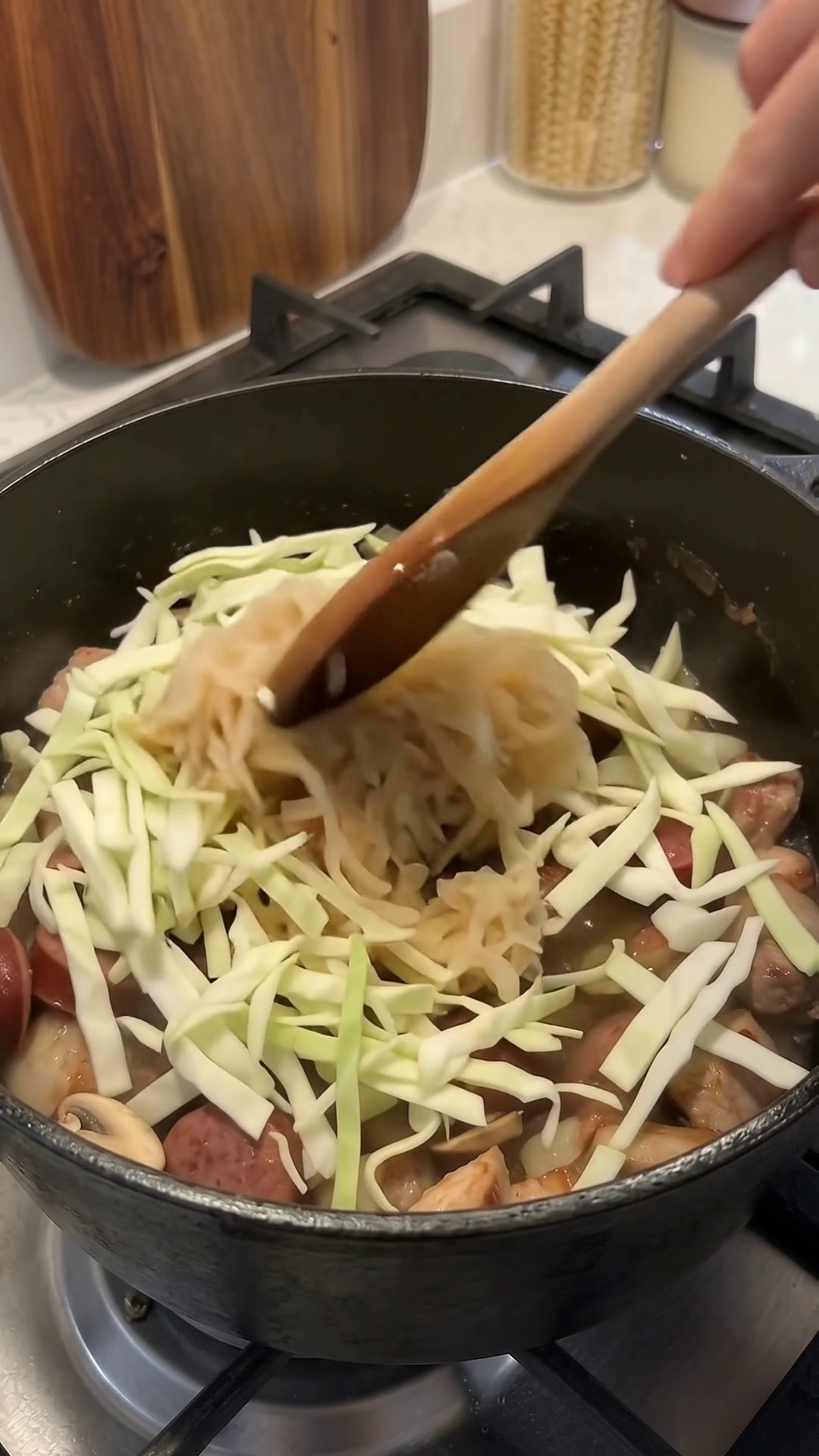
- Build the stew. Stir in the drained sauerkraut and tomato paste. Add the beef broth, bay leaves, marjoram, and black pepper. Mix well so the tomato paste is dispersed rather than left in concentrated patches. Bring the liquid just to a simmer.
- Simmer until tender. Cover and reduce the heat to low. Simmer gently for 75–90 minutes, stirring occasionally, until the pork is tender and the cabbage has softened. Add a small splash of water if the bottom begins drying out. If the pork is still firm, continue gently and check again; the tenderness cue takes priority.
- Finish and serve. Remove both bay leaves. Taste and adjust salt only after the stew has finished simmering. Serve warm with rye bread or boiled potatoes, spooning some of the savory juices over each portion.
Helpful Tips
Browning and simmering are separate stages with different goals. The first develops flavor on the meat; the second gives shoulder time to soften. Do not rush the simmer by boiling hard. A quiet pot is easier to control and less likely to dry out or scorch before the pork becomes tender.
Stir from the bottom as well as around the sides. Cabbage can settle over the hot base and conceal dry patches. Keep the lid on between checks to limit evaporation, then judge the finish by both moisture and texture. A stew that needs extra simmering may also need a little water, but it should not become soupy.
Variations and Serving Ideas
Choose butter or oil for the browning stage, keeping the listed 2 tablespoons. Serve bread when you want a simple bowl meal or potatoes when you want a more substantial plate. This measured version keeps its seasoning focused on bay and marjoram. Other family versions vary, but there is no need to add extra meats, dried fruit, or wine to make this preparation satisfying. Make the listed recipe first so you can judge its balance before changing it.
Storage and Reheating
Transfer leftovers to shallow containers and refrigerate within 2 hours. Store covered for 3–4 days and reheat to 165°F, stirring so the center warms evenly. The flavor can seem more rounded after a night in the refrigerator. Freeze cooled portions in sealed containers for up to 2 months, leaving room for expansion. Thaw in the refrigerator, then reheat gently with a little water only if the stew has become too thick.
Frequently Asked Questions
Why does the cooking time exceed the simmer time?
The pork, kielbasa, onion, mushrooms, and fresh cabbage all cook before the 75–90-minute simmer begins. The total includes those stages.
Is the pork done just because 90 minutes passed?
Not automatically. Test a piece for tenderness. Shoulder sometimes needs longer, depending on the size of the pieces and the simmer.
Can I make this ahead?
Yes. Cool and refrigerate promptly, then reheat thoroughly. Make-ahead storage does not mean leaving the pot on the counter overnight.