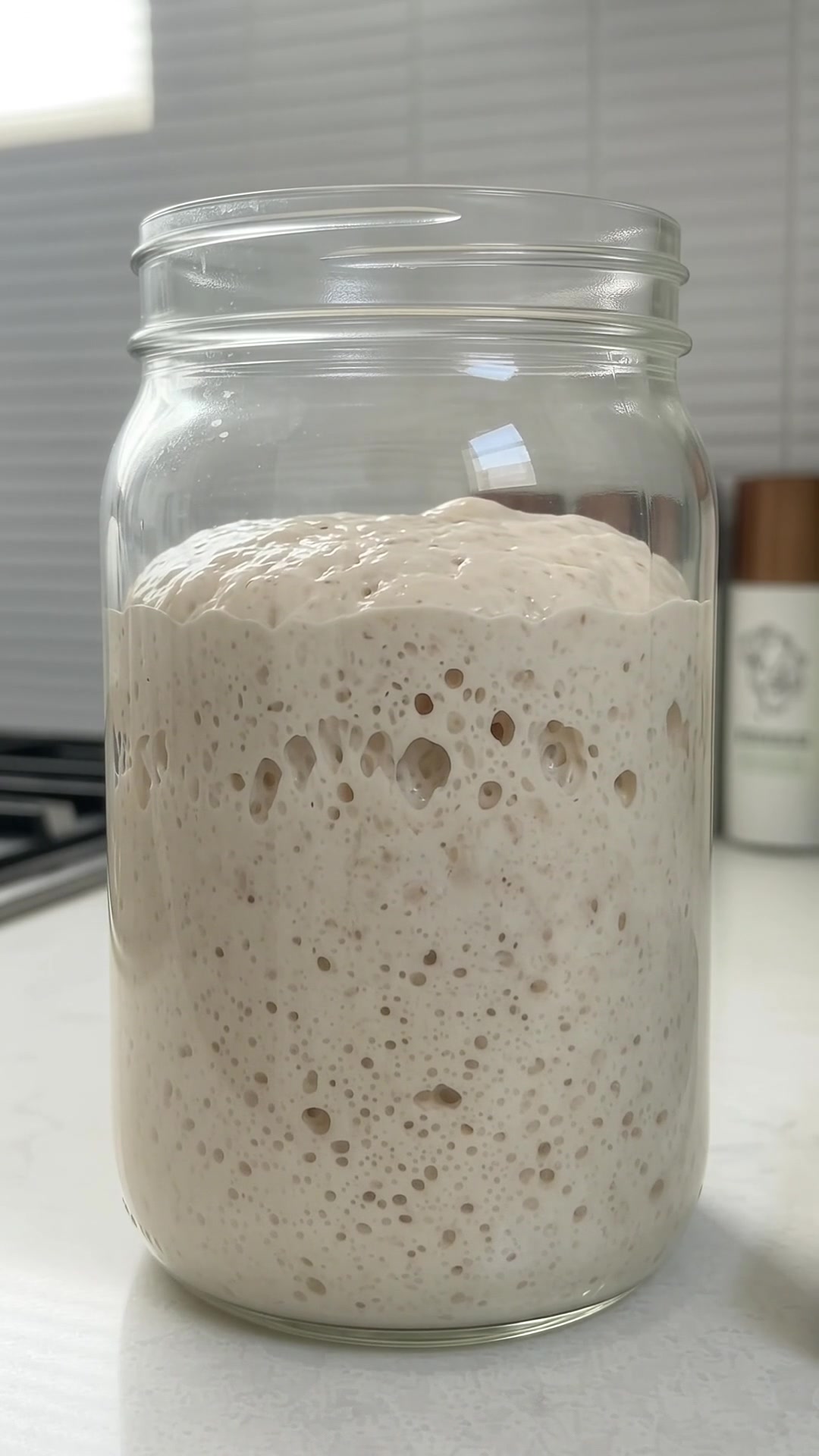
Feeding Sourdough Starter
A practical guide to feeding an established starter with one part starter, five parts flour, and four parts water by weight.
Feeding sourdough starter 1:5:4 gives a small amount of ripe culture a generous supply of fresh flour. The mixture is thicker than an equal-flour-and-water feeding, and its rise can be easier to track in a straight-sided jar. This method is for maintaining a healthy, established starter, not for creating a new culture from flour alone. Temperature and starter strength determine when it will be ready.
Why Use a 1:5:4 Feeding?
- A larger fresh-flour supply can lengthen the interval before peak.
- A small retained amount keeps the build manageable.
- The thicker mixture shows bubbles and expansion clearly.
- The formula scales easily when all ingredients are weighed.
Feeding at a Glance
Prep: 5 minutes
Fermentation: Often 8–14 hours around 74–78°F; allow more or less time as needed
Yield: About 3½ ounces starter
Equipment: A digital scale, clean jar, spoon, loose-fitting lid, and marker band
Ingredients and the Ratio
- 0.35 ounce ripe starter, about 10 grams
- 1.76 ounces bread or all-purpose flour, about 50 grams
- 1.41 ounces water, about 40 grams
Here the order is explicitly starter:flour:water. Some bakers write ratios in a different order, so always check the explanation. Use weight ounces, not fluid ounces. Cups and spoonfuls are too variable to preserve this ratio accurately, especially when the starter contains different amounts of trapped air.
The fresh water is 80% of the fresh flour’s weight. If the retained starter began at 100% hydration, this particular build ends near 82% overall hydration because that starter contributes some flour and water too. It is thicker than a liquid starter but not a dry dough.
Starter Tip: A larger feeding is useful only when the culture can ferment it. If your starter is weak or sluggish, first establish predictable rises with your usual maintenance feeding rather than repeatedly diluting it into large builds.
How to Feed Sourdough Starter 1:5:4
Step 1: Check the Culture
Start with a mature starter that has recently risen well and smells pleasantly fermented. Use it near peak or just after the top begins flattening. If the jar has been refrigerated, give it one or more room-temperature refreshments until its behavior is predictable before relying on an overnight build.
Inspect the entire jar before transferring a small amount. Do not try to rescue a visibly moldy culture by taking a spoonful from underneath. Pink or orange discoloration, visible mold, or a putrid smell means the whole culture should be discarded and the container cleaned. King Arthur’s starter FAQ explains these warning signs.
Step 2: Weigh and Mix
Place a clean jar on the scale and reset it to zero. Add 0.35 ounce starter, then 1.41 ounces water. Stir to loosen the starter. Add 1.76 ounces flour and mix thoroughly, scraping the bottom so no dry flour remains. The mixture should resemble a thick paste.
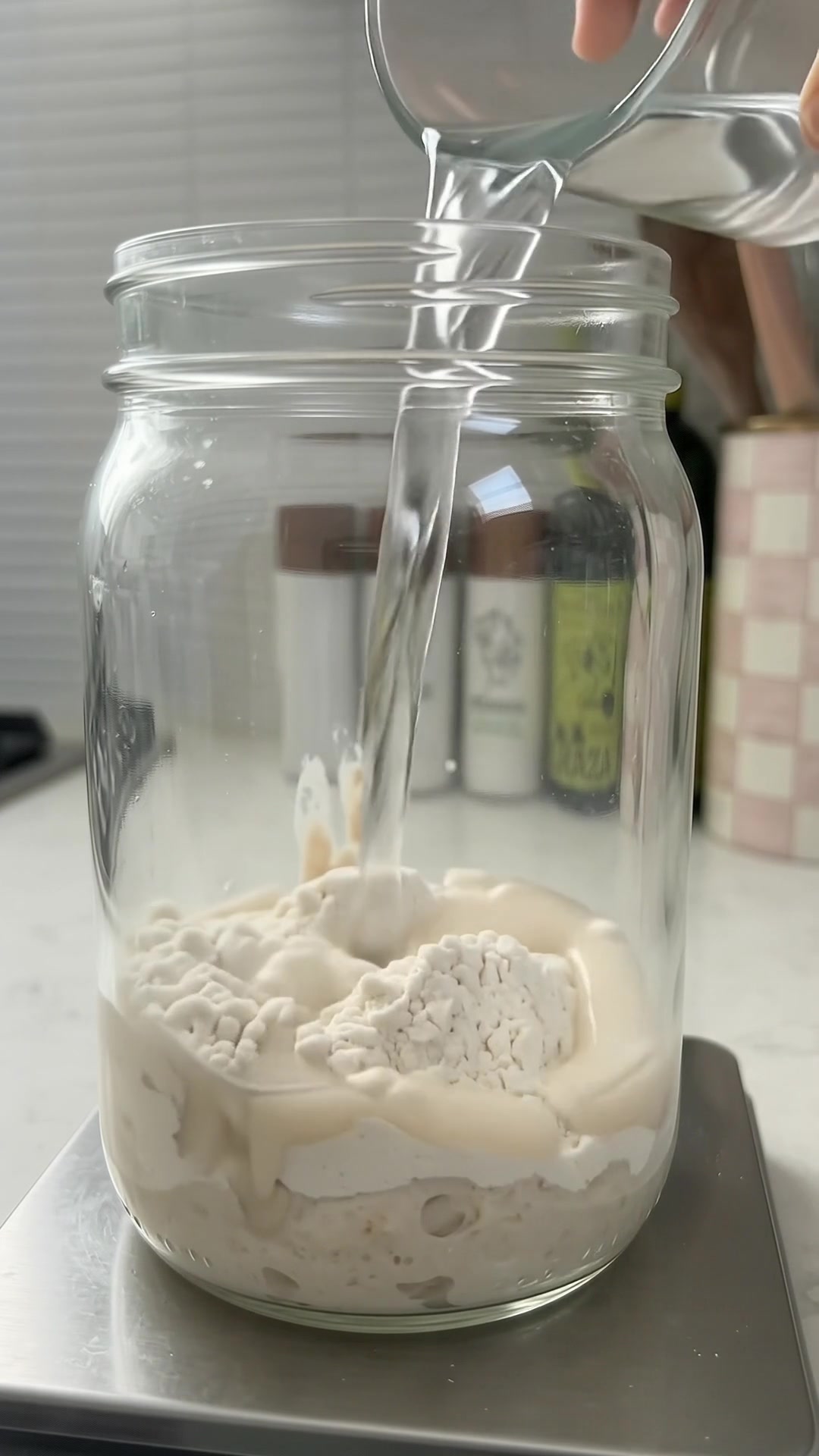
Use drinkable water that is cool to lukewarm, never hot. If your tap water is heavily chlorinated, try filtered water. Flour absorption varies, so the exact appearance may differ between brands; keep the weighed ratio consistent while learning how your particular flour behaves.
Step 3: Mark and Cover
Scrape down the sides and level the surface. Mark the starting height with a rubber band or washable marker. Choose a jar with room for the mixture to triple. Cover with a lid set loosely in place so it does not dry out but fermentation gas can escape.
Leave around 74–78°F, away from direct sun and hot appliances. Record the feeding time and temperature. The estimated 8–14-hour window is a planning aid, not a promise: a cool room, white flour, or a sluggish culture can extend it considerably.
Step 4: Recognize Ripeness
Watch for substantial expansion, bubbles along the sides, and a surface that domes and then begins to flatten. A strong starter often doubles or more, but texture and the pattern of change matter alongside height. Note when it peaks over several feedings to build a schedule that fits your kitchen.
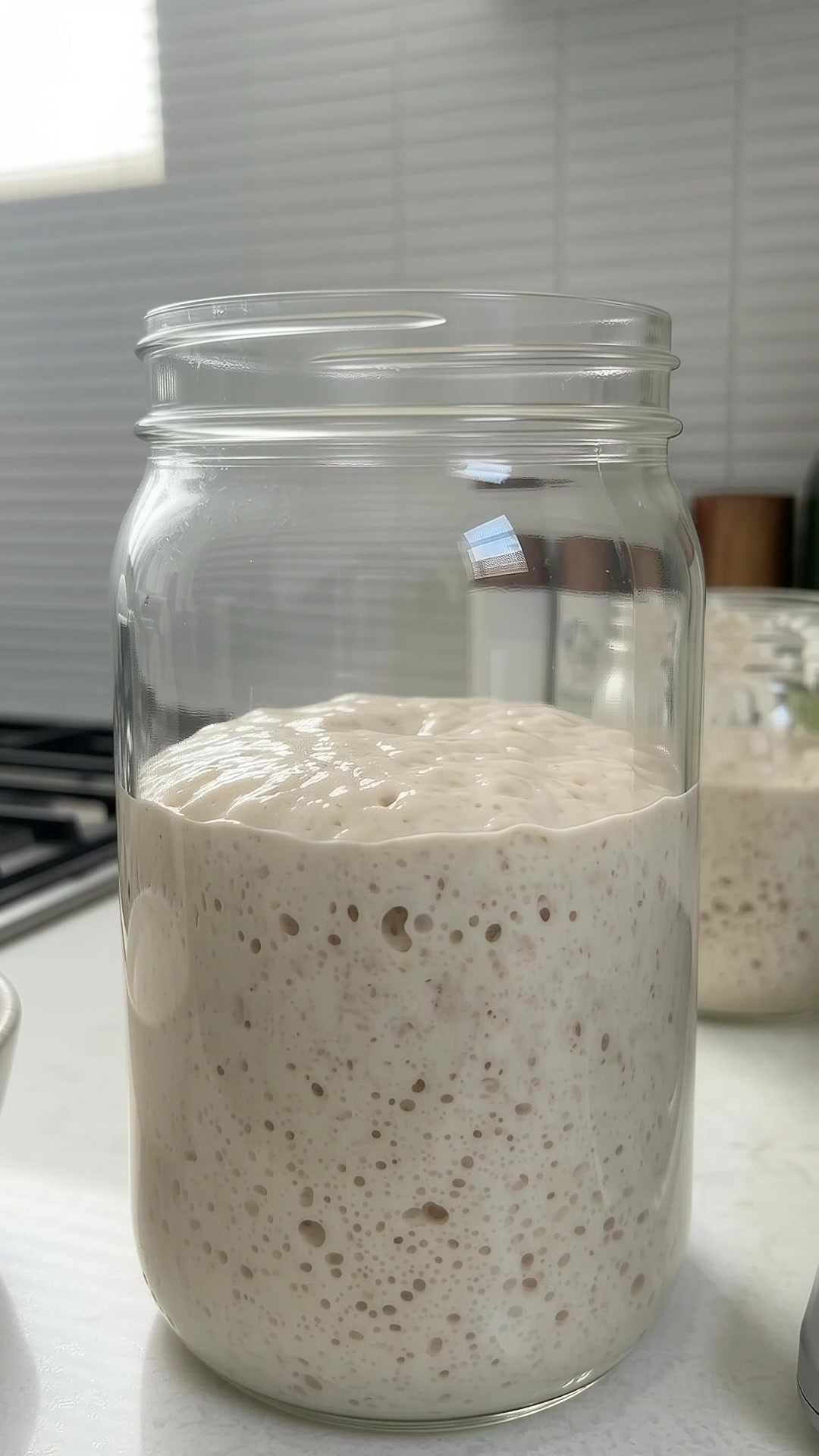
Use the starter when it is well expanded and still holding its structure. If it has collapsed substantially, refresh it again before a demanding bread dough. A float test alone is unreliable because flour type, hydration, and handling affect whether a spoonful floats.
Useful Tips and Adjustments
Keep a small notebook with flour type, room temperature, feeding time, and peak time. If it peaks too early, use a cooler location or mix later next time. If it is consistently too slow, a warmer room or a smaller feeding may fit better. Change one variable at a time. Substituting whole-grain flour can alter both absorption and fermentation speed.
Storage Guidance
For occasional baking, refrigerate an established starter after feeding and the first signs of activity, then refresh about weekly. Before baking, bring out a portion and feed at room temperature until vigorous. The longer it has been cold, the more refreshments it may need. Keep a separate small maintenance portion if you will use most of this build in a recipe.
Short FAQ
Can I double the batch?
Yes. Double every weight, including the retained starter, and use a larger jar.
Will this match a 100%-hydration recipe?
It is somewhat thicker. For recipes requiring precision, build a separate equal-flour-and-water levain rather than assuming they are identical.
Is a bigger ratio always better?
No. Choose a feeding your starter can finish predictably within your available time.