Authentic Italian Sfogliatelle Recipe (Crispy Ricotta Pastries)
Authentic Italian Sfogliatelle Recipe (Crispy Ricotta-Filled Pastries)
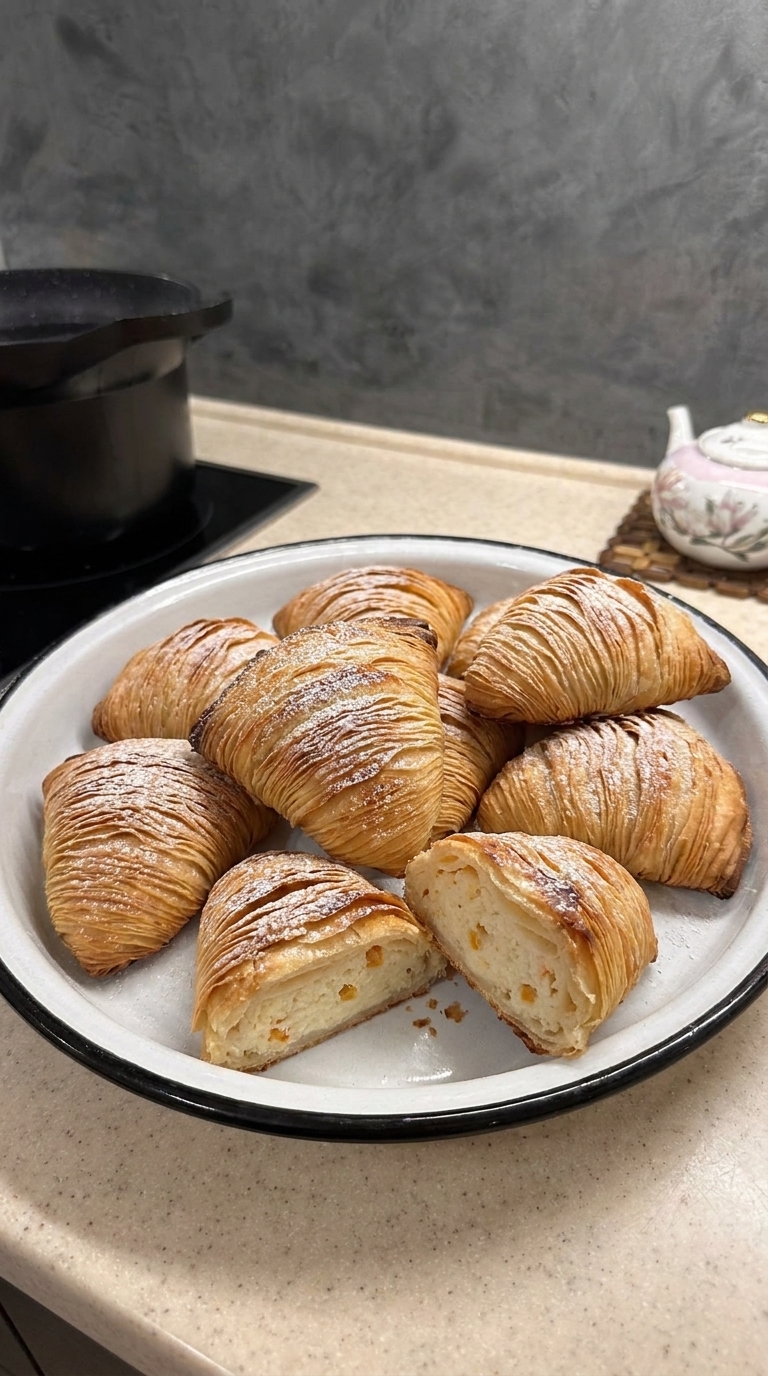
If you’ve ever visited an Italian bakery and admired those beautiful golden pastries shaped like seashells, you’ve probably seen Italian Sfogliatelle. These traditional Neapolitan pastries are famous for their incredibly thin, crispy layers and delicious sweet ricotta filling.
Sfogliatelle, pronounced sfoh-lyah-TEL-leh, are one of Italy’s most recognizable pastries. The name means “small, thin leaves,” referring to the delicate layers of dough that separate during baking.
Although they look complicated, making homemade sfogliatelle is possible with patience, careful rolling, and a little practice. The result is a bakery-style pastry with a crisp golden exterior and a soft, fragrant center.
What Are Italian Sfogliatelle?
Sfogliatelle originated in the Campania region of southern Italy and became especially popular in Naples.
There are two well-known varieties. Sfogliatelle Ricce have a crispy, layered shell, while Sfogliatelle Frolle use a smoother, shortcrust-style pastry.
This recipe focuses on Sfogliatelle Ricce, the beautiful shell-shaped version shown in the video.
The traditional filling combines ricotta cheese, cooked semolina, sugar, citrus zest, and sometimes candied orange peel.
Why You’ll Love This Recipe
- Incredible texture: Thin, flaky pastry layers surround a soft ricotta filling.
- Traditional Italian flavor: Orange zest, vanilla, and ricotta create a delicate sweetness.
- Beautiful presentation: The signature seashell shape makes these pastries impressive.
- Perfect with coffee: A wonderful breakfast pastry or afternoon dessert.
- Homemade bakery experience: A rewarding project for anyone who loves Italian baking.
Ingredients
Makes approximately 12 pastries.
For the Pastry Dough
- 3 cups (375 g) all-purpose flour
- ½ cup (125 g) fine semolina flour
- ¾ teaspoon salt
- 1 tablespoon honey
- ¾ cup plus 2 tablespoons (210 ml) warm water, approximately
- ¾ cup (150 g) softened lard or vegetable shortening, for laminating
For the Ricotta Filling
- 1 cup (240 ml) whole milk
- ¼ cup (45 g) fine semolina flour
- 1 cup (250 g) whole-milk ricotta cheese, well drained
- ½ cup (100 g) granulated sugar
- 1 large egg yolk
- 1 teaspoon vanilla extract
- 1 teaspoon finely grated orange zest
- ½ teaspoon finely grated lemon zest
- ¼ teaspoon ground cinnamon
- ¼ cup (40 g) finely chopped candied orange peel, optional
For Serving
- Powdered sugar, optional
How to Make Italian Sfogliatelle
Step 1: Prepare the Pastry Dough
In a large mixing bowl, combine the all-purpose flour, semolina flour, and salt.
Add the honey and gradually pour in the warm water, mixing until a firm dough forms.
Knead for approximately 10–15 minutes until smooth. The dough should be quite stiff rather than soft and sticky.
Wrap tightly in plastic wrap and let it rest at room temperature for 1 hour.
Step 2: Prepare the Ricotta Filling
In a small saucepan, bring the milk to a gentle simmer.
Slowly sprinkle in the semolina while whisking continuously to prevent lumps.
Cook over low heat for approximately 3–5 minutes, stirring until the mixture becomes very thick.
Remove from the heat and allow it to cool completely.
In a separate bowl, mix the drained ricotta, sugar, egg yolk, vanilla, orange zest, lemon zest, and cinnamon.
Stir in the cooled semolina mixture and optional candied orange peel.
Cover and refrigerate until ready to use. The filling should be thick enough to hold its shape.
Step 3: Roll the Dough Very Thin
Divide the rested dough into four portions.
Working with one portion at a time, roll it into a long, thin sheet using a pasta machine. Gradually reduce the thickness until the dough is nearly translucent, about 0.5 mm if your machine allows.
Keep the remaining dough covered to prevent drying.
Step 4: Create the Pastry Layers
Lightly stretch the thin dough sheet and spread a very thin, even layer of softened lard or shortening over its surface.
Starting from one short end, roll the dough tightly into a cylinder.
As you prepare additional sheets, attach each new sheet to the end of the previous one and continue rolling around the same cylinder.
Spread each sheet with fat before rolling.
The goal is to create one thick, tightly rolled cylinder with many delicate layers.
Wrap the finished roll tightly and refrigerate for at least 4 hours, preferably overnight.
Step 5: Cut the Dough
Remove the chilled pastry roll from the refrigerator.
Using a sharp knife, cut it into approximately 12 slices, each about ¾ inch thick.
You should see many thin, circular layers inside each slice.
Keep the pieces chilled while working.
Step 6: Shape the Sfogliatelle
Take one slice and hold it between your fingers.
Using your thumbs, gently press the center while pushing the circular layers outward, gradually forming a hollow cone or seashell shape.
Work carefully so the layers slide over one another without tearing.
The finished pastry should have a pointed end and a wider opening for the filling.
Step 7: Fill the Pastries
Spoon approximately 2 tablespoons of chilled ricotta filling into each pastry shell.
Gently bring the open edges together, pressing lightly to close the pastry without crushing its delicate layers.
Arrange the pastries on a parchment-lined baking sheet, leaving space between them.
Step 8: Bake Until Golden and Crispy
Preheat your oven to 400°F (200°C).
Bake the sfogliatelle for approximately 25–35 minutes, until the pastries are deeply golden and the layers have separated into a crisp, flaky shell.
If they begin browning too quickly, reduce the temperature slightly.
Step 9: Cool and Serve
Remove the pastries from the oven and transfer them to a wire rack.
Let them cool for approximately 10–15 minutes before serving.
Dust lightly with powdered sugar if desired.
Enjoy while still slightly warm for the best crispy texture.
Tips for Perfect Homemade Sfogliatelle
Roll the dough extremely thin. Thin dough is essential for creating the delicate layers that make sfogliatelle special.
Use a firm dough. A soft, sticky dough can be difficult to laminate and may lose its shape.
Don’t skip the resting time. Resting relaxes the gluten and makes the dough easier to stretch.
Keep the pastry roll chilled. Cold dough is easier to slice and shape without crushing the layers.
Drain the ricotta thoroughly. Excess moisture can make the filling watery and soften the pastry.
Use a thin layer of fat. Too much shortening can make the layers greasy rather than flaky.
Serve fresh. Sfogliatelle taste best on the day they’re baked, when the shells are at their crispiest.
Delicious Variations
Classic Orange Ricotta Sfogliatelle
Add a little extra finely chopped candied orange peel to the filling for a more traditional citrus flavor.
Lemon Ricotta Sfogliatelle
Increase the lemon zest and reduce the orange zest for a brighter flavor.
Chocolate Chip Sfogliatelle
Fold ¼ cup of mini chocolate chips into the cooled ricotta filling for a sweeter variation.
Cinnamon Ricotta Sfogliatelle
Increase the cinnamon slightly for a warmer, more aromatic filling.
How to Store Italian Sfogliatelle
Refrigerator
Store cooled pastries in an airtight container in the refrigerator for up to 3 days because the filling contains ricotta.
Freezer
For longer storage, freeze shaped, unbaked sfogliatelle on a baking sheet until firm, then transfer them to a freezer-safe container.
Freeze for up to 2 months.
Bake from frozen, allowing additional baking time until the shells are golden and the filling is fully cooked.
Reheating
Reheat baked sfogliatelle in a 350°F oven for approximately 8–12 minutes until warmed through and crisp again.
Avoid using the microwave because it can soften the pastry layers.
Frequently Asked Questions
What does sfogliatelle mean in Italian?
Sfogliatelle means “small, thin leaves,” referring to the many delicate layers of pastry dough.
Is sfogliatelle the same as a croissant?
No. Both are layered pastries, but croissants use yeast-leavened laminated dough, while traditional sfogliatelle use very thin sheets of unleavened dough rolled with fat.
Can I use puff pastry instead?
You can make a simplified ricotta-filled pastry using puff pastry, but it won’t have the distinctive tightly layered shell of traditional Sfogliatelle Ricce.
Why aren’t my sfogliatelle crispy?
The dough may have been rolled too thick, the layers may have stuck together, or the pastries may need more baking time.
Can I make sfogliatelle ahead of time?
Yes. You can prepare the dough roll and ricotta filling the day before, refrigerate them separately, and shape and bake the pastries the following day.
What is the traditional sfogliatelle filling?
A classic filling usually includes ricotta, cooked semolina, sugar, citrus zest, and sometimes candied orange peel.
Final Thoughts
Homemade Italian Sfogliatelle are a wonderful example of traditional Italian pastry-making. Their golden, delicate layers and creamy citrus-scented ricotta filling create a dessert that’s both beautiful and delicious.
Although they require more preparation than ordinary cookies or cakes, the finished pastries are worth the effort.
Serve them warm with espresso or cappuccino, and enjoy a little taste of a traditional Neapolitan bakery at home.
Have you ever tried homemade sfogliatelle? Share your favorite Italian pastry memories in the comments below!