
German Christmas Butter Cookies (Butterplätzchen)
German Christmas butter cookies, or Butterplätzchen, are the kind of simple holiday bake that makes a cookie platter feel complete. They have a delicate vanilla flavor, lightly golden edges, and a tender bite that works beautifully with a thin layer of icing. Stars, hearts, trees, and rounds all look lovely, so use the cutters you already own.
This recipe uses a chilled, easy-to-handle dough made with everyday ingredients. There is no baking powder: the cookies hold their shapes without puffing dramatically. A little lemon zest gives the butter a brighter flavor, but it is optional. Keep the decorating simple with white glaze, or set out sprinkles and let everyone finish a few cookies.
Recipe at a glance
Makes about 36 cookies with 2½-inch cutters. Prep: 30 minutes. Chill: at least 1 hour, plus 15 minutes after cutting. Bake: 9–12 minutes per batch. Allow additional cooling and icing-setting time. Heat the oven to 350°F and line two baking sheets with parchment paper.
Ingredients
- 1 cup unsalted butter, softened but cool
- ¾ cup granulated sugar
- 1 large egg, at room temperature
- 2 teaspoons vanilla extract
- 1 teaspoon finely grated lemon zest, optional
- 2¾ cups all-purpose flour, spooned into the cup and leveled, plus a little for rolling
- ½ teaspoon fine salt
For the icing
- 1½ cups powdered sugar, sifted
- 2–3 tablespoons milk or water
- ½ teaspoon vanilla extract
- Sprinkles or colored sugar, optional
Use real stick butter for the most dependable texture. Spreadable tub butter contains a different balance of water and fat and may cause spreading. The butter should give slightly when pressed, without looking shiny or oily. Measuring flour lightly matters, too; packing it into the measuring cup can turn a tender cookie dry.
Make and chill the dough
Beat the butter and granulated sugar in a large bowl for about 2 minutes, until smooth and slightly lighter. Scrape the bowl. Beat in the egg, vanilla, and optional zest until evenly combined. In another bowl, whisk the flour and salt. Add the dry mixture in two portions, mixing on low just until the dough comes together.
Gather the dough with your hands without kneading it repeatedly. Divide it in half, flatten each portion into a disk about 1 inch thick, and wrap tightly. Refrigerate for at least 1 hour, or up to 2 days. If chilled overnight, let the dough stand briefly at room temperature so it can roll without cracking.
Roll and cut the cookies
Work with one disk at a time, keeping the second refrigerated. Lightly flour the work surface and rolling pin, then roll the dough to an even ¼-inch thickness. Turn it occasionally to prevent sticking. Cut out shapes, dipping the cutter lightly in flour as needed, and lift them onto the lined baking sheets with a thin spatula. Leave about 1 inch between cookies.
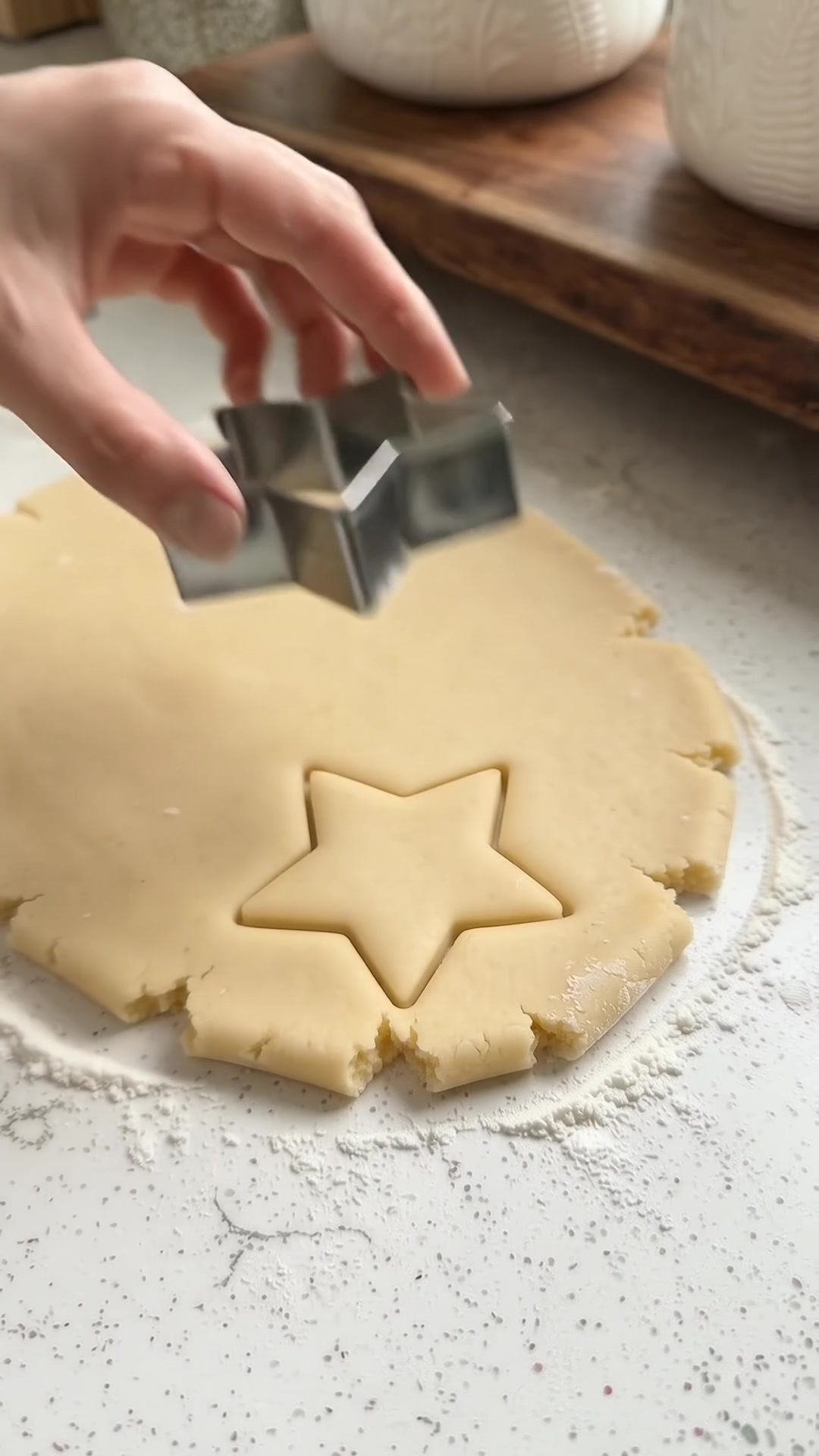
Gather the scraps and reroll once for the most tender results. If the dough softens or sticks, refrigerate it for 10–15 minutes instead of adding a lot of flour. Chill the filled baking sheet for 15 minutes while the oven finishes heating. This extra pause helps keep the star points and other details defined.
Bake and cool
Bake one sheet at a time on the center rack for 9–12 minutes, rotating the pan if your oven browns unevenly. Start checking at 9 minutes; small shapes may finish sooner. The edges should just begin turning pale gold while the tops remain light. Let cookies rest on the pan for 5 minutes, then transfer carefully to a wire rack.
Cool completely before icing. Warm cookies melt the glaze and make the decorations slide. Always let the baking sheet cool before loading the next batch, since hot metal starts melting the butter before the cookies reach the oven.
Ice and decorate
Stir the powdered sugar, vanilla, and 2 tablespoons milk or water into a smooth glaze. Add the remaining liquid a few drops at a time until thick but spreadable. Spoon a small amount onto each cookie and guide it toward the edges with the back of the spoon. Add sprinkles immediately.

Leave the decorated cookies in a single layer until the icing feels dry, usually 1–2 hours depending on its thickness and the room. A little extra powdered sugar thickens a runny glaze. For bright white icing, use water and omit the vanilla or use clear vanilla flavoring.
Helpful tips and storage
Keep similar sizes on each pan so they finish together. For extra crisp cookies, roll slightly thinner and shorten the bake as needed. For tender centers, keep the full ¼-inch thickness and avoid deep browning. A pinch of cinnamon can replace the lemon zest for a warmer flavor.
Store plain cookies airtight at cool room temperature for up to 1 week. Cookies glazed with water keep about 5 days; refrigerate milk-glazed cookies for up to 5 days. Separate decorated layers with parchment once fully set. Freeze plain baked cookies for up to 2 months, then thaw wrapped before decorating. Wrapped dough disks also freeze for 2 months; thaw overnight in the refrigerator.
Short FAQ
Why did my cookies spread?
The dough or baking sheet may have been too warm. Chill the cut shapes and use cool pans. Butter should be softened, never melted.
Can I make the dough ahead?
Yes. Refrigerate tightly wrapped dough for 2 days, then let it soften just enough to roll. Keep unused portions cold.
Do these need icing?
No. They are delicious plain. For a quicker finish, sprinkle with a little colored sugar before baking instead.