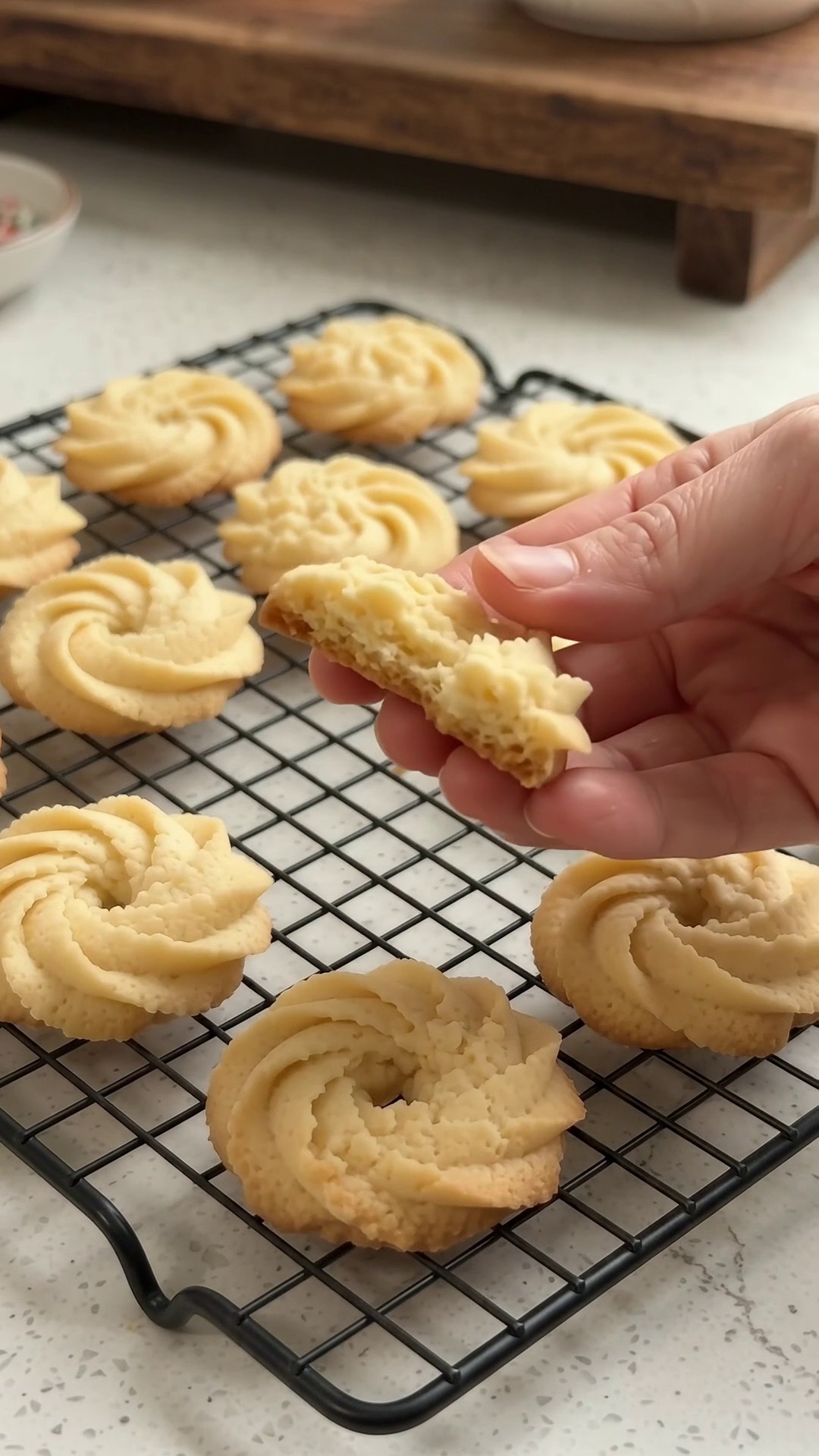
Old-Fashioned German Spritz Cookies (Spritzgebäck)
Buttery, tender, and shaped into pretty little rosettes, German Spritz Cookies are a welcome sight on a Christmas cookie tray. Their crisp edges and delicate vanilla-almond flavor make them easy to love, while a traditional cookie press gives each batch its familiar ridges without rolling or cutting dough.
This version uses familiar pantry ingredients and a traditional cookie press for neat, evenly baked shapes.
What Are German Spritz Cookies?
Spritzgebäck are small German butter cookies formed by pressing soft dough through a patterned disk. The name is related to the German verb spritzen, meaning to squirt or press out. In Germany, these cookies are part of the Advent and Christmas baking season; many families make them alongside other small cookies for holiday plates and tins. Older recipes often shaped the dough with a meat grinder fitted with a cookie plate, while a hand-cranked or trigger-style cookie press makes the same ridged shapes at home.
Some versions add nuts or chocolate; this simple butter dough gets its classic flavor from vanilla and a hint of almond.
Ingredients for German Spritz Cookies
- 2¼ cups all-purpose flour, spooned and leveled
- ½ teaspoon baking powder
- ¼ teaspoon fine salt
- 1 cup (2 sticks) unsalted butter, softened but cool
- ⅔ cup granulated sugar
- 1 large egg, at room temperature
- 1 teaspoon vanilla extract
- ¼ teaspoon almond extract (optional)
- Colored sanding sugar or sprinkles, optional
How to Make Old-Fashioned Spritzgebäck
Prep time: 25 minutes. Bake time: 8–10 minutes per pan. Yield: about 36 cookies.
- Heat the oven. Preheat to 350°F. Set a rack in the center. Use a clean, cool, ungreased metal baking sheet; leave off parchment and silicone mats so the dough can grip the pan as it is pressed.
- Mix the dry ingredients. In a medium bowl, whisk together the flour, baking powder, and salt until evenly combined.
- Cream butter and sugar. In a large bowl, beat the softened butter and granulated sugar on medium speed for about 2 minutes, until creamy and smooth. Avoid whipping until very fluffy, which can encourage spreading.
- Add egg and flavorings. Beat in the egg, vanilla, and almond extract until the mixture looks smooth. Scrape down the bowl once.
- Finish the dough. Add the flour mixture in two additions, mixing on low just until no dry streaks remain. The dough should be soft and pliable, not sticky or crumbly. Do not chill it before pressing.
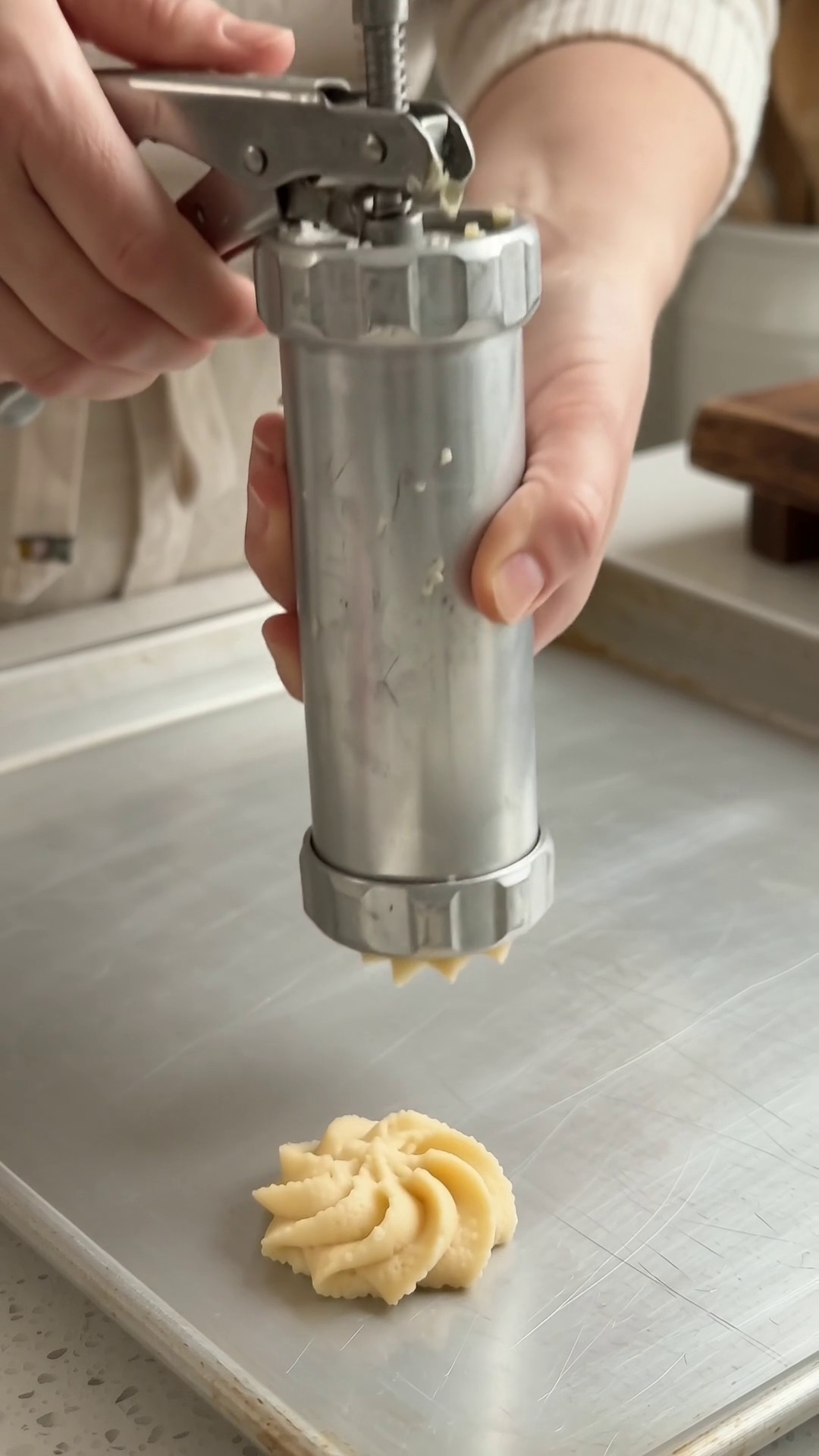
- Load the cookie press. Fit the press with a star or rosette disk, fill the barrel without packing the dough too tightly, and close it according to the manufacturer’s directions. Keep the remaining dough covered while you work.
- Press the shapes. Hold the press upright with its disk touching the cool baking sheet. Press the trigger once, then lift straight up. Leave about 1 inch between cookies. If a shape stays on the disk, wipe it away and try again on a clean, cool spot.
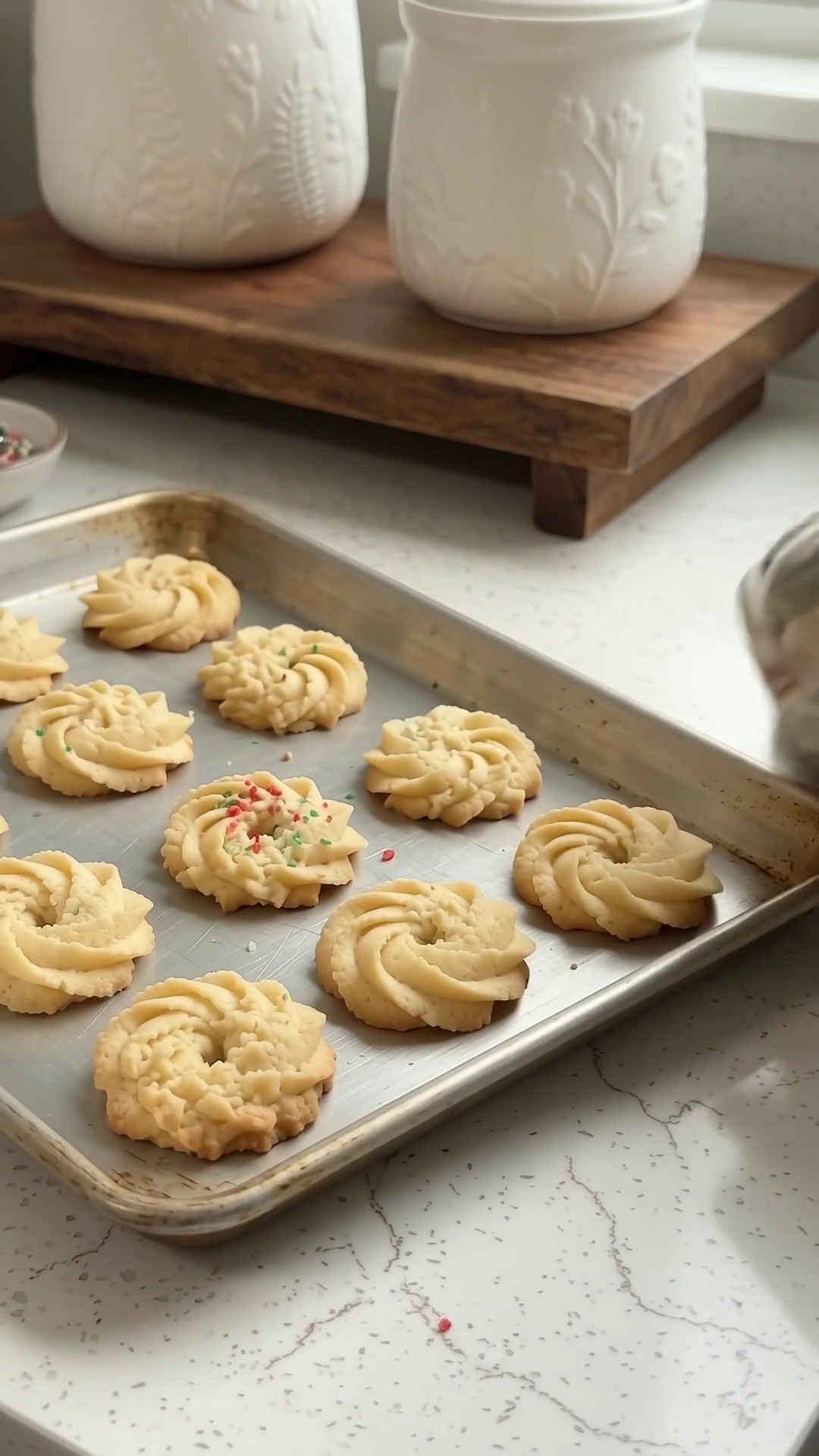
- Decorate and bake. Add sanding sugar or sprinkles now, if desired. Bake one pan at a time for 8–10 minutes, until the cookies look set and the bottoms and outer edges are only lightly golden. Keep the tops pale for a tender, buttery cookie.
- Cool. Let the cookies sit on the pan for 2 minutes, then transfer them carefully to a wire rack. Cool the baking sheet completely before pressing the next batch.
Cookie Press Tips and Common Mistakes
- Press on a cool, bare metal sheet; parchment, silicone, and grease can prevent the dough from releasing cleanly.
- Keep butter cool-soft, not melty. If warm dough spreads, chill it briefly, then let it become pliable again.
- Too much flour makes dough stiff. Spoon and level the flour, and avoid adding liquid unless it is truly crumbly.
- Cool the baking sheet between batches and bake one pan at a time for even results.
How to Store and Freeze Spritz Cookies
Once completely cool, store the cookies in an airtight container at room temperature for up to 1 week. Separate layers with parchment to protect the ridged designs. To freeze baked cookies, layer them in a freezer-safe container and freeze for up to 2 months; thaw uncovered at room temperature so condensation does not soften them. You can also freeze the unpressed dough tightly wrapped for up to 2 months. Thaw it overnight in the refrigerator, then let it soften until pressable before loading the cookie press.
Frequently Asked Questions
Why won’t my spritz dough stick to the baking sheet?
Use a cool, clean, ungreased metal pan. The dough must grip the surface before you lift the press.
Can I use parchment paper?
Skip parchment and silicone; their slick surfaces can pull the dough back up with the press.
Can I make Spritzgebäck without a cookie press?
A sturdy piping bag with a large star tip can make ridged strips, but the firm dough takes more pressure. A cookie press gives the most consistent shapes.
Can I make the dough ahead?
Yes. Wrap and refrigerate it for up to 2 days or freeze it for up to 2 months. Before pressing, let chilled dough soften at room temperature until pliable; very cold dough may break or resist the press.
Serve these buttery cookies with coffee or cocoa, or tuck them into a holiday tin.