Kielbasa and Sauerkraut
Browned smoked kielbasa, tender onions, and tangy sauerkraut come together in one skillet for a hearty, straightforward supper.
This kielbasa and sauerkraut recipe relies on a simple sequence: brown the sausage, soften the onions, then simmer the sauerkraut with a little broth. Each stage gives the finished skillet more character than simply warming everything at once. The sauerkraut stays pleasantly tangy, while the browned sausage and butter add richness. Caraway and brown sugar are optional, so you can keep the flavor direct or soften the sharpness slightly. Add mashed potatoes, boiled potatoes, or rye bread at the table to make a complete meal.

Why You’ll Love This Recipe
- Fully cooked smoked sausage makes preparation straightforward.
- One skillet handles browning, softening, and simmering.
- Onions add sweetness without requiring a long cook.
- Optional caraway and brown sugar let you tune the finish.
Recipe Details
Serves 4. Prep: about 10 minutes. Cook: about 25–30 minutes. Total: about 35–40 minutes. Use a large skillet with a lid. Cook over medium heat for browning, then reduce to a gentle simmer.
Ingredients
- 1 pound fully cooked smoked Polish kielbasa, sliced ½ inch thick
- 1 pound sauerkraut, drained
- 1 large yellow onion, sliced
- 2 tablespoons butter
- ½ teaspoon black pepper
- ½ teaspoon caraway seeds, optional
- ½ cup chicken broth or water
- 1 teaspoon brown sugar, optional
Read the sausage package and choose fully cooked smoked kielbasa for this method. A raw fresh sausage needs a different cooking approach. Drain the sauerkraut so the measured broth controls the moisture in the pan. Taste a little kraut before cooking; brands vary considerably in saltiness and acidity. The recipe does not call for additional salt, and the sausage and sauerkraut may supply plenty.
Numbered Instructions
- Prepare the ingredients. Slice the kielbasa into ½-inch rounds and the onion into even strips. Drain the sauerkraut, loosening any tightly packed strands. Have the broth and optional seasonings ready before heating the skillet.
- Brown the kielbasa. Melt the butter in a large skillet over medium heat. Add the sausage in a fairly even layer and cook for 4–5 minutes, turning so the cut sides develop golden brown spots. Work gently so the slices hold their shape.

- Soften the onion. Add the sliced onion to the sausage and cook about 5 minutes, stirring regularly. The onion should soften and begin to look translucent. Lower the heat if the butter or browned bits are darkening too quickly.
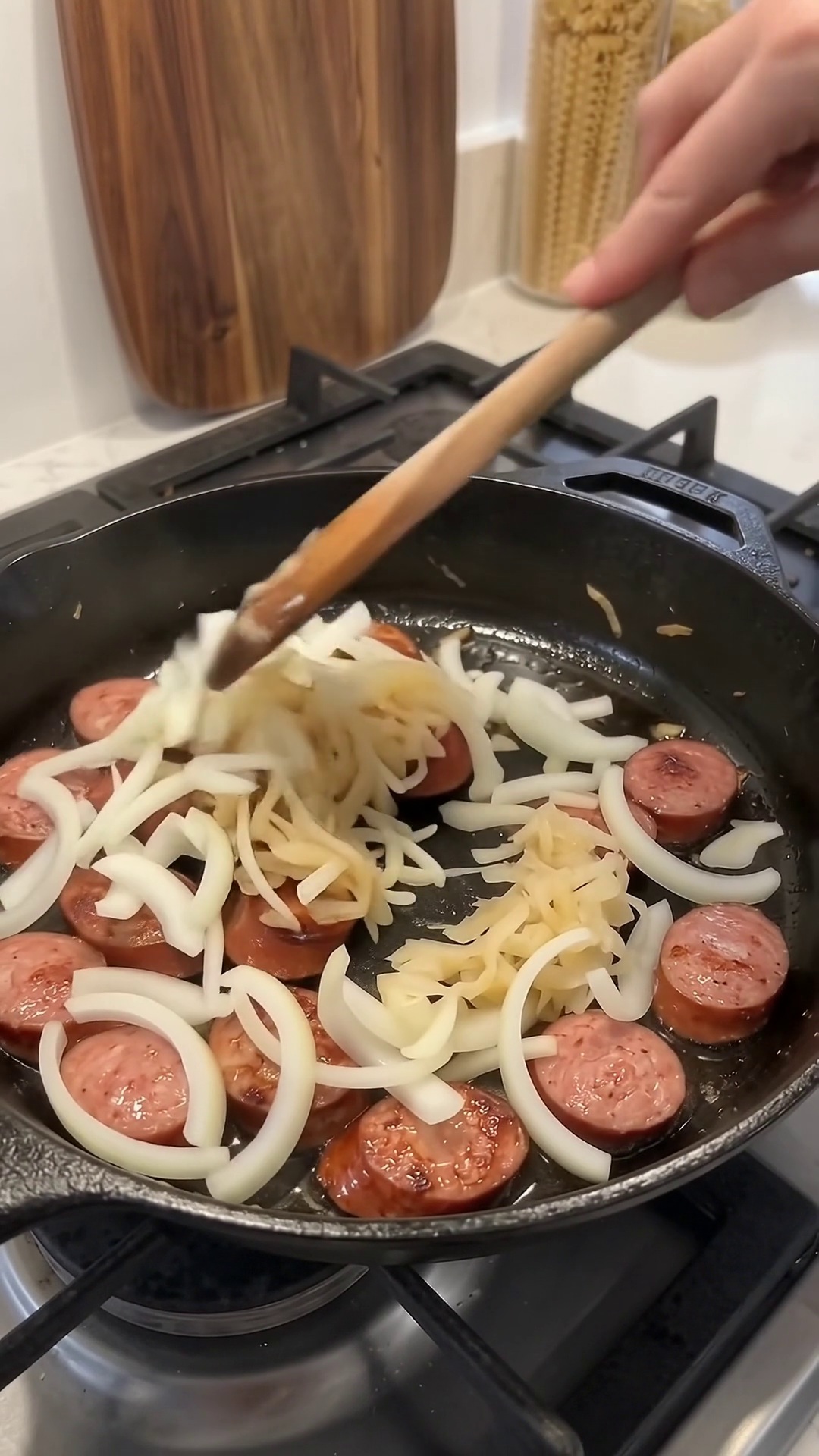
- Add the sauerkraut. Stir in the drained sauerkraut, black pepper, and optional caraway. Lift and turn the mixture to distribute the onion and sausage through the cabbage rather than leaving the kraut in one compact mound.
- Simmer gently. Pour in the ½ cup broth or water and add the optional brown sugar. Cover, reduce the heat, and simmer for 10–15 minutes, until the onions and sauerkraut are tender and everything is hot. Stir once or twice and check that the pan is not drying out.
- Reduce and serve. Uncover and cook another 2–3 minutes to evaporate excess liquid. Leave enough moisture to keep the kraut glossy. Taste before making any further seasoning decisions, then serve warm with your chosen side.
Helpful Tips
Use the sausage’s cut surfaces to build flavor. If the pan is crowded into a deep pile, rearrange the slices so more of them contact the skillet. You do not need a hard crust on every round; a few nicely browned surfaces bring contrast to the softer sauerkraut.
Keep the simmer gentle after adding broth. A vigorous boil can evaporate the small amount of liquid before the onion is fully tender. At the end, uncovering gives you control: a wetter kraut can reduce a little longer, while a nearly dry skillet should come off the heat sooner.
Variations and Serving Ideas
Use water for a simpler pan liquid or chicken broth for a more savory background. Both use the same ½ cup amount. Caraway adds a distinctive aromatic note; leave it out if you prefer the flavor of the sausage and cabbage alone. The optional teaspoon of brown sugar softens the impression of acidity without turning the dish sweet. For serving, choose a mild potato side that catches the juices or rye bread for a more compact supper.
Storage and Reheating
Cool leftovers promptly in shallow containers and refrigerate within 2 hours. Keep covered for 3–4 days and reheat to 165°F. A covered skillet over medium-low heat works well; stir occasionally and add a small splash of water only if needed to prevent sticking. You can freeze portions for up to 2 months. Thaw overnight in the refrigerator, then reheat gently so the sausage does not become dry at the edges.
Frequently Asked Questions
Do I rinse the sauerkraut?
Draining is the default here. If your kraut tastes unusually sharp or salty, a brief rinse is an optional adjustment, but it will mellow its flavor. Drain well afterward.
Can I use raw kielbasa?
This recipe is written for fully cooked smoked kielbasa. Do not substitute raw sausage and assume the same short browning and simmering sequence will be sufficient.
Why add the onion before the sauerkraut?
Giving it its own few minutes in the skillet helps it soften before the wetter, acidic sauerkraut goes in.