Slow Cooker Meatloaf and Baby Potatoes
Slow Cooker Meatloaf and Baby Potatoes
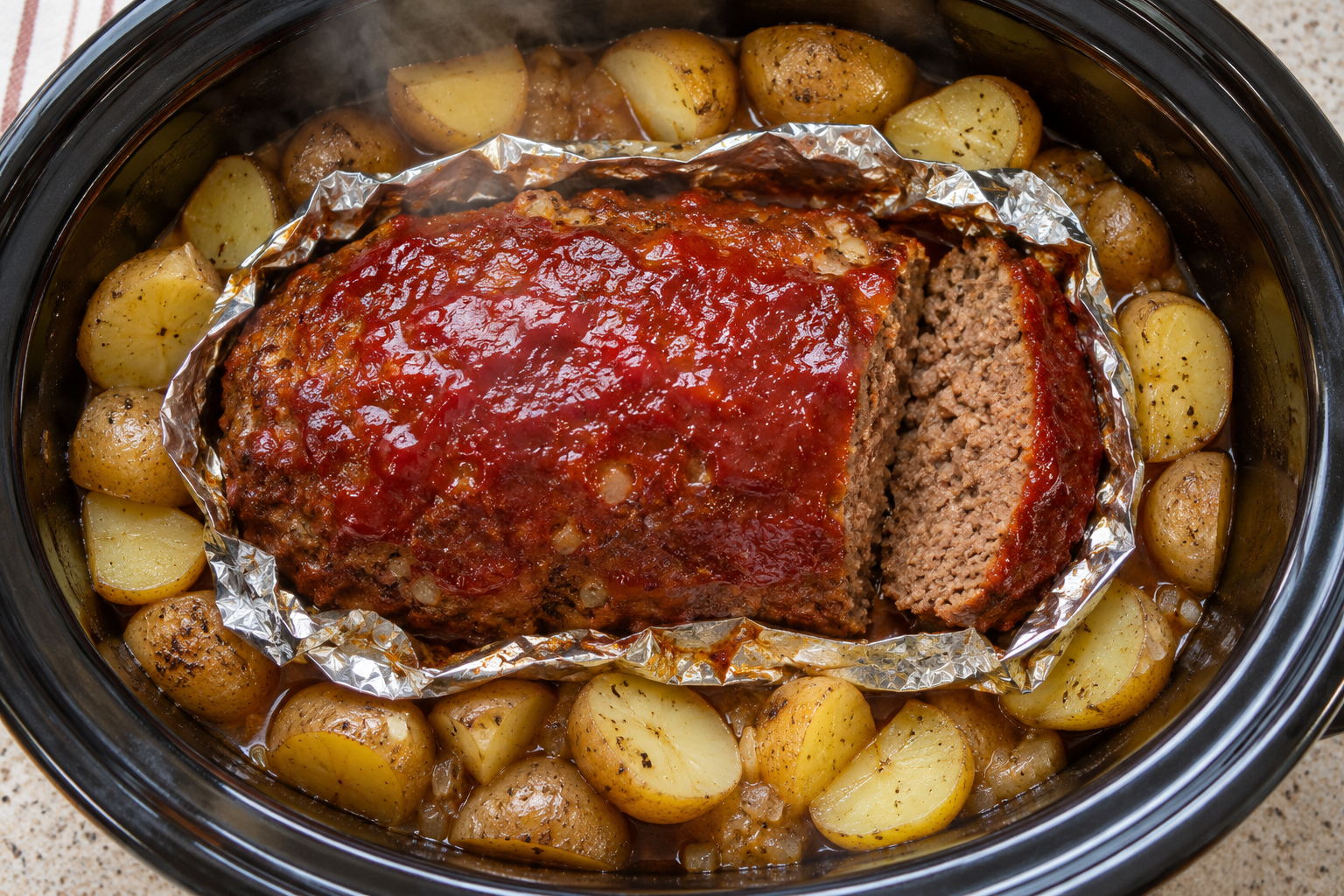
A glazed meatloaf and baby potatoes share the slow cooker for a hearty family-style dinner.
This meatloaf and baby potatoes recipe is built around familiar ingredients and a straightforward sequence: prepare the food, arrange it in the cooker, and finish by checking texture and doneness. It is a practical starting point for a home-cooked meal when you would rather spend less time standing at the stove.
Why You’ll Love This Recipe
- Familiar ingredients that are easy to organize before you begin.
- A clear cooking sequence with specific doneness checks.
- Flexible serving ideas so the dish can fit your family’s supper.
- A slow cooker method that leaves you free to prepare the rest of the meal.
Recipe Details
Servings: 6. Estimated timing: 20 minutes prep; approximately 5–6 hours LOW. Method: slow cooking. Course: Main course.
Development note: this recipe has not been kitchen-tested. Cooking times are estimates, not a guarantee of doneness. Test the method, quantities, and serving yield in your appliance before publishing this draft.
Ingredients
- 1 1/2 pounds ground beef
- 1/2 cup plain breadcrumbs
- 1 large egg
- 1/4 cup milk
- 1/2 small onion, finely chopped
- 1 tablespoon Worcestershire sauce
- 1 teaspoon garlic powder
- 1/2 teaspoon salt
- 1/4 teaspoon black pepper
- 1 1/2 pounds baby potatoes, halved
- 1/4 cup low-sodium beef broth
- 1/3 cup ketchup
- 1 tablespoon brown sugar
- 1 teaspoon mustard
Ingredient Notes
A meatloaf should hold together without being packed into a dense brick. Mix gently and shape it so the center has a consistent thickness. The potatoes need their own attention: they may not finish at exactly the same moment as the beef. Checking both components lets you remove the loaf when it is ready rather than drying it out while waiting for a stubborn potato.
How to Make Slow Cooker Meatloaf and Baby Potatoes
Step 1
Combine beef, breadcrumbs, egg, milk, onion, Worcestershire sauce, garlic powder, salt, and pepper gently. Shape into a compact oval loaf.
Step 2
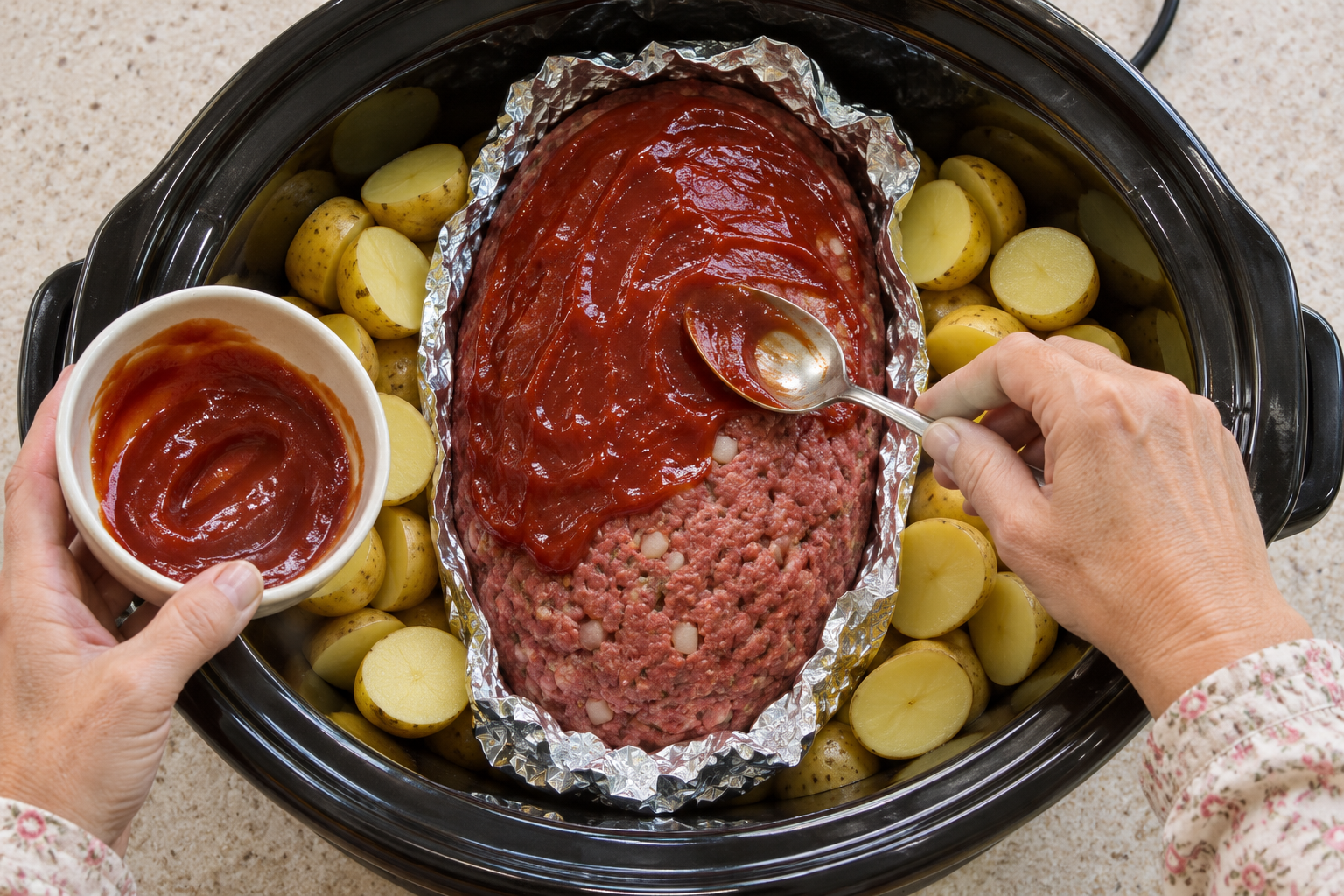
Place potato halves and broth in a 6-quart slow cooker. Make an open foil cradle with handles for the loaf; place the loaf centrally among the potatoes, leaving room for heat circulation.
Step 3
Mix ketchup, sugar, and mustard. Spread over the loaf. Cover and cook on LOW for approximately 5–6 hours.
Step 4
Check that the center of the meatloaf reaches 160°F and potatoes are tender. If potatoes need longer, remove and cover the cooked meatloaf while they finish.
Step 5
Using sturdy utensils and the foil handles for support, carefully lift out the meatloaf. Rest 10 minutes, slice, and serve with potatoes.
Tips for a Better Result
Measure and arrange the ingredients before starting. This is especially helpful when meat must move directly from a hot skillet into the slow cooker; you should not pause halfway through that process to prepare the rest of the ingredients.
Use the cooker size specified in the method when one is given, and follow your appliance’s fill guidance. A deep, crowded batch behaves differently from a shallow one. Doubling the ingredients does not mean you can keep the original cooking time.
Keep the lid closed between checks. Begin checking near the early end of the estimated range, then use the food’s actual temperature and texture to decide whether it needs longer. Avoid repeatedly opening the cooker simply to stir or look.
Do not pack the beef tightly. Drain excess fat carefully before serving.
Variations and Serving Suggestions
Mashed potatoes, buttered noodles, or rice give the cooking juices somewhere to go. Add green beans, carrots, or a fresh salad for contrast. If you want a different herb profile, change one seasoning at a time during testing so you can tell which adjustment actually improved the finished supper.
Storage and Reheating
Refrigerate leftovers within two hours in shallow covered containers rather than leaving a large, warm batch on the counter. Use refrigerated leftovers within three to four days. Reheat leftovers to 165°F, adding a small splash of water or broth when appropriate to prevent the sauce from drying out.
Frequently Asked Questions
Can I prepare this ahead?
Measure dry ingredients and prepare vegetables ahead, storing them appropriately in the refrigerator. Keep raw meat separate from ready-to-eat food. Do not brown meat partially, refrigerate it, and plan to finish cooking it later; complete the cooking sequence without that interruption.
Can I double the recipe?
Only if the larger batch fits your slow cooker’s recommended capacity. A fuller cooker can change heating and cooking behavior. Check several portions for doneness, and do not assume that doubling the ingredients either doubles the time or leaves it unchanged.
How do I know it is ready?
Use the temperature and texture checks in the method. Time alone cannot account for differences in food thickness, starting temperature, cooker size, or appliance performance. Check the thickest or slowest-cooking portions, not just the most accessible piece near the edge.
Can I use HIGH instead of LOW?
Use the setting listed in this draft. If an alternative HIGH time is not given, it has not been established for this formulation. A higher setting is not simply a precise mathematical shortcut; test the change and watch texture as well as doneness.
Bring It to the Table
Serve meatloaf and baby potatoes while warm, and let everyone choose their sides and finishing touches. The goal is a comfortable meal with clear instructions, sensible portions, and a method you can repeat. After your first test, note any adjustments to seasoning, timing, or liquid so the next batch reflects what worked in your kitchen.