Italian Ciabatta Bread
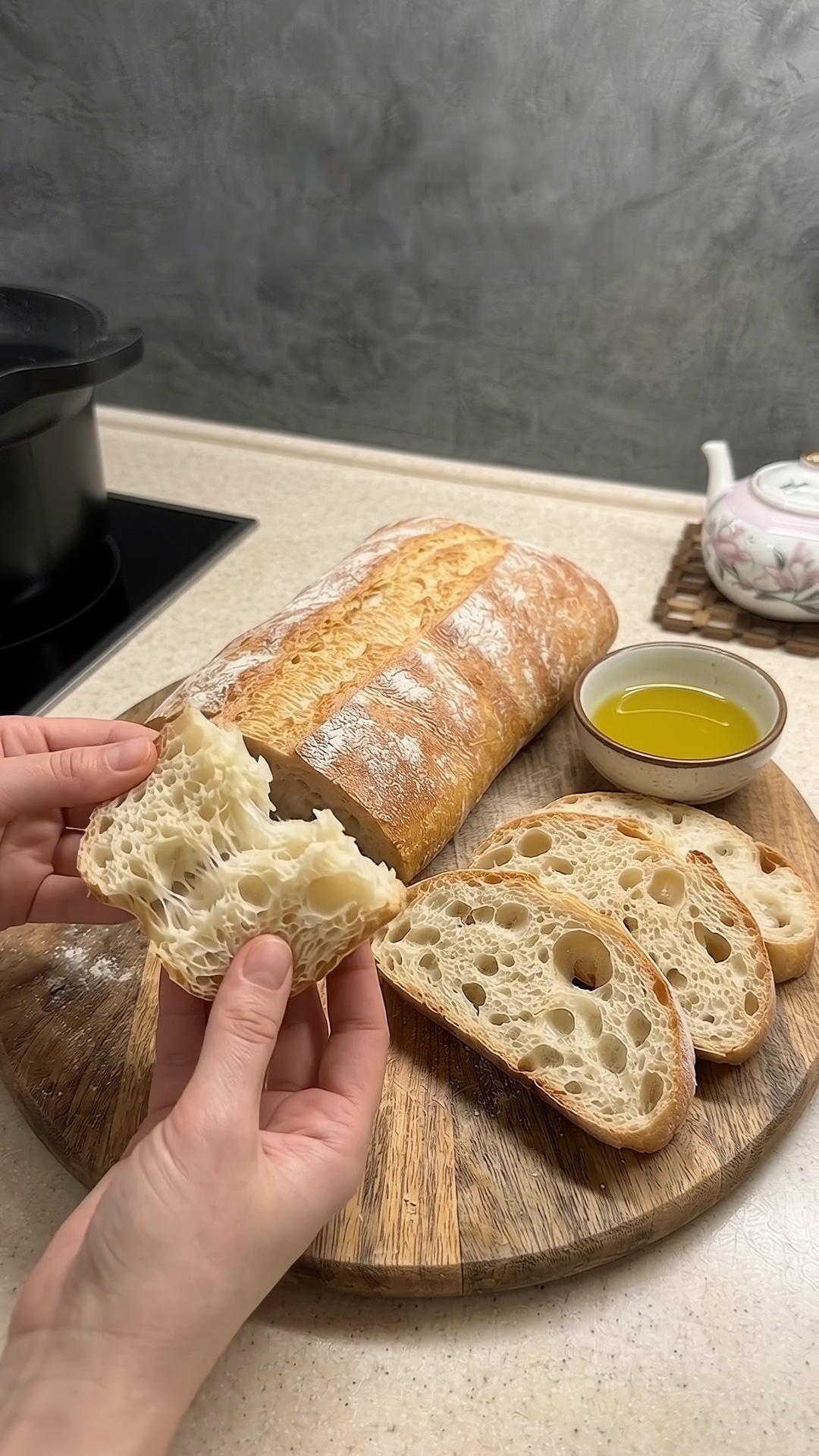
Italian ciabatta bread has a crisp crust and an airy interior with irregular holes. The dough starts out sticky and loose, which can feel unfamiliar if you usually bake sandwich bread. A few sets of folds give it enough strength to hold together, and a bench scraper makes it easier to divide into four small loaves. The finished bread is good for sandwiches, for dipping in olive oil, or for tearing at the table.
Plan to start several hours before you want to serve it. The dough takes only about 25 minutes of active work, with most of the time spent resting or rising. Set a timer between folds, then use the dough’s appearance to tell when it is ready to divide. How quickly the bowl fills depends in part on how warm your kitchen is.
Ingredients for Italian ciabatta bread
Bread flour gives this wet dough enough strength to stretch and hold the bubbles that form as it rises. Measure 4 cups, with extra flour set aside for the work surface and the top of the dough. Spoon the flour into the measuring cup and level it rather than pressing it down. A heavy measure of flour changes how loose the dough feels and makes the folds harder.
Use 1⅔ cups room-temperature water and 1 teaspoon instant yeast. The yeast goes straight into the flour and water. Fine salt seasons the bread and goes in after the first 20-minute rest. A tablespoon of olive oil is for the bowl, where a light coating helps the dough release when you turn it out.
How to make ciabatta
1. Mix and rest the dough
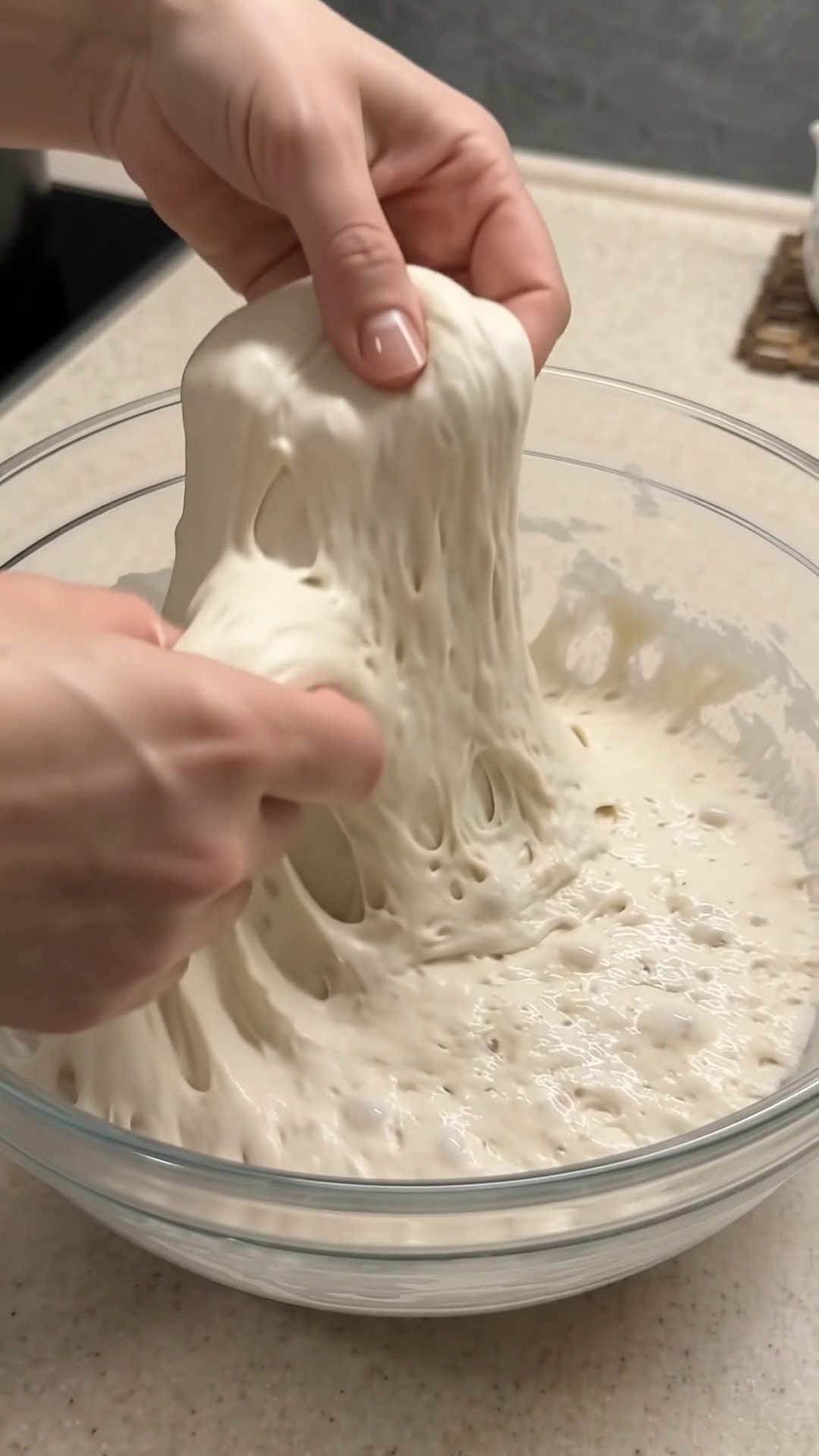
Stir together the flour, water, and yeast until you see no dry patches, scraping the bottom of the bowl if needed. Leave the dough for 20 minutes, then mix in the salt. The dough will be very sticky. Wet your hands before handling it so you can work without adding flour. At this stage, a quick mix is enough to bring the ingredients together.
2. Fold the dough and let it rise
Move the dough to a lightly oiled bowl. With wet hands, take hold of one side, lift it gently until it stretches, and fold it over the middle. Turn the bowl and repeat from the other three sides. Do three more sets of folds at 30-minute intervals. The dough should gradually feel stronger and hold its shape longer after each set.
After the last fold, cover the bowl and leave the dough until it is visibly bubbly and nearly doubled. Allow about 1 to 2 more hours, using the dough as your guide. A cool kitchen can put you toward the longer end. Once the surface has puffed and the dough jiggles when the bowl moves, get your scraper and parchment ready.
3. Divide the loaves and proof
Flour the counter generously and ease the dough out of the bowl. Dust the top as well. Use a bench scraper to divide it into four rectangles, then lift each piece onto parchment. The pieces can be a little uneven. Handle them gently and keep the bubbles you built during the rise. Leave the loaves to rest for 30 to 45 minutes.
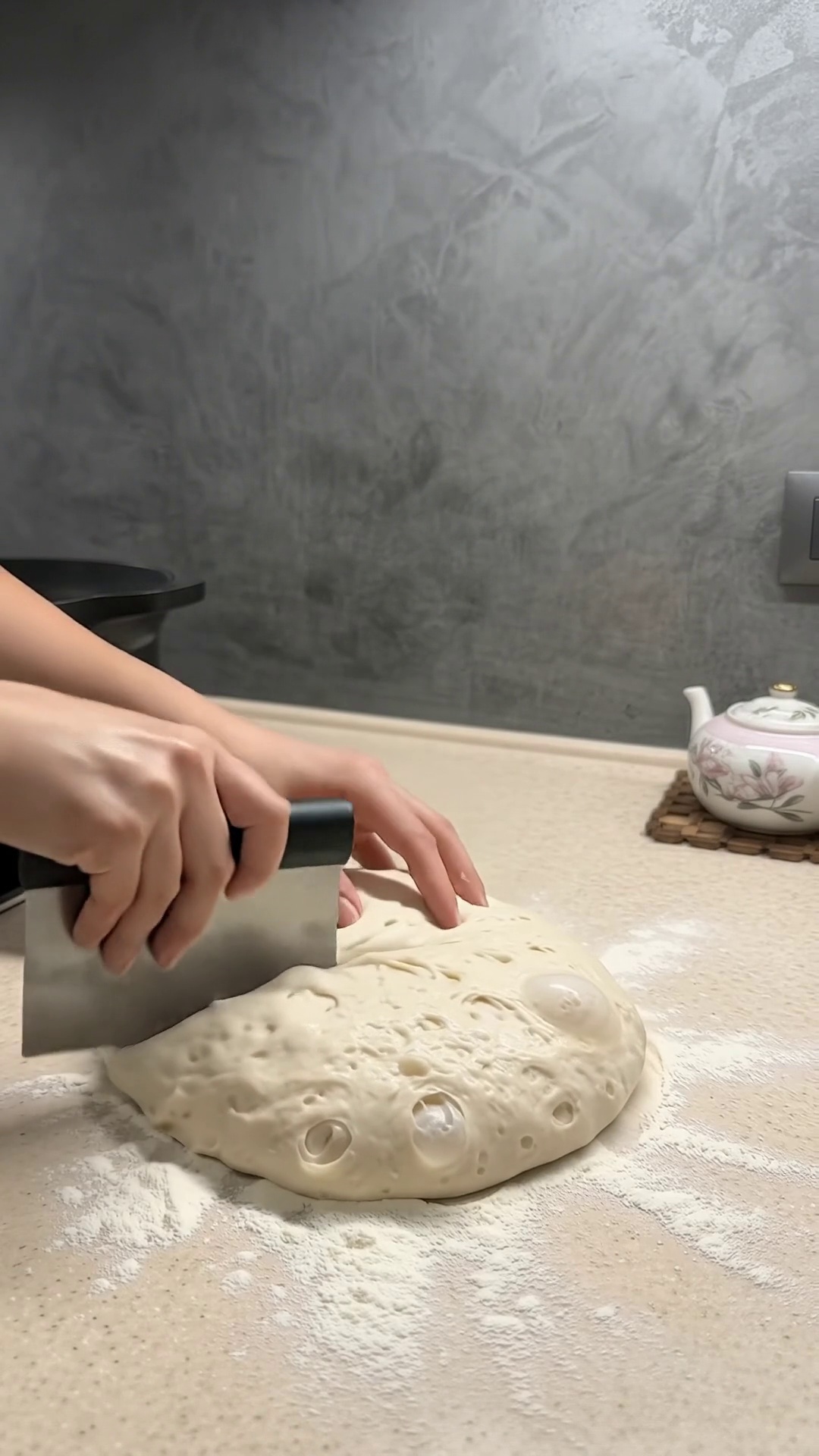
4. Bake on a hot surface
Preheat the oven to 450°F with a baking stone or heavy sheet pan inside. Slide the parchment and loaves onto the hot surface. Bake for 22 to 28 minutes, until the crust is deep golden and the center registers about 205 to 210°F. Move the loaves to a rack. Let them cool before slicing so the crumb has time to set and the underside stays crisp.
Tips for a more open crumb
Add extra flour to the counter when you divide the dough and keep your hands damp during the folds. This keeps the dough manageable at each stage. When you turn it out after the rise, avoid pressing it flat or pulling hard to make the rectangles match. The dough keeps more of its bubbles if you use the scraper to lift and support each piece.
Serving and storing ciabatta
Slice a loaf across the middle for a sandwich, or cut it into thick pieces for soup and olive oil. Once completely cool, keep the bread in a paper bag if you plan to eat it that day. For longer storage, freeze the cooled loaves in a freezer bag. Reheat them in the oven after thawing to bring back some of the crust’s crispness.
Frequently asked questions
Can I use a sheet pan in place of a baking stone?
Yes. A heavy sheet pan works well here. Give it time to heat with the oven so the parchment and dough land on a hot surface.
Why is my dough still sticking after the folds?
Ciabatta dough stays sticky even after it develops strength. Look for dough that stretches and lifts in a more cohesive piece after the later folds. Wet hands and a well-floured counter make the difference when you move from folding to shaping.
Printable recipe card
Italian Ciabatta Bread
Ingredients
Method
- Mix the flour, water, and yeast until no dry flour remains. Rest for 20 minutes, then mix in the salt. The dough will be very sticky.
- Transfer to a lightly oiled bowl. With wet hands, stretch and fold the dough over itself from four sides. Repeat three more times at 30-minute intervals.
- Cover and let rise until very bubbly and nearly doubled, about 1 to 2 additional hours, depending on room temperature.
- Turn onto a generously floured surface without punching down. Dust the top with flour, divide into four rectangles with a bench scraper, and transfer gently to parchment. Rest for 30 to 45 minutes.
- Preheat the oven and a baking stone or heavy sheet pan to 450°F. Slide the parchment and loaves onto the hot surface. Bake for 22 to 28 minutes, until deep golden and about 205 to 210°F inside.
- Cool on a wire rack before slicing.