German Christmas Stollen with Dried Fruit and Almonds
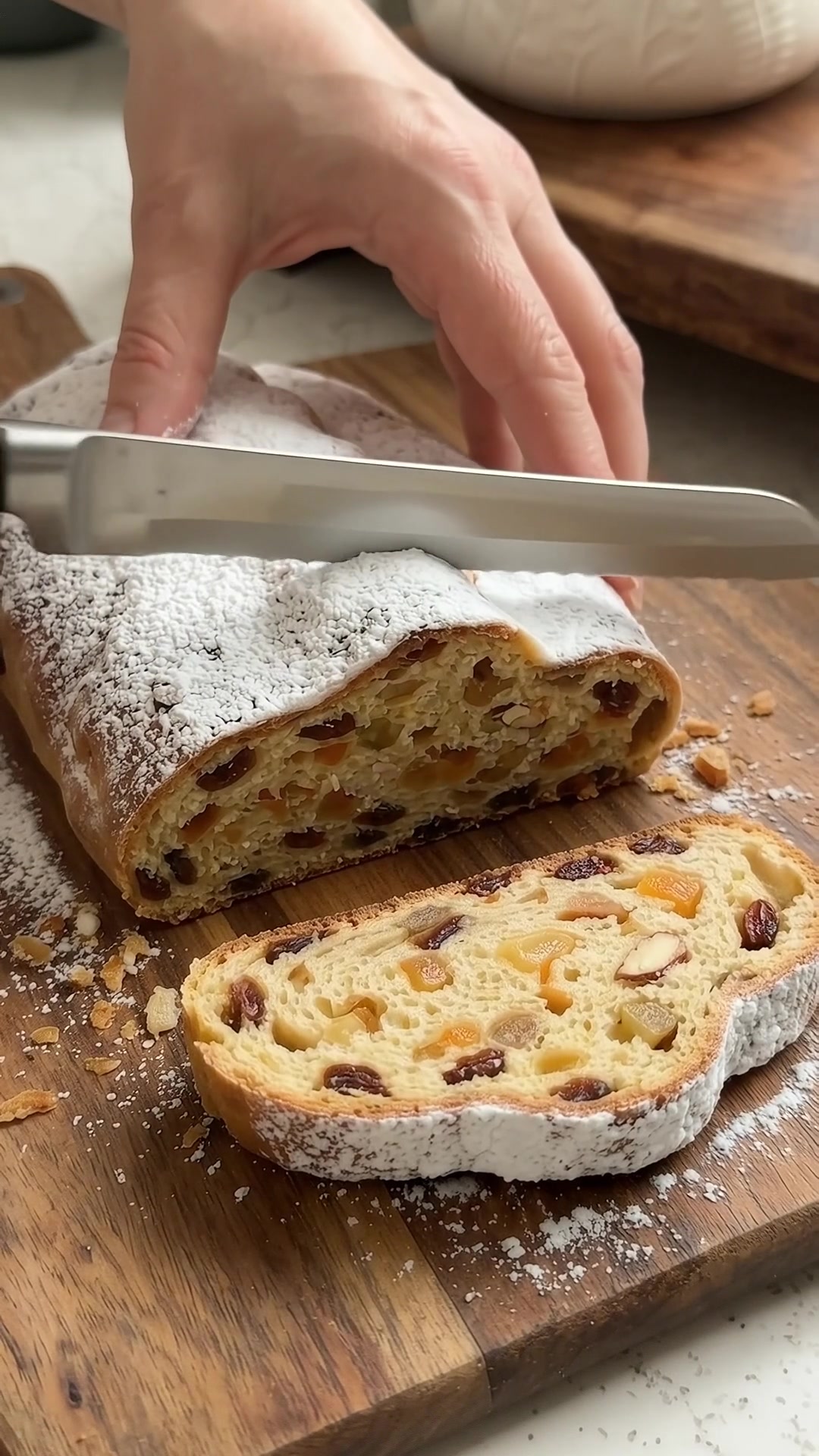
German Christmas stollen is a rich, fragrant yeast bread filled with dried fruit, citrus peel, and almonds. A generous brushing of butter and a snowy coating of powdered sugar make the loaf feel festive before the first slice is cut. Its crumb is closer and more substantial than sandwich bread, with little pockets of sweet fruit throughout.
This home-style version makes one generous loaf and uses orange juice to soften the raisins. Rum is an optional substitution if you prefer its flavor. You do not need a special pan or a marzipan center: a simple folded oval gives the bread its familiar raised ridge. Plan a relaxed baking afternoon, because the enriched dough needs time to rise.
Recipe at a glance
Makes 1 loaf, about 12 slices. Hands-on prep: 40 minutes. Fruit soaking: 1 hour. Rising: about 2–3 hours total. Baking: 35–45 minutes. Allow at least 2 hours for cooling. A stand mixer is helpful but optional, and an instant-read thermometer helps judge the center.
Ingredients
Fruit and dough
- 1 cup raisins or a mixture of raisins and golden raisins
- ¼ cup orange juice, or dark rum
- ½ cup finely chopped candied orange and lemon peel
- ½ cup slivered almonds
- ½ cup whole milk, warmed to 105–110°F
- 2¼ teaspoons active dry yeast, one standard packet
- ⅓ cup granulated sugar, divided
- 3 cups all-purpose flour, spooned and leveled, plus up to ¼ cup as needed
- ½ teaspoon fine salt
- ½ teaspoon ground cinnamon
- ¼ teaspoon ground cardamom
- 1 large egg, at room temperature
- 1 teaspoon vanilla extract
- 1 teaspoon finely grated lemon zest
- ½ cup unsalted butter, softened and cut into pieces
For finishing
- ¼ cup unsalted butter, melted
- 2 tablespoons granulated sugar
- ¾ cup powdered sugar, divided
Soak the fruit and activate the yeast
Combine the raisins and orange juice in a small bowl. Cover and soak for 1 hour, stirring once or twice. Drain thoroughly and pat dry with paper towels so excess liquid does not make the dough gummy. Toss the drained raisins with the candied peel and almonds and set aside.
Put the warm milk in a large mixing bowl. Stir in the yeast and 1 tablespoon of the measured granulated sugar. Let stand for 5–10 minutes until foamy. Milk that feels very hot can damage the yeast, so check its temperature. If nothing happens and the yeast is old, begin again with fresh yeast before adding the remaining ingredients.
Mix and knead the dough
Whisk 3 cups flour with the remaining sugar, salt, cinnamon, and cardamom. Add the egg, vanilla, lemon zest, and flour mixture to the yeast mixture. Stir until a rough dough forms. Knead by hand or with a dough hook on low speed, adding the softened butter a few pieces at a time until incorporated.
Continue kneading for 8–10 minutes by hand, or 5–7 minutes with a mixer, until smooth and elastic. The dough should feel soft and slightly tacky, without coating your hands like batter. If needed, add extra flour 1 tablespoon at a time, using as little as possible. Rich dough becomes smoother as it is worked.
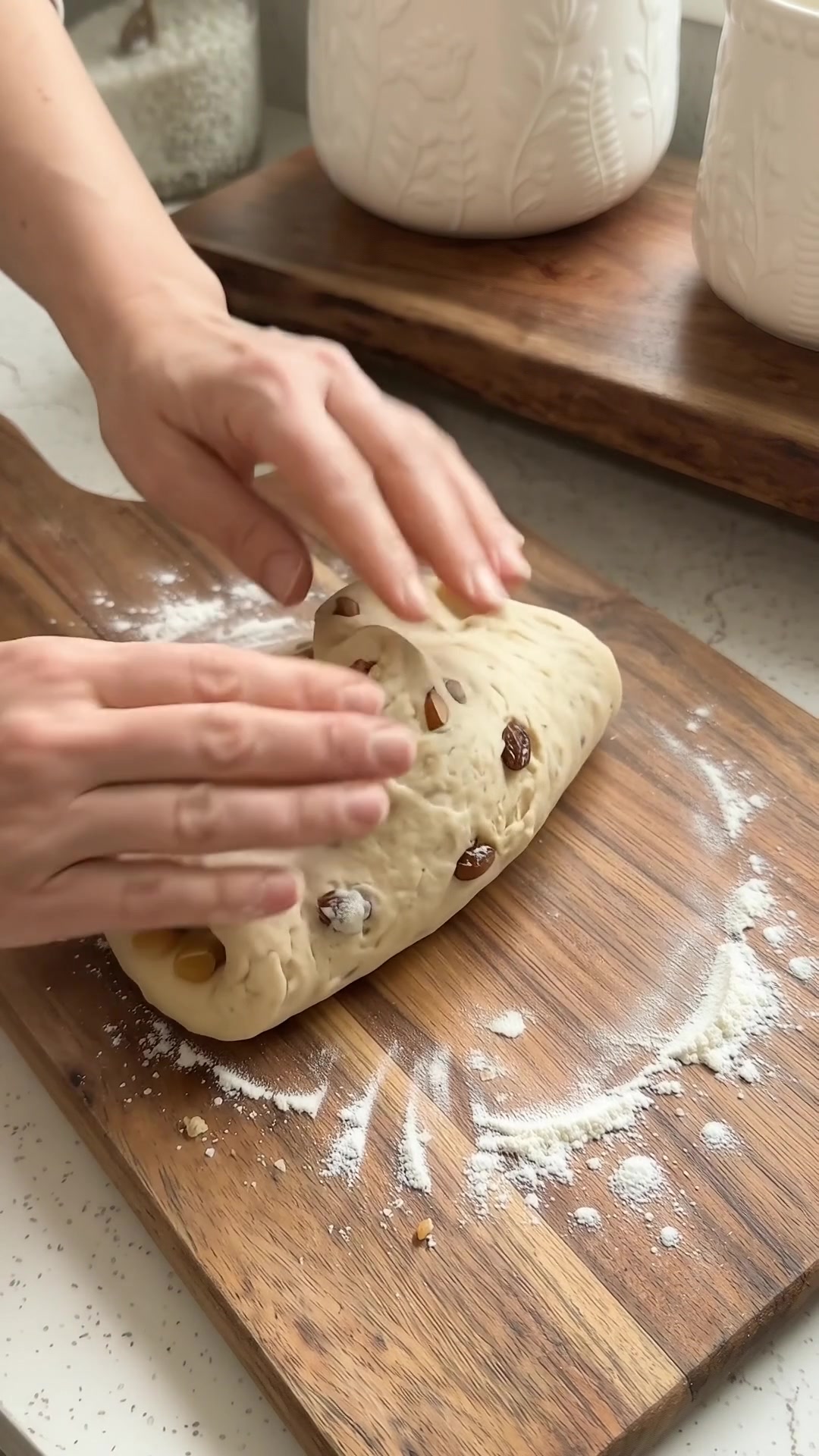
Flatten the dough slightly, scatter over the fruit and almonds, and fold it around them. Knead gently until they are distributed. Some pieces may poke through; tuck loose fruit back into the dough to reduce scorching.
Let rise and shape
Place the dough in a lightly buttered bowl, cover, and let rise in a warm, draft-free spot for 1½–2 hours, until visibly puffy and roughly doubled. The fruit and butter make this dough slower than a lean bread dough.
Gently press out large air pockets. On a lightly floured surface, pat the dough into a 10-by-8-inch oval. Fold one long side over toward the other, stopping about 1 inch short of the opposite edge to make an offset ridge. Press along the fold to seal. Transfer to a parchment-lined baking sheet, cover loosely, and rise for 45–60 minutes, until puffy.
Bake and coat with butter
Heat the oven to 350°F during the final rise. Bake on the middle rack for 35–45 minutes, until golden brown and the center registers about 190–195°F. Insert the thermometer into dough rather than a fruit pocket. Tent loosely with foil if the top darkens before the middle is done.
Let the loaf rest on its pan for 10 minutes, then transfer to a rack. Brush the warm loaf all over the accessible top and sides with the melted butter, allowing it to absorb between passes. Sprinkle with the 2 tablespoons granulated sugar, then sift half the powdered sugar over it.
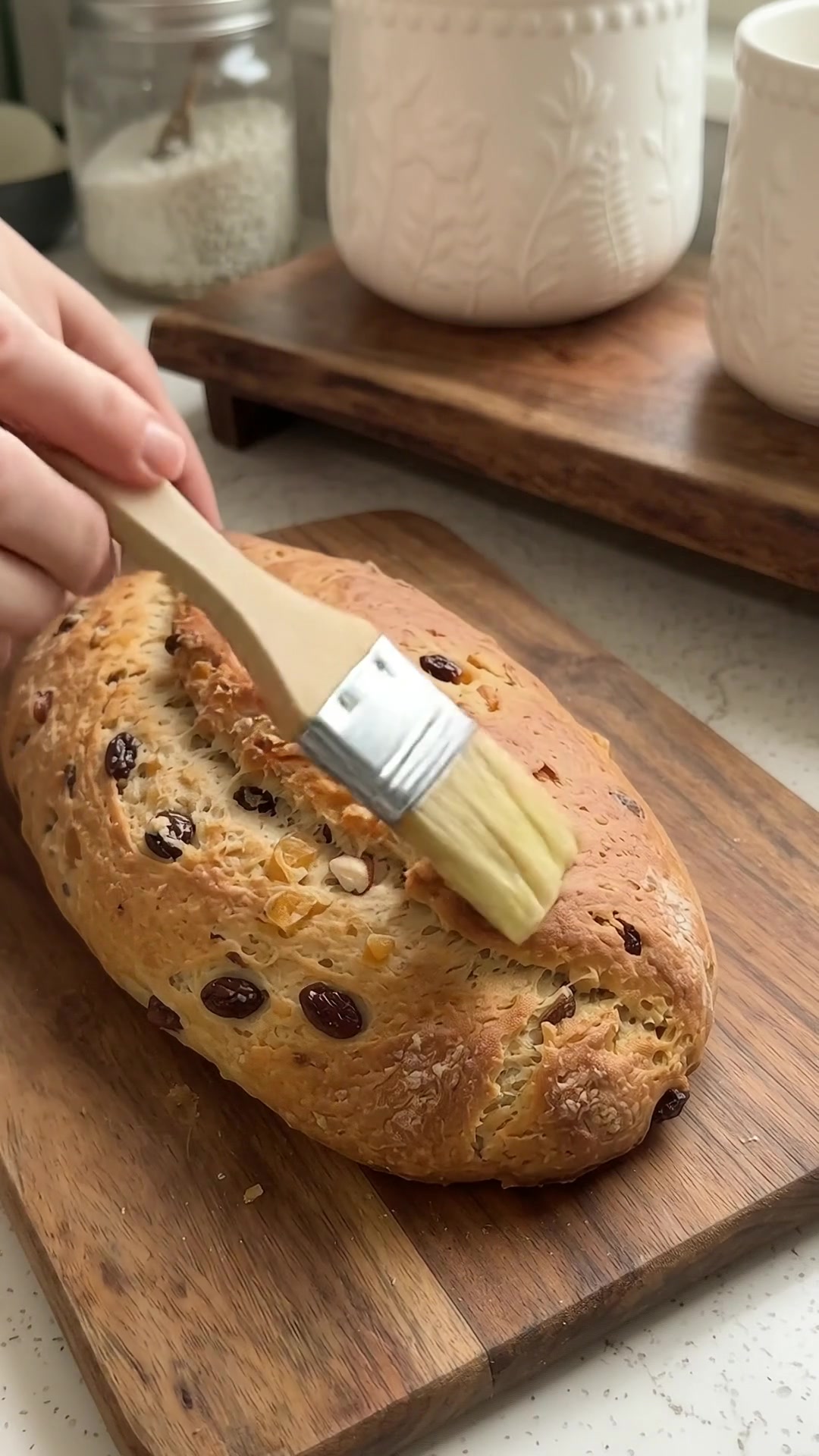
Cool completely before adding the remaining powdered sugar. Slicing warm stollen can compress the crumb, so let it settle first. Use a serrated knife and cut modest slices: this is a rich bread, and a little goes beautifully with coffee.
Tips and storage
Keep fruit pieces small for easier slicing. Replace candied peel with chopped dried apricots if desired, understanding that the citrus flavor will be milder. Do not pour leftover soaking liquid into the dough, since it changes the moisture balance.
Once completely cool, wrap the loaf tightly and store at cool room temperature for up to 4 days. Its flavor becomes more rounded after a day. For longer storage, freeze the whole loaf or individual slices, wrapped airtight, for up to 2 months. Thaw wrapped at room temperature, then refresh with a light dusting of powdered sugar. This home recipe is not intended for weeks of unrefrigerated aging.
Short FAQ
Why is my loaf dense?
Stollen has a close crumb, but a heavy, gummy center can mean insufficient rising or underbaking. Check both the dough’s expansion and the center temperature.
Can I omit the nuts?
Yes. Leave them out without changing the flour or liquid. Check every ingredient if baking for an allergy.
Does the rum bake away completely?
Do not assume so. Use orange juice when avoiding alcohol; it softens the fruit and adds a pleasant citrus note.