Old-Fashioned Chocolate Spritz Cookies
German Christmas Springerle cookies are prized for the crisp pictures pressed into their pale surfaces. This family-style version uses eggs, confectioners’ sugar, cake flour, vanilla, cinnamon, and cloves, then shapes the dough with a springerle or cookie mold. The photo supplied with this recipe shows the molded cookies before baking, when the Santa details are easiest to see.
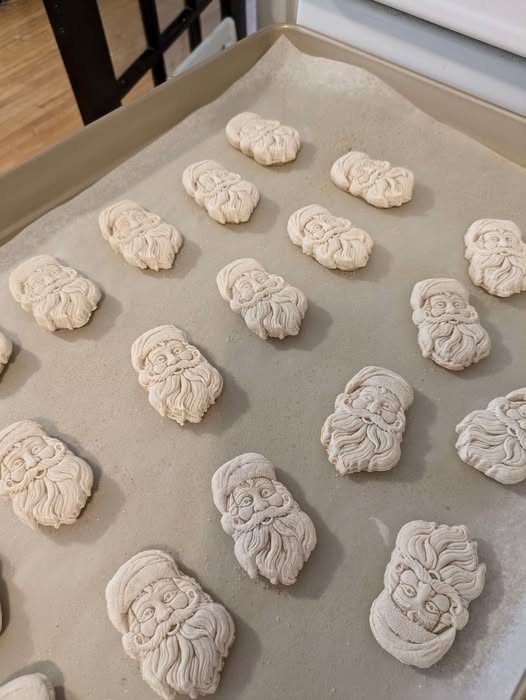
A note before you begin: the original baker shared the ingredient list and described wanting a fuller flavor, but did not include a tested method, oven temperature, baking time, or yield. The preparation below is a careful suggested starting point, not a verified reproduction. Bake a small test cookie first and adjust only after seeing how your mold and oven behave.
What to expect from Springerle
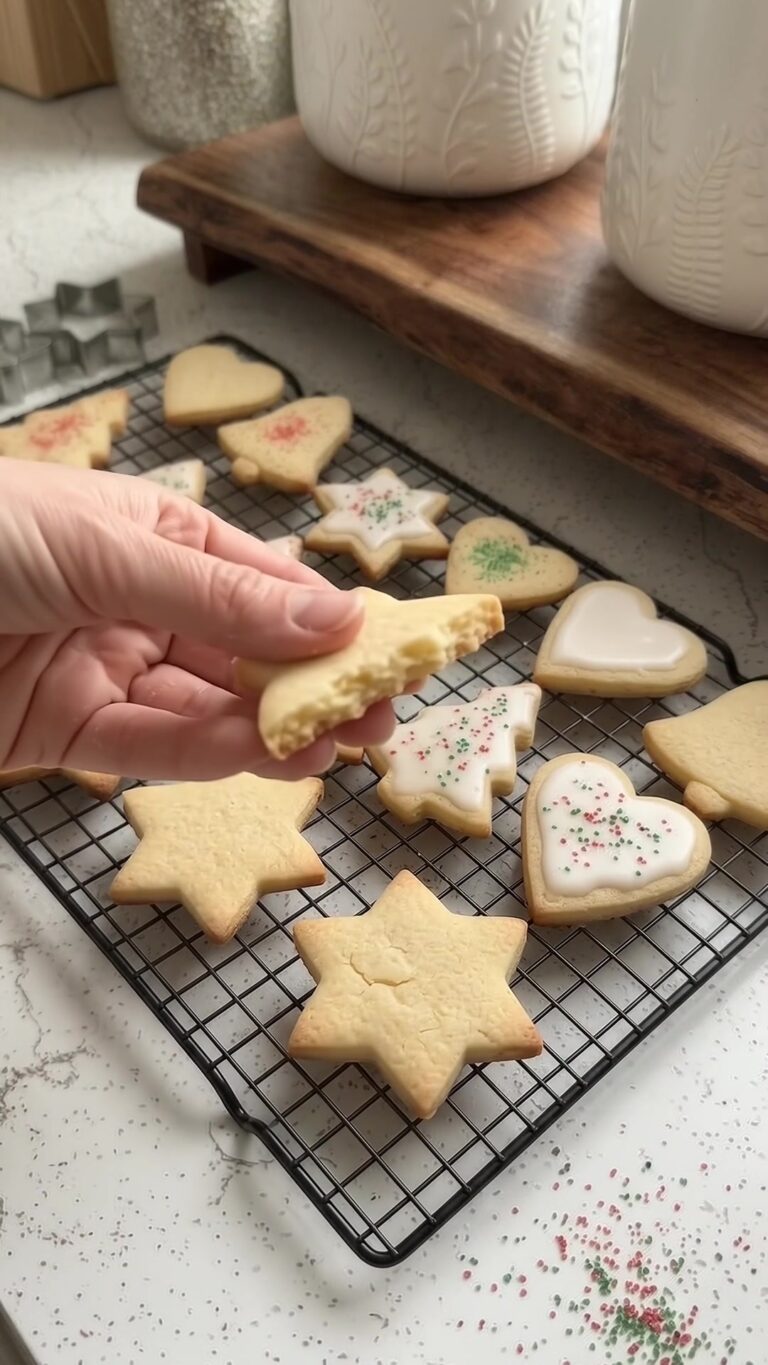
Springerle are traditional molded cookies with a firm, dry surface that holds its design. Their dough is different from a buttery drop cookie: it contains no butter in the supplied ingredient list, so it can preserve the sharp pattern made by the mold. Letting the shaped cookies dry before baking is commonly used to help the design remain visible. The finished cookie should be pale and set rather than deeply browned.
Ingredients
- 3 large eggs
- 1 large egg white
- 1 pound confectioners’ sugar, sifted if lumpy
- 1 pound cake flour, plus a little extra for dusting
- 1 teaspoon ground cinnamon
- 1/2 teaspoon ground cloves
- 1 tablespoon vanilla extract
The baker mentioned experimenting with ginger, cardamom, additional spices, and extra vanilla, but did not give amounts. Those additions are optional experiments rather than part of the measured original list. Begin with the measured ingredients so you can judge the base flavor before changing the dough.
Suggested preparation
- Prepare the pans and mold. Line baking sheets with parchment. Set out a springerle mold or a firm cookie mold, a rolling pin, and a little cake flour for dusting. Keep the work surface clean so the design transfers clearly.
- Whip the eggs. In a large bowl, beat the eggs and egg white until thick and pale. Gradually beat in the confectioners’ sugar, allowing it to blend into a smooth, fluffy mixture. Add the vanilla and mix briefly.
- Mix the dry ingredients. Whisk the cake flour, cinnamon, and cloves in another bowl. Add the flour mixture gradually to the egg mixture, stirring until a firm dough forms. The dough should be workable enough to roll and press; add flour sparingly if it feels sticky.
- Roll and mold. Lightly dust the mold and work surface. Roll a portion of dough to about 1/2 inch thick as a starting point. Press the mold firmly and evenly, then lift it straight up. Cut around each design and transfer the pieces to the lined pans.
- Let the designs dry. Leave the shaped cookies uncovered in a cool, dry place for 12 to 24 hours, until the surface feels dry. The drying step is suggested and may need adjustment for humidity, cookie size, and the particular mold.
- Test bake first. Heat the oven to 300°F and bake one or two cookies for 15 minutes as an initial test. Check whether they are set and cooked through while still pale. Continue in short increments if needed, noting the final time. The original source did not provide a temperature or timing, so the suggested range is not guaranteed.
- Cool completely. Let the cookies rest on the pan until firm enough to move, then transfer to a rack. Keep the first batch as a guide before baking the rest.
Tips for clear molded details
Use a light dusting of flour on the mold rather than a heavy coating, which can blur the surface. Press straight down with even pressure. If the design sticks, allow the dough to firm slightly or dust the mold again. Work in manageable portions and keep unused dough covered so the edges do not dry while you shape the cookies.
Because the recipe has no supplied fat, it may feel firmer and less rich than familiar sugar cookies. Do not add butter to the whole batch without testing: extra fat can change how the cookies spread and may soften the design. The original baker specifically wanted a stronger flavor, so a small test portion is a sensible place to try more vanilla or a pinch of ginger or cardamom.
Flavor and serving ideas
Anise is a traditional flavor pairing for many Springerle, but it is not listed in this version. If you enjoy it, try a small amount in a separate portion rather than changing the entire batch. Cinnamon and cloves give the supplied formula a warm holiday profile. Serve the cooled cookies with coffee or tea, or dip just the backs in melted chocolate for a richer finish after you have tested the plain cookie.
Storage and frequently asked questions
Once fully cool, store the cookies in an airtight container in a cool, dry place. Keep them away from moisture, which can soften the surface. Separate layers with parchment if the molded tops are delicate.
Why are the cookies pale?
The goal is to keep the molded surface light so the design remains visible. Use the suggested temperature only as a test and watch the bottoms closely.
How many cookies does this make?
The source did not state a yield. The number depends on the size and shape of the mold and how thickly the dough is rolled.
Can I use a different mold?
A firm cookie mold or springerle mold can make a pattern, but results depend on the dough and depth of the design. Test one cookie before shaping the full batch.
This recipe is best approached as a historic-style baking experiment: preserve the supplied ingredient list, label the method as suggested, and make a test cookie before committing the whole tray. That way the Santa pattern stays the focus while you learn how the dough responds in your own kitchen.