
Whipped Cream Puff Pastry Horns
A plate of whipped cream puff pastry horns looks like it came from a bakery window. Each pastry has a crisp, golden shell with a swirl of vanilla whipped cream peeking out at the wide end. The pastry is rich and buttery, and the cool filling keeps each bite light. Finish the horns with a dusting of powdered sugar and serve them with coffee, tea or a plate of fresh berries.
Store-bought puff pastry makes this a manageable weekend baking project. The shells can be baked ahead, so the only work left before serving is to whip the cream and pipe it into the horns. The recipe makes 12, a convenient size for a holiday dessert tray or an afternoon gathering.
Ingredients and equipment
You’ll need one sheet of puff pastry, about 10 ounces. Thaw it until you can unfold it without cracking, but keep it cold enough to hold its shape. An egg beaten with a tablespoon of water gives the pastry a glossy finish. For the filling, use 1½ cups of cold heavy whipping cream, 3 tablespoons of powdered sugar and 1 teaspoon of vanilla extract. Set aside a little extra powdered sugar to dust over the finished pastries.
Metal cream horn molds support the spiral while the pastry puffs in the oven. A pizza cutter or pastry wheel makes it easier to cut long, even strips. You’ll also want a parchment-lined baking sheet, a pastry brush, a mixer and a piping bag. A star tip makes the finished swirl, but a plain round tip works well for filling the shells. If you own fewer than 12 cones, refrigerate the remaining strips and let the molds cool before wrapping the next batch.
How to make whipped cream puff pastry horns
Cut the pastry into strips
Heat the oven to 400°F and line a baking sheet with parchment. Unfold the chilled pastry and cut it into 12 strips about ¾ inch wide. Try to keep the strips roughly the same size so the shells finish baking together. If the dough turns soft and sticky while you work, put it back in the refrigerator briefly. Cold dough is easier to lift and wrap without stretching it.
Wrap the molds and brush with egg wash
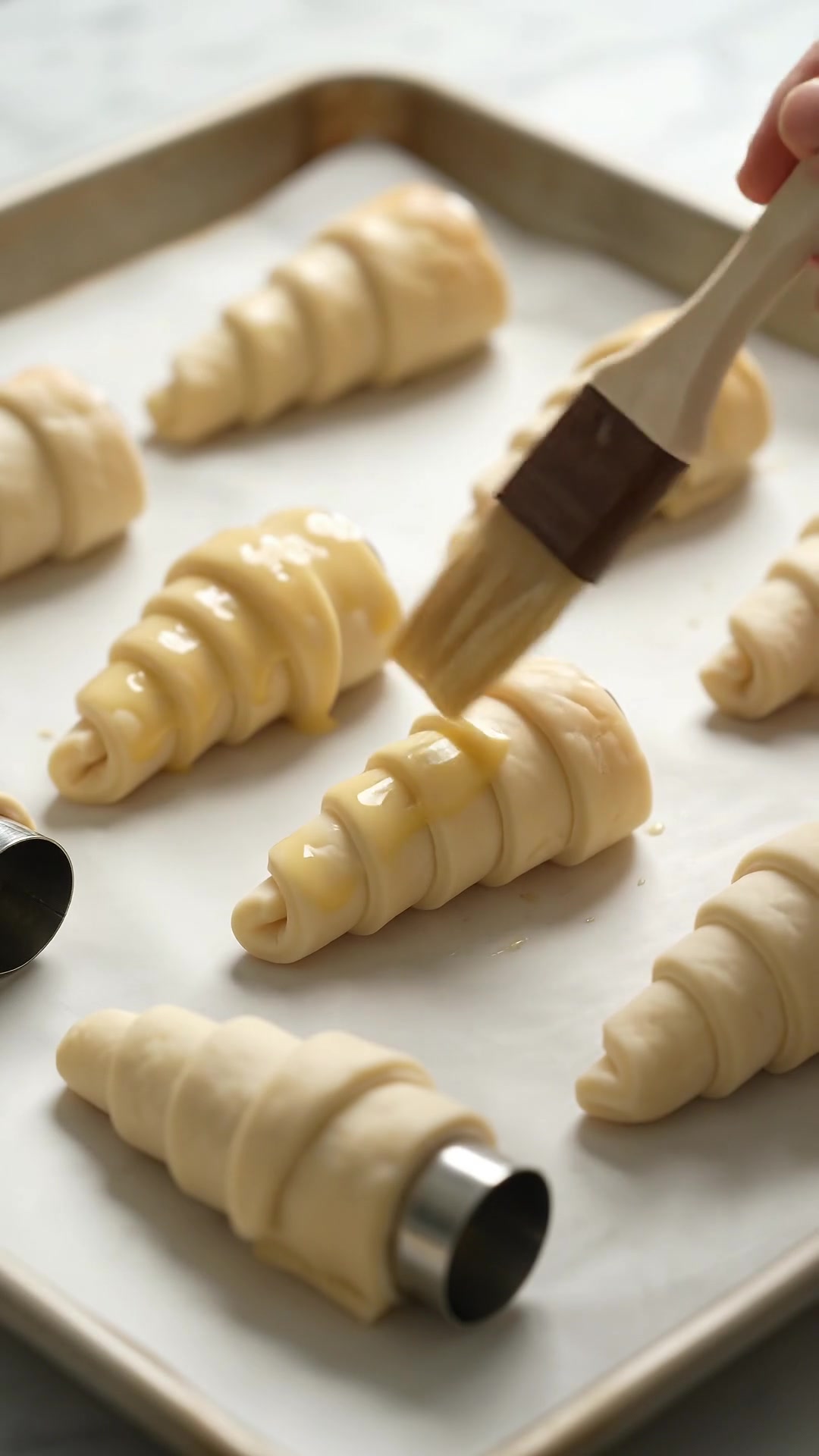
Start at the pointed end of a metal cone and wind a strip toward the wide end. Overlap each turn by about ¼ inch so the layers stay joined after baking. Press the end gently to secure it, then set the cone seam-side down on the baking sheet. Leave space between cones to give the pastry room to expand.
Beat the egg with the water and brush a light coat over the exposed pastry. A thin coat is enough for color. Keep the wash from pooling where the dough meets the mold, which can make the baked shell harder to release.
Bake, unmold and cool
Bake for 15 to 20 minutes, until the shells are puffed and deep golden. Check the pastry along the overlapping bands as well as the tips. Give the horns a few minutes on the tray, then use a clean towel to hold the warm mold and gently twist it out. Set the empty shells on a wire rack until completely cool. Even slightly warm pastry can soften the whipped cream as you fill it.
Whip the cream and fill the horns
Chill the mixing bowl and beaters before starting. Beat the cold heavy cream, powdered sugar and vanilla until stiff peaks form. Lift the beaters to check the texture. The cream should hold a defined peak, so stop mixing once it stands up. The last part of whipping goes quickly, and a few extra strokes can make the cream grainy.
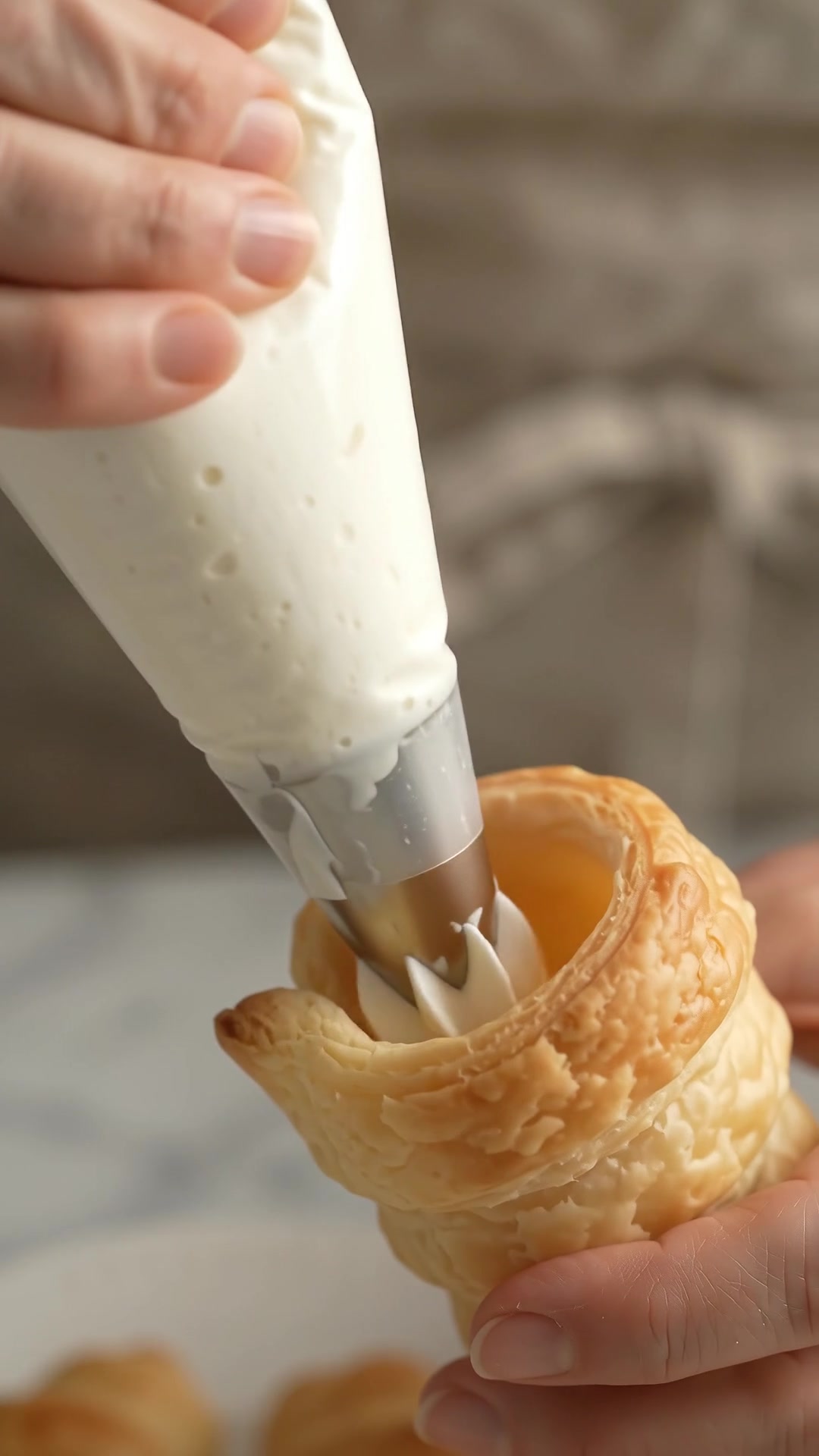
Transfer the cream to a piping bag. Slide the tip into the cooled shell and squeeze gently while pulling the bag back toward the opening. Finish with a small swirl. Dust the horns with powdered sugar just before serving.
Make ahead and storage
Bake the shells up to a day ahead and let them cool fully before closing them in an airtight container. Any steam trapped in the container can soften the pastry. Keep the whipped cream covered in the refrigerator until filling time. Once filled, refrigerate the horns and serve them the same day for the best texture. The cream gradually softens the inner layers, so fill them shortly before serving when you want the shells at their crispest.
Frequently asked questions
Why did my pastry stick to the mold?
Pastry wrapped tightly around the cone or egg wash pooled at the edges can make a shell harder to release. Follow the preparation directions for your molds and gently twist the cone while the baked pastry is still warm. Support the wider part of the shell with your other hand to keep it from cracking.
Can I give the filling a different flavor?
A little finely grated lemon zest goes well with the vanilla cream. For a fruit center, spoon a small amount of thick raspberry or strawberry jam into the cooled shell before piping in the cream. A light drizzle of melted chocolate over the shells is another option for a dessert tray.
Printable recipe
Ingredients
Method
- Preheat the oven to 400°F and line a baking sheet with parchment.
- Unfold the pastry and cut it into 12 strips about ¾ inch wide.
- Starting at the tip of each metal cone, wrap one strip in a spiral, overlapping by ¼ inch. Press the end to secure.
- Arrange seam-side down on the baking sheet, leaving room between the horns.
- Beat the egg with the water and brush over the pastry.
- Bake for 15–20 minutes until puffed and deep golden. Cool briefly, then gently twist out the molds while the pastry is still warm. Cool completely on a wire rack.
- In a cold bowl with cold beaters, whip the cream, powdered sugar and vanilla to stiff peaks.
- Transfer to a piping bag fitted with a star tip. Fill each cooled horn and finish with a swirl.
- Dust with powdered sugar just before serving.