City Chicken — Breaded Pork Skewers
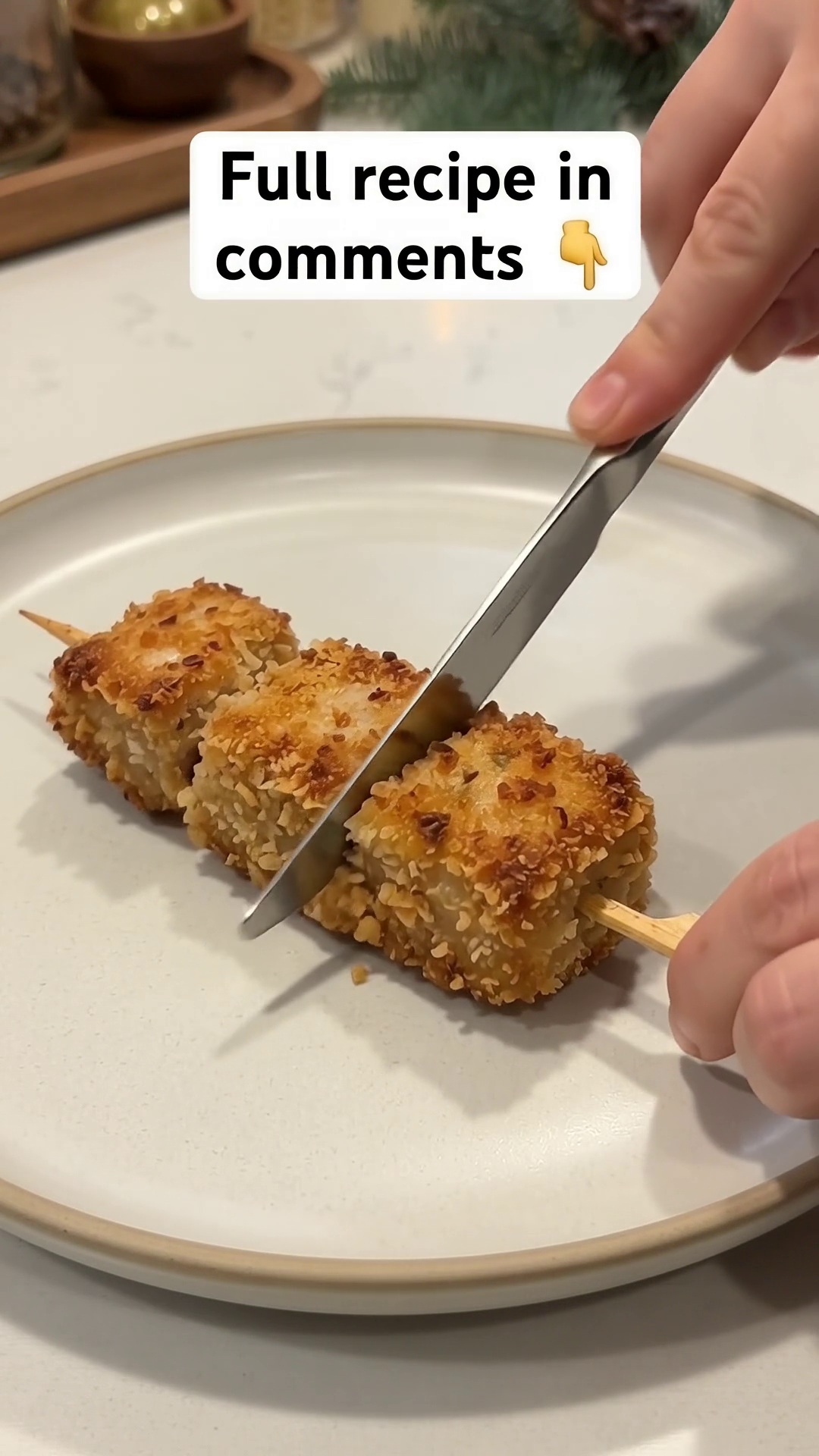
City chicken pork skewers have a seasoned breadcrumb coating, golden skillet color, and an oven finish that cooks the meat through.
Despite the name, this version of city chicken uses pork. Cubes of meat are threaded onto small skewers, coated in flour, egg, and breadcrumbs, then browned before a short stay in the oven. It is a satisfying main dish for a plate of mashed potatoes, gravy, and green beans. Keep the cubes consistent in size so the coating browns evenly and the pork finishes together. A thermometer is more dependable than judging the meat by the color of its breadcrumb crust.
Why You’ll Love This Recipe
- Skewers create convenient individual portions.
- A flour, egg, and breadcrumb coating adds a crisp exterior.
- The skillet supplies color before the oven finishes cooking.
- The finished pork pairs naturally with familiar supper sides.
Recipe Details
Serves 4, making about 8 small skewers. Prep: about 20 minutes, with skewer soaking done alongside preparation. Cook: about 25–30 minutes, plus a 3-minute rest. Total: about 48–53 minutes; allow longer if browning in batches. Oven: 350°F. Stovetop: medium heat for shallow frying.
Ingredients
- 1½ pounds boneless pork shoulder or pork loin, cut into 1½-inch cubes
- 8 small wooden skewers
- ¾ cup all-purpose flour
- 2 eggs
- 2 tablespoons milk
- 1½ cups seasoned breadcrumbs
- 1 teaspoon paprika
- ½ teaspoon garlic powder
- ½ teaspoon salt
- ½ teaspoon black pepper
- Vegetable oil, for frying
Pork loin is the more predictable choice for the short cooking time here. Shoulder can be used, but it may remain firmer or chewier even when it has reached a safe temperature; it does not become braise-tender in a brief oven finish. Choose short skewers that fit your skillet and baking sheet. Seasoned breadcrumbs already contain flavorings, so keep the additional measured seasoning as listed for a first batch.
Numbered Instructions
- Soak and preheat. Soak the wooden skewers in water for about 20 minutes while you prepare the meat and coating. Heat the oven to 350°F and set out a rimmed baking sheet. Drain the skewers before threading.
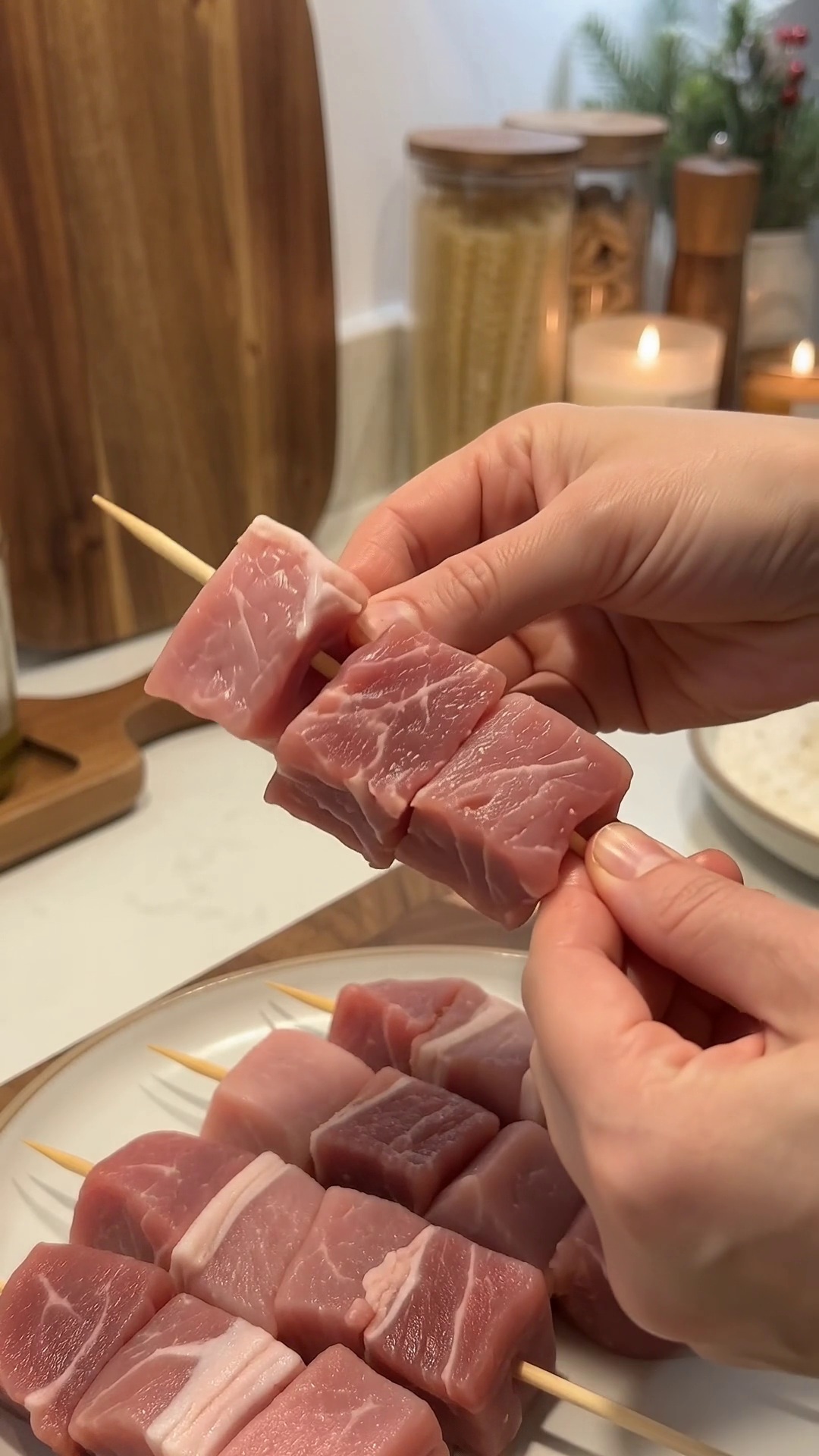
- Thread and season. Thread 3–4 pork cubes onto each skewer, distributing the meat evenly and leaving ends to hold. Do not pack the pieces tightly into a solid block. Season the pork with the paprika, garlic powder, salt, and pepper.
- Set up the coating. Put the flour in one shallow bowl. Beat the eggs with the milk in a second bowl. Place the seasoned breadcrumbs in a third. Coat each skewer in flour, shake off excess, dip in the egg mixture, and press into breadcrumbs on every side.
- Brown in the skillet. Heat about ¼ inch vegetable oil in a skillet over medium heat. Add the breaded skewers without crowding and brown on all sides for about 6–8 minutes total per batch. Turn carefully and lower the heat if the crumbs darken before the other sides are colored.
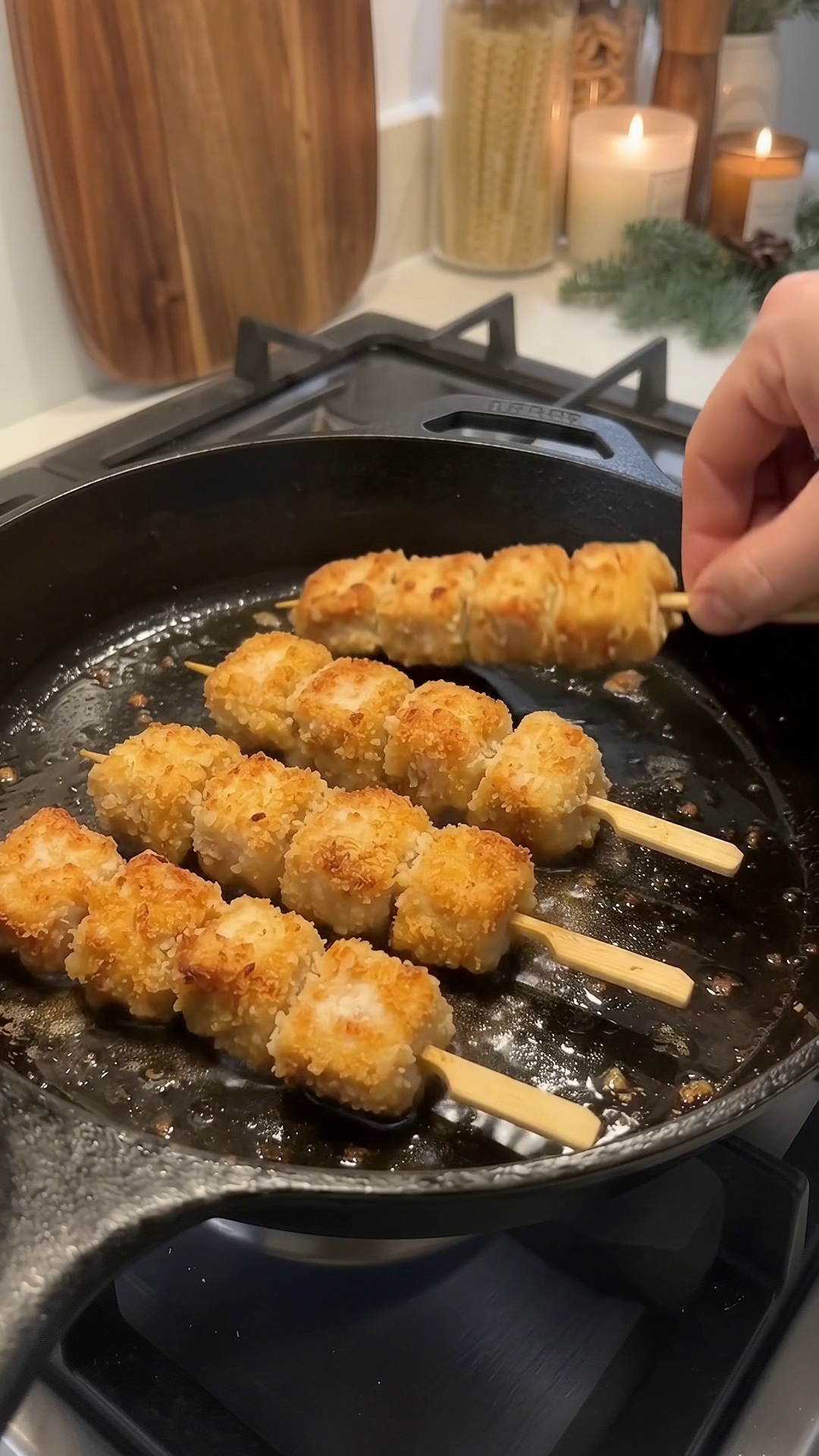
- Finish in the oven. Transfer the browned skewers to the rimmed baking sheet. Bake for about 15–20 minutes, until the thickest pork pieces reach at least 145°F. Insert the thermometer into meat without touching the skewer. Check more than one piece if their sizes vary.
- Rest and serve. Rest the cooked pork for at least 3 minutes before serving. Handle the skewers carefully; they will be hot. Add your chosen sides at the table and keep any gravy separate if you want the coating to stay crisper.
Helpful Tips
Use one hand for the wet egg mixture and the other for dry crumbs when practical. This keeps the coating station tidier and reduces thick patches of egg and flour on your fingers. Press crumbs gently into corners between the pork pieces, but do not build a heavy shell that hides uneven meat sizes.
Brown only as many skewers as the skillet holds comfortably. Crowding lowers the oil temperature and makes turning awkward. This first stage is for color, not a promise that the pork is already done. Move the browned skewers into the preheated oven promptly, and use the temperature check to decide when to stop cooking.
Variations and Serving Ideas
Choose pork loin for a more uniform, short-cooking skewer or shoulder if you prefer that cut and understand its firmer result with this method. Keep the cube size and measured coating the same. Serve with mashed potatoes and gravy for a hearty plate, or with green beans and a lighter side. Spoon gravy beside the skewers rather than over every crumb-coated surface when texture matters.
Storage and Reheating
Refrigerate leftovers in shallow, covered containers within 2 hours and use within 3–4 days. Reheat to 165°F, preferably in the oven so the coating regains some texture. Cover loosely if the crumbs color before the center is hot. Freeze cooled skewers for up to 2 months in a sealed container, separating layers. Thaw in the refrigerator and reheat thoroughly. Keep unused coating that touched raw pork separate and discard it after preparation.
Frequently Asked Questions
Why is it called city chicken if this recipe uses pork?
The name does not describe the ingredient here. This article is specifically a breaded pork-skewer version, so buy the pork listed rather than chicken.
Can I rely on the 20-minute oven time?
No. Cube size, starting temperature, and skillet browning affect the finish. Check for 145°F in the pork, then allow the 3-minute rest.
Will shoulder be as tender as loin?
Not necessarily. Shoulder benefits from longer cooking in other preparations and can be chewier in this short method. Loin is the simpler choice here.