Polish Gołąbki Recipe – Stuffed Cabbage Rolls
Polish Gołąbki Recipe – Traditional Stuffed Cabbage Rolls with Tomato Sauce
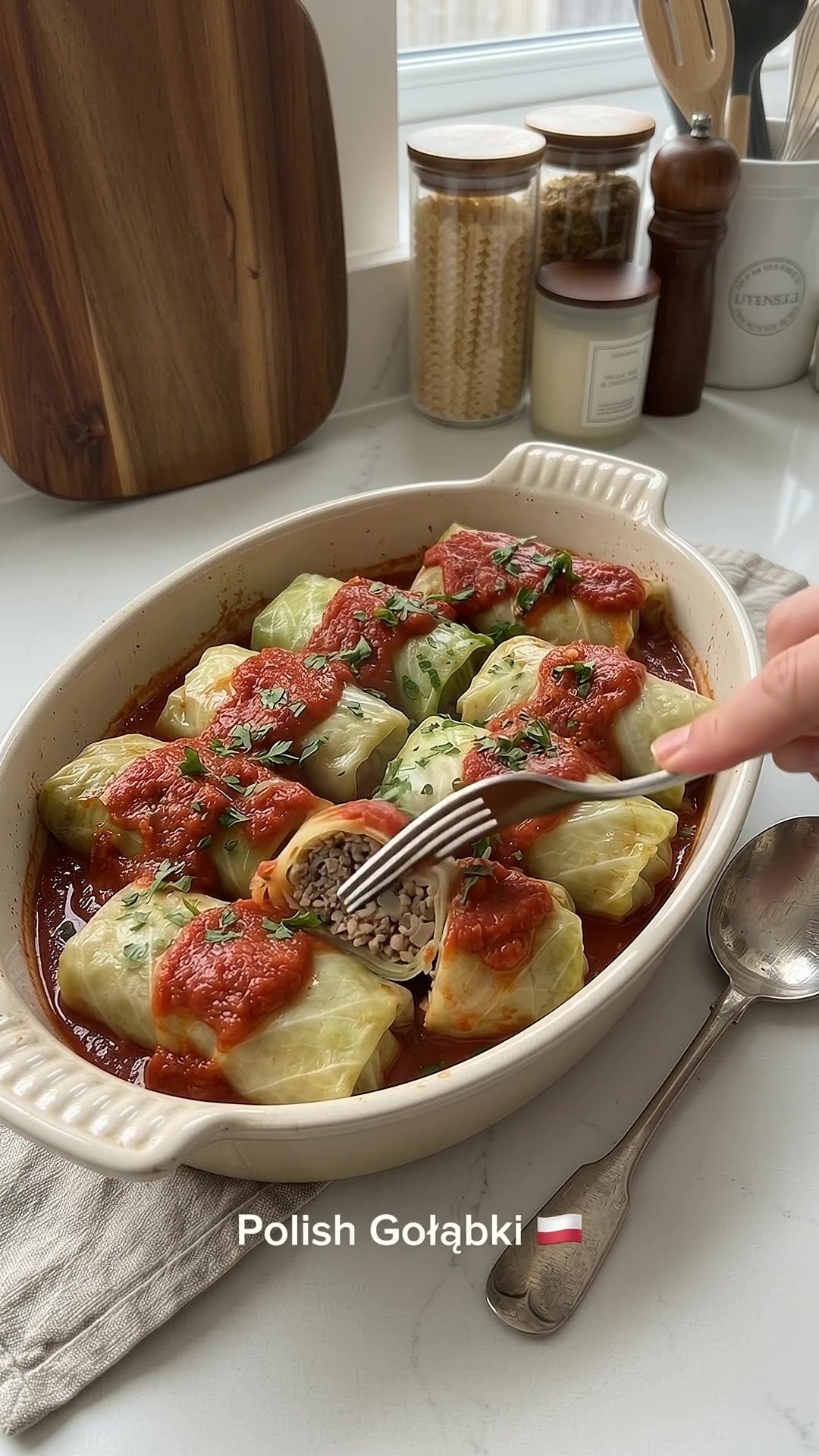
Polish Gołąbki, also known as stuffed cabbage rolls, are a beloved comfort food made with tender cabbage leaves wrapped around a savory mixture of ground meat, rice, and onions. Slowly baked in a rich tomato sauce, these traditional Polish cabbage rolls are hearty, satisfying, and perfect for family dinners.
If you grew up in a Polish-American household, you may remember a large baking dish filled with cabbage rolls bubbling in the oven. Gołąbki are often prepared for Sunday dinners, family gatherings, and holidays because they can feed a crowd and taste even better the next day.
This homemade version uses simple ingredients and traditional preparation techniques to create tender, flavorful cabbage rolls.
What Are Polish Gołąbki?
Gołąbki (pronounced approximately goh-WUMP-kee) are traditional Polish stuffed cabbage rolls. The name literally means “little pigeons,” although the dish contains no pigeon.
Classic gołąbki are made by filling softened cabbage leaves with a mixture of ground pork, beef, rice, and seasonings. The rolls are arranged in a baking dish and cooked until tender.
Some Polish families serve their cabbage rolls with tomato sauce, while others prefer mushroom gravy or the natural cooking juices.
Why You’ll Love This Recipe
- Traditional comfort food: A classic Polish family favorite.
- Budget-friendly ingredients: Cabbage, rice, ground meat, and pantry staples.
- Great for meal preparation: The rolls reheat beautifully.
- Freezer-friendly: Prepare extra portions for future dinners.
- Perfect for gatherings: A hearty dish that serves the whole family.
Polish Gołąbki Ingredients
Servings: 6 (approximately 12 cabbage rolls)
Prep Time: 30 minutes
Cook Time: 1 hour 30 minutes
Total Time: 2 hours
For the Cabbage Rolls
- 1 large green cabbage
- 1 pound ground pork
- ½ pound ground beef
- 1 cup cooked white rice, cooled
- 1 medium onion, finely chopped
- 2 garlic cloves, minced
- 1 large egg
- 1 teaspoon salt
- ½ teaspoon black pepper
- 1 teaspoon dried marjoram (optional)
- 1 tablespoon butter or olive oil
For the Tomato Sauce
- 1 can (15 ounces) tomato sauce
- 1 can (14.5 ounces) crushed tomatoes
- 1 cup chicken or vegetable broth
- 1 tablespoon tomato paste
- 1 teaspoon sugar, optional
- ½ teaspoon salt, or to taste
- ¼ teaspoon black pepper
- 1 tablespoon butter
- Fresh parsley, for garnish
How to Make Traditional Polish Gołąbki
Step 1: Prepare the Cabbage
Bring a large pot of water to a boil.
Carefully remove the tough core from the cabbage using a sharp knife.
Place the cabbage into the boiling water and cook for approximately 5–8 minutes, gently removing the outer leaves as they soften.
Transfer the leaves to a plate and allow them to cool.
Using a knife, carefully trim the thick center rib of each leaf without cutting completely through it. This makes the cabbage easier to roll.
Step 2: Prepare the Meat and Rice Filling
Heat the butter or olive oil in a skillet over medium heat.
Add the chopped onion and cook for 4–5 minutes until softened. Stir in the garlic and cook for another 30 seconds.
Remove from the heat and let cool slightly.
In a large mixing bowl, combine the ground pork, ground beef, cooked rice, sautéed onions, garlic, egg, salt, pepper, and optional marjoram.
Mix gently until evenly combined.
Avoid overmixing, which can make the filling dense.
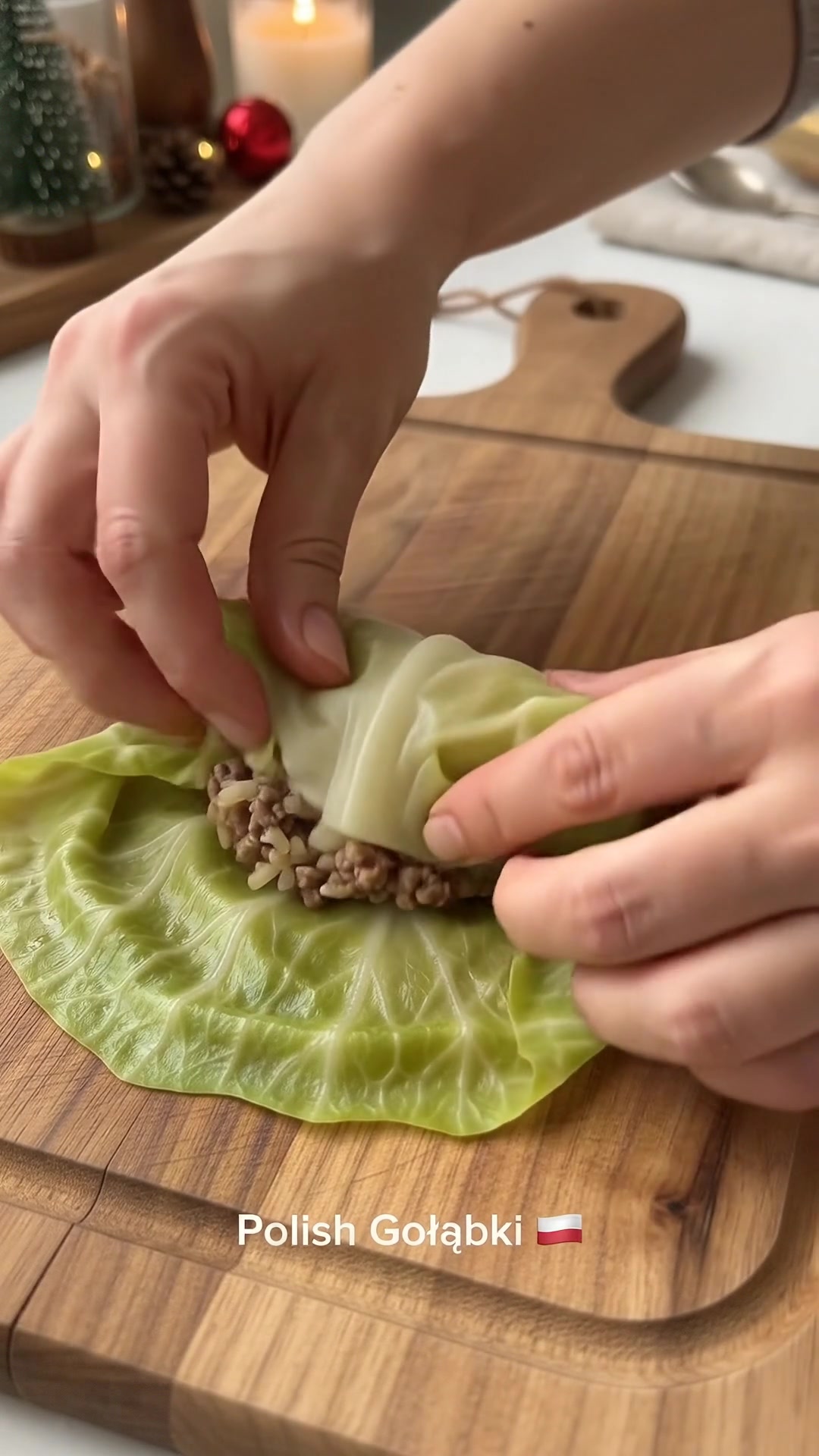
Step 3: Fill and Roll the Cabbage Leaves
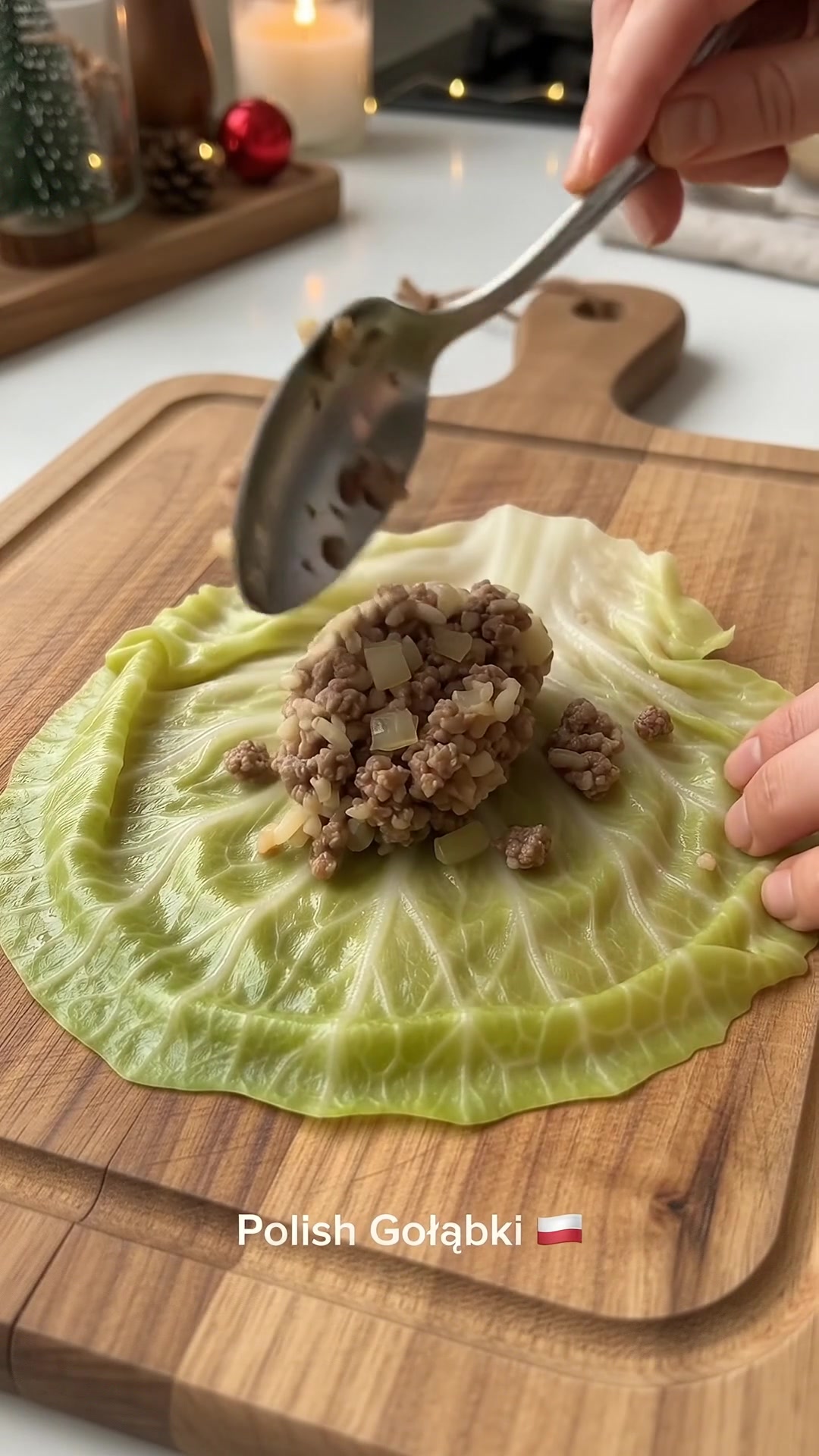
Place one softened cabbage leaf flat on a cutting board.
Spoon approximately ⅓ cup of the meat and rice mixture near the base of the leaf, adjusting the amount depending on leaf size.
Fold the bottom of the leaf over the filling.
Fold both sides inward, then roll tightly toward the top, similar to wrapping a burrito.
Repeat with the remaining cabbage leaves and filling.
Step 4: Prepare the Tomato Sauce
In a saucepan, combine the tomato sauce, crushed tomatoes, broth, tomato paste, sugar if using, salt, pepper, and butter.
Bring to a gentle simmer and cook for approximately 5 minutes, stirring occasionally.
Taste and adjust the seasonings.
Step 5: Arrange the Cabbage Rolls
Preheat your oven to 350°F (175°C).
Spread a thin layer of tomato sauce across the bottom of a large baking dish.
Arrange the cabbage rolls seam-side down in a single layer.
Pour the remaining tomato sauce over the rolls, ensuring they are well coated.
Cover the dish tightly with aluminum foil.
Step 6: Bake Until Tender
Bake for approximately 75–90 minutes, until the cabbage is tender and the meat filling is fully cooked.
Check the center of a cabbage roll with a food thermometer. The filling should reach at least 160°F (71°C).
If necessary, continue baking until the filling reaches the correct temperature.
Allow the cabbage rolls to rest for 10 minutes before serving.
Step 7: Serve and Enjoy
Spoon the tender cabbage rolls onto serving plates and cover them with additional tomato sauce.
Sprinkle with fresh chopped parsley.
Serve warm with mashed potatoes, crusty bread, or a simple cucumber salad.
Tips for Perfect Polish Stuffed Cabbage Rolls
Choose a large cabbage. Large, flexible leaves are easier to fill and roll without tearing.
Don’t overcook the rice. Slightly firm cooked rice works well because it continues absorbing moisture while the cabbage rolls bake.
Keep the filling moist. Using a combination of ground pork and beef helps create flavorful, tender rolls.
Roll gently but securely. The cabbage should hold the filling together without being wrapped too tightly.
Keep the dish covered. Covering the baking dish traps moisture and helps the cabbage soften evenly.
Allow time for baking. Slow cooking helps the meat, cabbage, and tomato sauce develop their flavors.
What to Serve with Polish Gołąbki
Traditional Polish cabbage rolls pair beautifully with simple side dishes.
Creamy mashed potatoes are an excellent choice because they absorb the tomato sauce.
Rye bread or crusty homemade bread is another favorite, especially when served warm.
For a lighter meal, try a Polish cucumber salad called mizeria, made with cucumbers, sour cream, and dill.
You can also serve gołąbki with boiled potatoes, roasted vegetables, or a fresh green salad.
How to Store and Reheat
Refrigeration
Allow the cabbage rolls to cool, then transfer them to an airtight container with the tomato sauce.
Refrigerate within two hours of cooking and store for up to 3–4 days.
Freezing
Place completely cooled cabbage rolls in freezer-safe containers with enough sauce to keep them moist.
Freeze for up to 3 months for best quality.
Thaw overnight in the refrigerator before reheating.
Reheating
Place the cabbage rolls in a covered baking dish with a little extra sauce or broth.
Warm in a 325°F oven until heated through to 165°F.
Individual portions can also be reheated in the microwave.
Frequently Asked Questions
Can I make Polish cabbage rolls ahead of time?
Yes. Assemble the cabbage rolls up to one day in advance, cover, and refrigerate. Add the sauce and bake when ready, allowing additional cooking time if the dish is cold.
Can I use only ground beef?
Absolutely. Traditional recipes often use pork or a pork-and-beef mixture, but ground beef works well. Choose meat with some fat to prevent dry filling.
Why are my cabbage rolls tough?
The cabbage leaves may not have been softened enough before rolling, or the rolls may need additional cooking time. Keep them covered with sauce while baking.
Can I make gołąbki without rice?
Yes. Some variations use cooked buckwheat, barley, or other grains instead of rice.
Are Polish cabbage rolls the same as Ukrainian cabbage rolls?
They are similar traditional Eastern European dishes, but ingredients, preparation methods, sauces, and regional customs can differ.
Final Thoughts
Traditional Polish Gołąbki are more than just stuffed cabbage rolls. They are a comforting family dish that brings together simple ingredients, familiar flavors, and generations of home cooking.
Whether you’re preparing them for a Sunday dinner, a holiday gathering, or simply craving homemade Polish comfort food, these tender cabbage rolls with tomato sauce are a delicious choice.
Make a large batch, save the leftovers, and enjoy a classic Polish recipe that deserves a place at your family table.