Haluski — Cabbage and Noodles
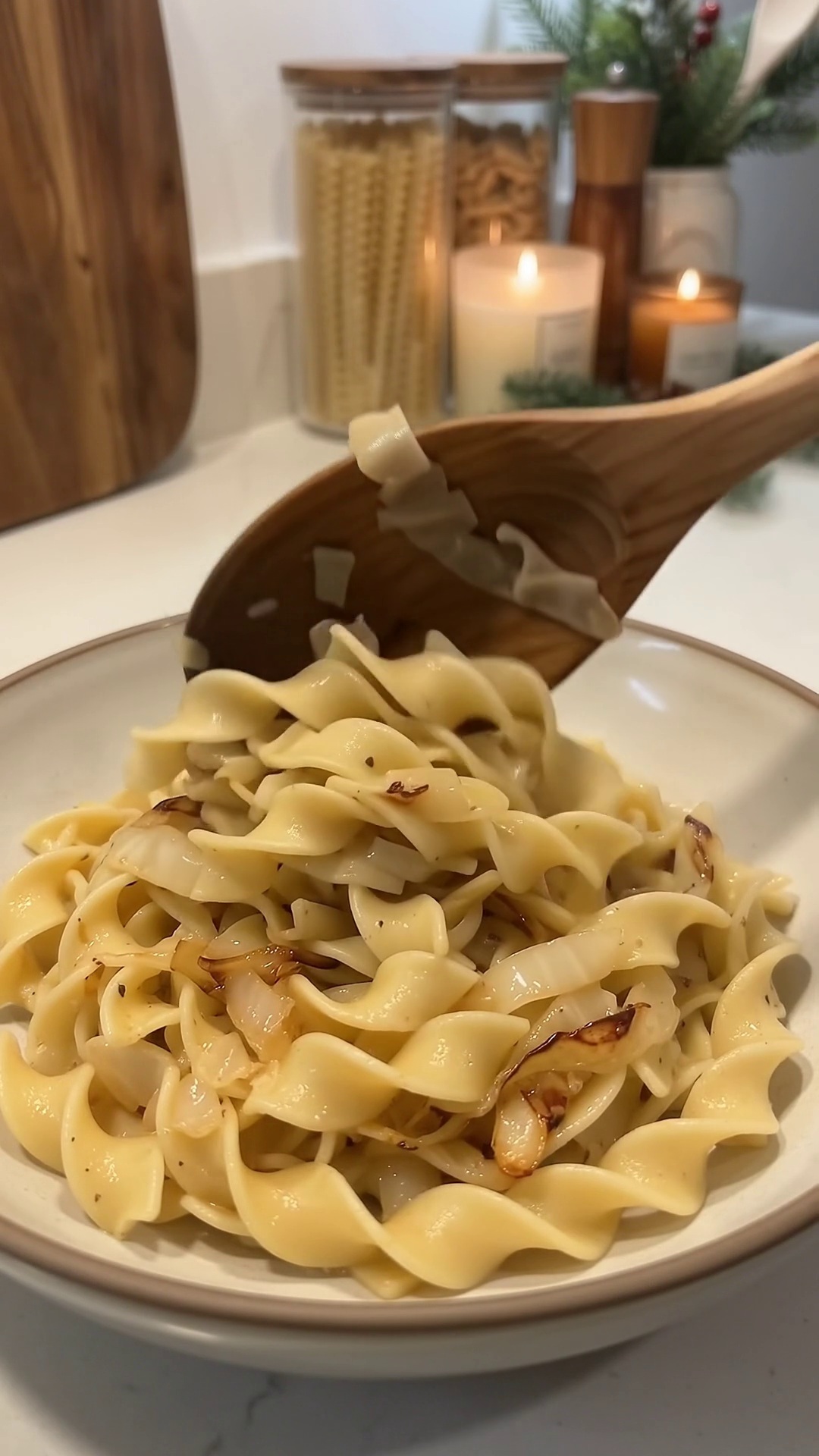
Buttery egg noodles, golden cabbage, and tender onion make a comforting skillet dish that works as a meatless meal or a generous side.
Haluski turns a short ingredient list into a satisfying bowl of cabbage and noodles. The key is to give the vegetables time in the skillet before adding the cooked noodles. Onion softens first, then thin cabbage strands become tender and pick up golden edges. Butter added in two stages coats the vegetables at the start and gives the finished noodles a glossy finish. This version is a practical home preparation with wide egg noodles, ready to serve on its own or beside sausage or pork.
Why You’ll Love This Recipe
- Familiar ingredients keep the shopping list short.
- Cooking the noodles alongside the vegetables saves time.
- Cabbage becomes mellow and sweet as it softens.
- The finished skillet can be a main dish or a side.
Recipe Details
Serves 6. Prep: about 15 minutes. Cook: about 25 minutes when the noodles cook alongside the vegetables. Total: about 40 minutes. Equipment: a pot for noodles and a large, wide skillet. Stovetop: medium heat, adjusted to prevent scorching.
Ingredients
- 12 ounces wide egg noodles
- ½ medium green cabbage, thinly sliced
- 1 large onion, sliced
- 5 tablespoons butter, divided
- 1 tablespoon olive oil
- 1 teaspoon salt, divided
- ½ teaspoon freshly ground black pepper
- ½ teaspoon garlic powder, optional
Remove the cabbage’s tough core before slicing. Thin, fairly even strands cook more predictably than thick wedges. Keep 3 tablespoons butter for the vegetable stage and reserve the remaining 2 tablespoons for finishing. The measured salt is divided between the cabbage and final seasoning; add the second half gradually to taste. Water for boiling noodles is salted separately as part of cooking the pasta.
Numbered Instructions
- Cook the noodles. Bring a pot of salted water to a boil and cook the egg noodles according to their package directions. Aim for tender noodles that still hold their shape. Drain well; they will receive a brief final toss in the skillet.
- Start the onion. While the noodles cook, heat 3 tablespoons butter with the olive oil in a large skillet over medium heat. Add the sliced onion and cook about 5 minutes, stirring until softened. Keep the butter from darkening too quickly.
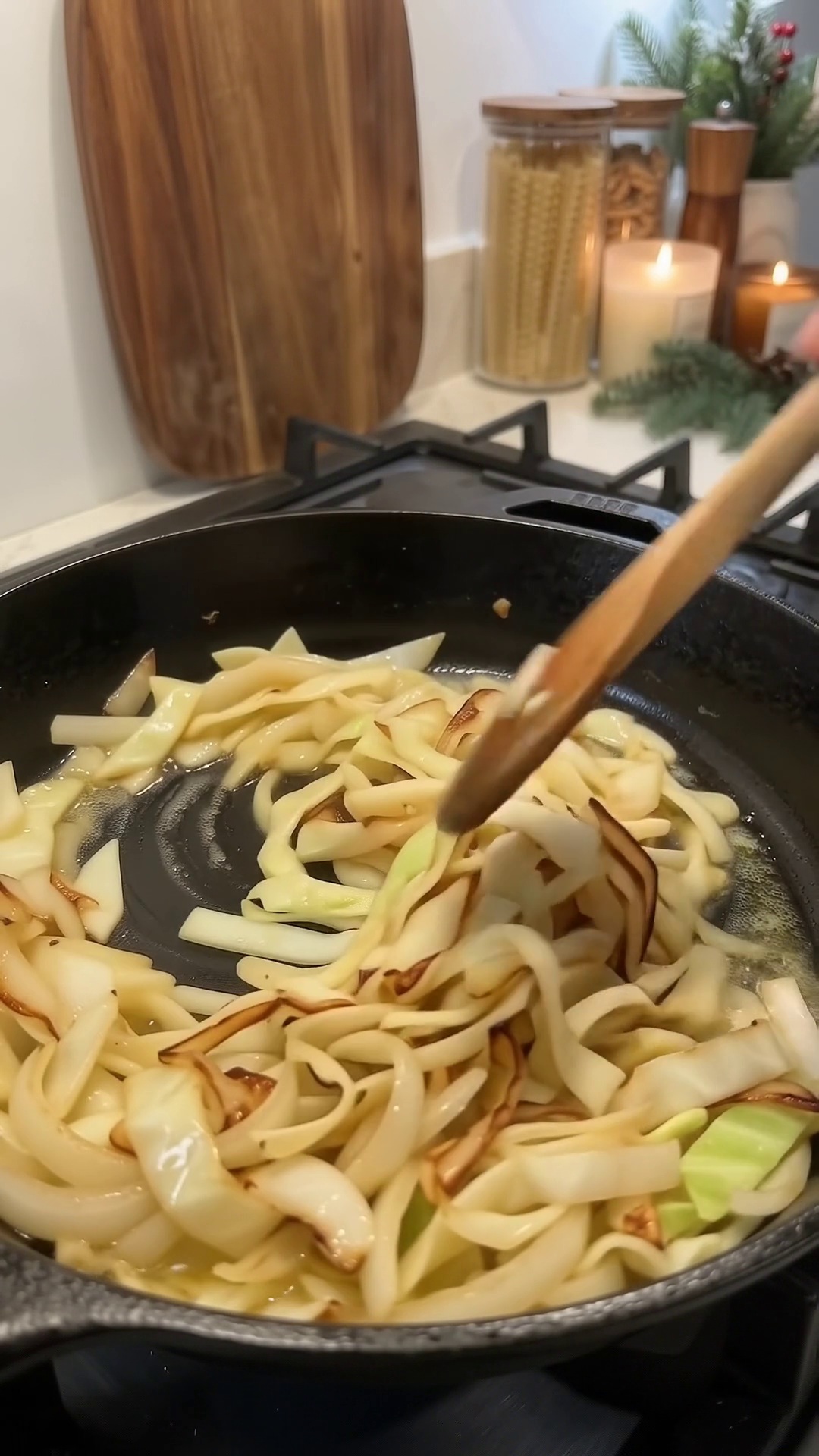
- Soften the cabbage. Add the thinly sliced cabbage and ½ teaspoon of the measured salt. Cook for 12–15 minutes, turning regularly, until tender with some golden edges. If the skillet is initially full, add the cabbage in stages as it wilts.
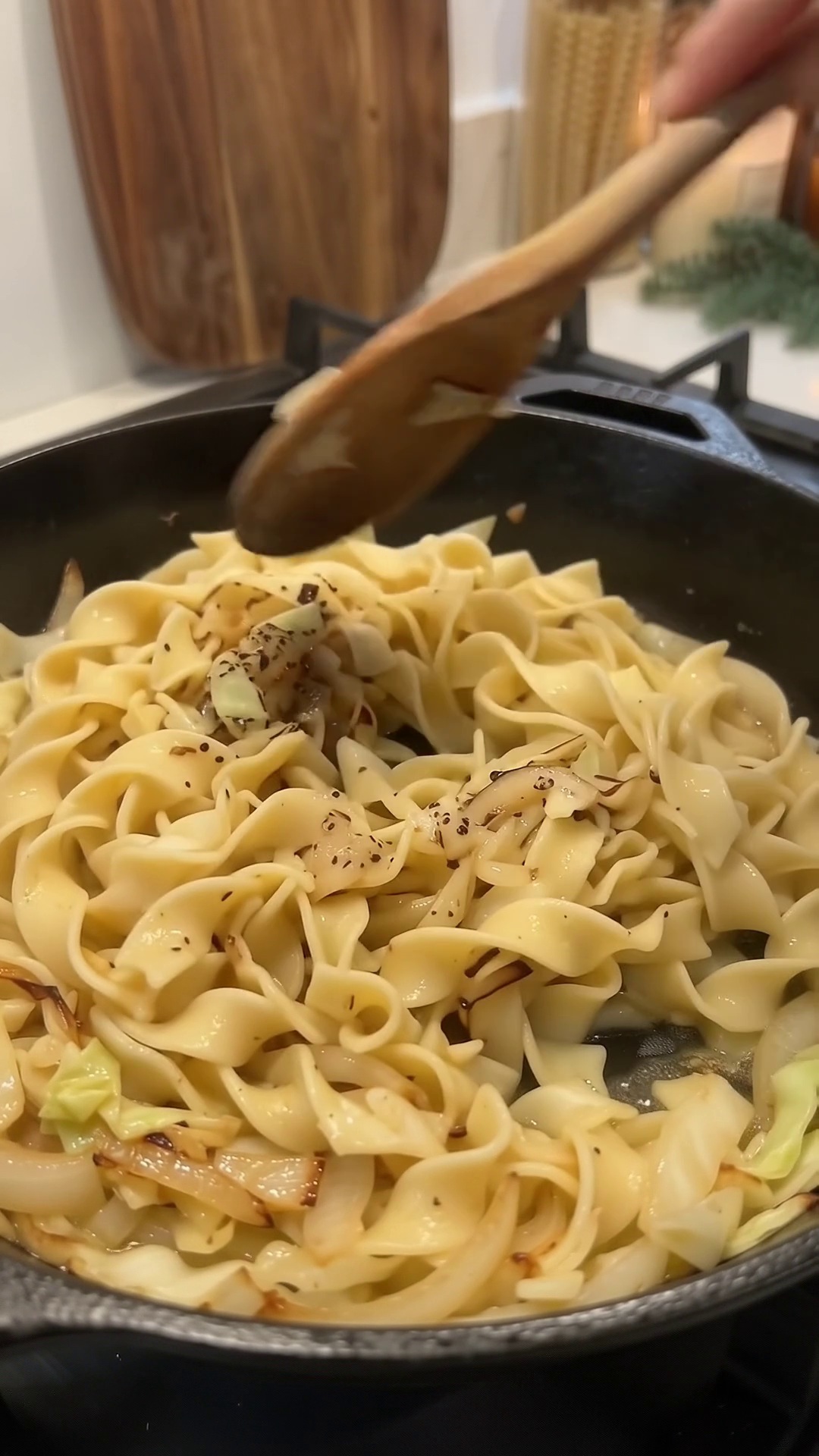
- Combine with noodles. Add the drained noodles and the remaining 2 tablespoons butter to the tender cabbage and onion. Use two spoons or a broad spatula to lift and turn everything gently, distributing the vegetables through the noodles.
- Season and finish. Add the black pepper and optional garlic powder. Taste and add from the remaining ½ teaspoon salt as needed. Toss over the heat for 2–3 minutes, until the butter has melted and the noodles are hot throughout.
- Serve warm. Divide into bowls for a meatless meal or serve family-style beside cooked sausage or pork. Include both cabbage and noodles in each serving so the vegetables do not remain in the bottom of the skillet.
Helpful Tips
Give cabbage enough room to soften without scorching. A wide skillet exposes more surface to the heat, helping moisture evaporate and allowing golden patches to form. Stir and turn rather than leaving one layer untouched for the whole cooking time. If you see dark bits developing quickly, reduce the heat.
Drain the noodles thoroughly, since excess water dilutes the butter coating. Avoid overcooking them in the pot; very soft noodles can break when tossed. If the vegetables need longer than the pasta, keep the drained noodles ready and combine only when the cabbage is tender. The order matters more than matching a rigid clock.
Variations and Serving Ideas
Leave out the optional garlic powder for the simplest butter, onion, and cabbage flavor. Keep the full amount of cabbage even if it looks like a large volume at first; it shrinks noticeably as it cooks. For a softer vegetable texture, continue cooking the cabbage gently before adding noodles. For more golden edges, let it contact the skillet briefly between turns, watching closely. Serve it as a side when other dishes provide the protein, or portion it as the main attraction for a simple supper.
Storage and Reheating
Refrigerate leftovers in shallow, covered containers within 2 hours and use within 3–4 days. Reheat to 165°F in a covered skillet over low to medium-low heat, turning gently. A small splash of water can help loosen cold noodles without adding more butter to the measured recipe. The microwave also works for individual portions; stir partway through. Freezing is possible for up to 2 months, though thawed noodles and cabbage will be softer.
Frequently Asked Questions
Can I cook everything in one pot?
This version uses a separate pot for the noodles so the cabbage can develop flavor in the skillet. Adding dry noodles directly would require a different liquid amount and method.
Why is my cabbage still firm?
The strands may be thick or the pan may be crowded. Keep cooking gently until tender before adding the noodles, even if it takes a little longer.
Is all the salt added at once?
No. Start with ½ teaspoon on the cabbage, then add the remaining measured salt to taste after the noodles and pepper are mixed in.