Ingredients
Method
- In a bowl, whisk together the Tender Quick, sugar, cornstarch, kosher salt, and cold water until all dry ingredients are fully dissolved.
- In a very large container, pour the liquid slurry over the ground pork shoulder and ground ham. Mix thoroughly with your hands until the liquid is absorbed and the meat is sticky.
- Divide the meat mixture evenly between two 9x5 loaf pans. Press down very firmly to remove all air bubbles and pack the meat tightly.
- Preheat your oven to 250°F. Tightly seal the tops of the loaf pans with aluminum foil.
- Place the sealed loaf pans into a large roasting pan. Pour hot water into the roasting pan until it reaches halfway up the sides of the loaf pans.
- Bake in the oven for 3 to 3.5 hours, or until a meat thermometer inserted into the center reads 155°F.
- Remove the loaf pans from the oven and carefully remove the foil.
- While still hot, place a flat object (like a foil-wrapped brick) directly onto the surface of the meat in both pans to press it down.
- Allow the pans to cool completely on the counter with the weights on.
- Transfer the pans (with the weights still on top) to the refrigerator and let them chill overnight.
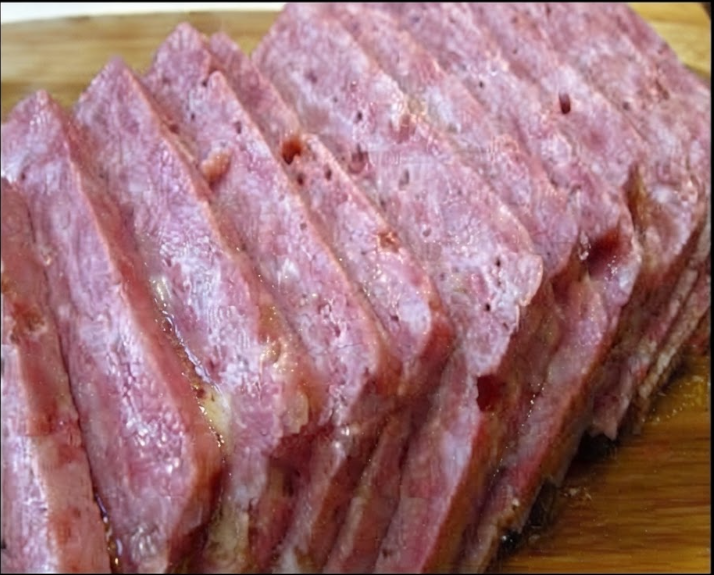
- The next day, remove the weights, pop the solid meat blocks out of the pans, slice, and pan-fry as desired!
Notes
Safety First: The Morton Tender Quick is required for safe curing and authentic flavor; do not substitute with regular table salt.
Pressing: A foil-wrapped brick is ideal, but heavy cast-iron skillets or heavy cans resting on a piece of rigid cardboard also work to press the meat.