Traditional Calabrese Italian Easter Bread
This Calabrese Italian Easter bread is a soft, sweet yeast bread with orange zest, vanilla, and a colorful sprinkle topping. The recipe comes from a first-generation Calabrese home baker who adapted her mother’s method over the years. Her family shapes the dough into round loaves, so the bread is easy to share at Easter breakfast or wrap and freeze for later.
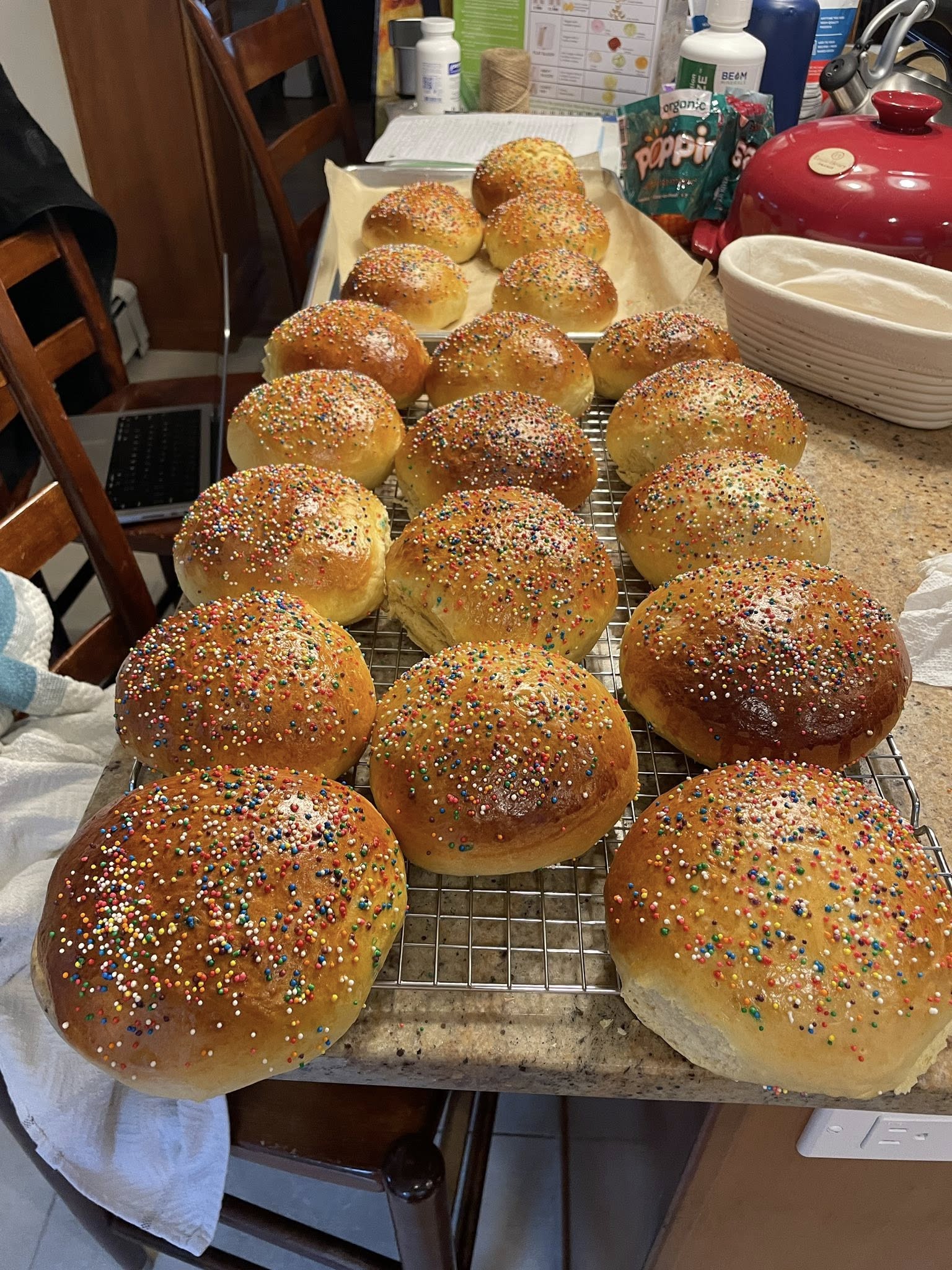
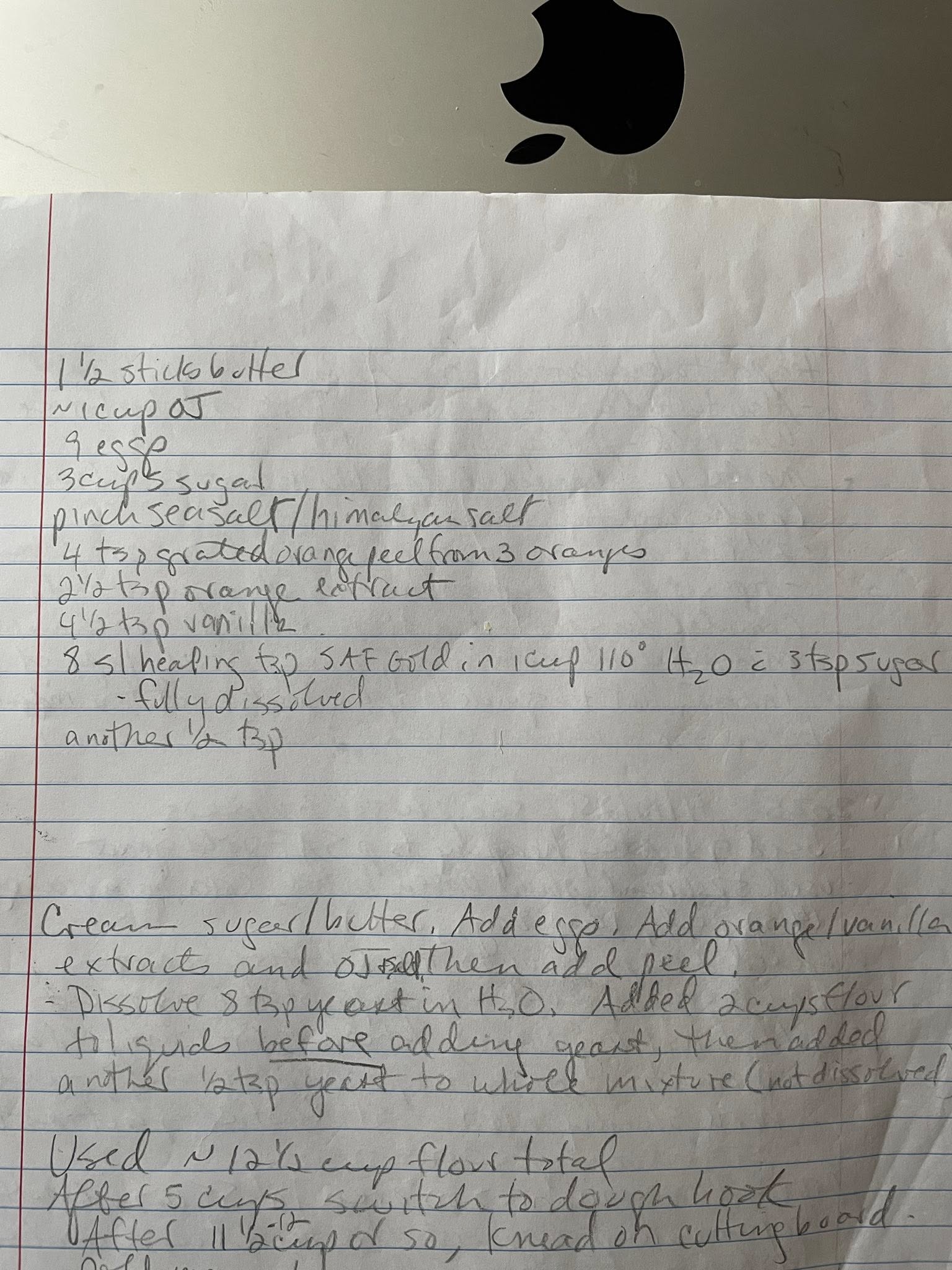
The baker recorded different flour amounts and rising times from year to year. Flour, humidity, and egg size can all change how the dough feels. Start with the measurements below and use the texture and rise of the dough to decide when to move on.
Ingredients
- 1½ sticks (¾ cup) butter, softened
- About 1 cup oil
- 9 eggs
- 3 cups granulated sugar
- Pinch of sea salt or Himalayan salt
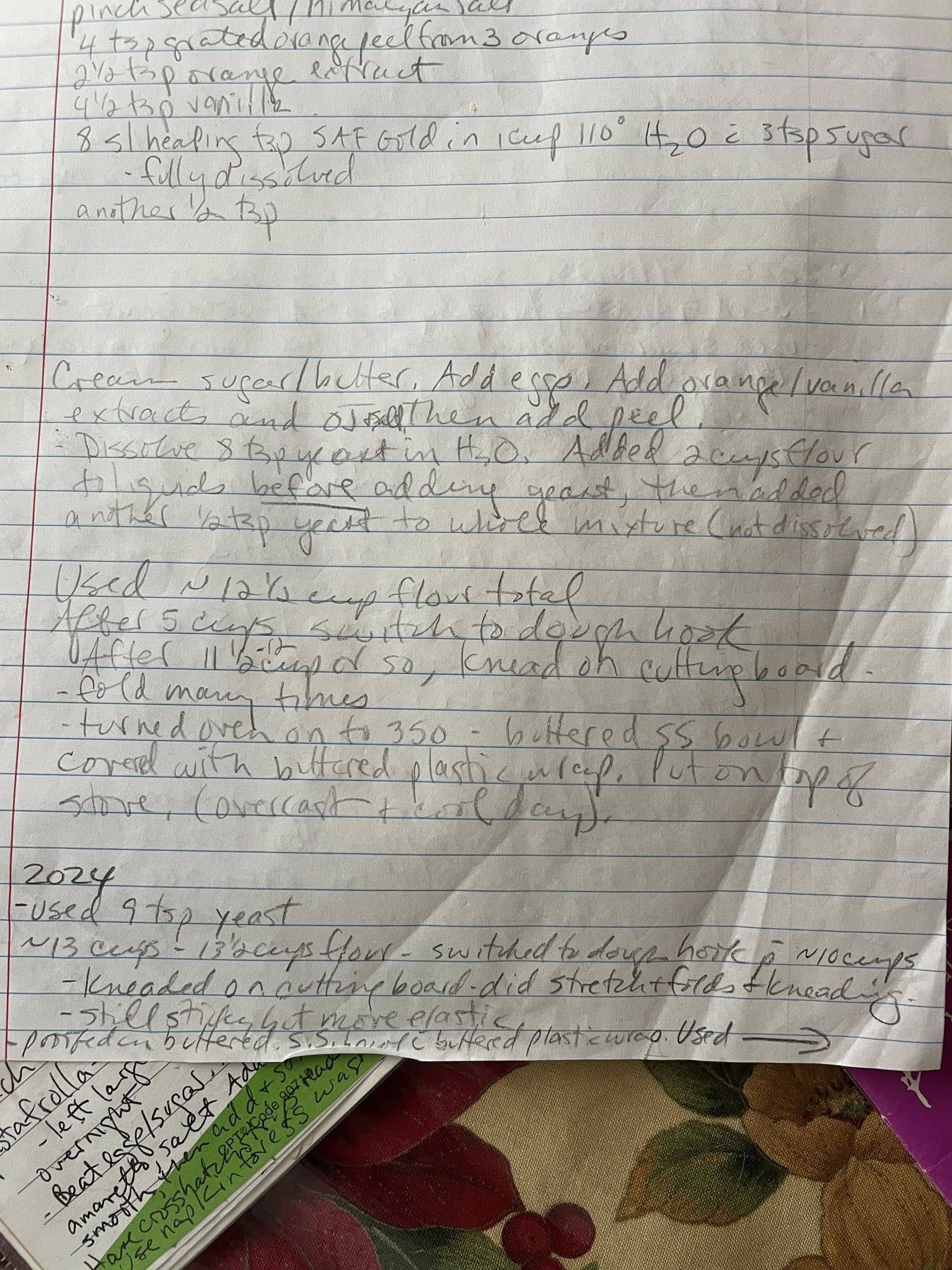
- 4 teaspoons grated orange peel, from about 3 oranges in the family notes
- 2½ teaspoons orange extract
- 4½ teaspoons vanilla extract
- About 9 slightly heaping teaspoons SAF Gold instant yeast, as used in the baker’s more recent batches
- 1 cup warm water, about 110°F, plus 3 tablespoons sugar for the yeast mixture
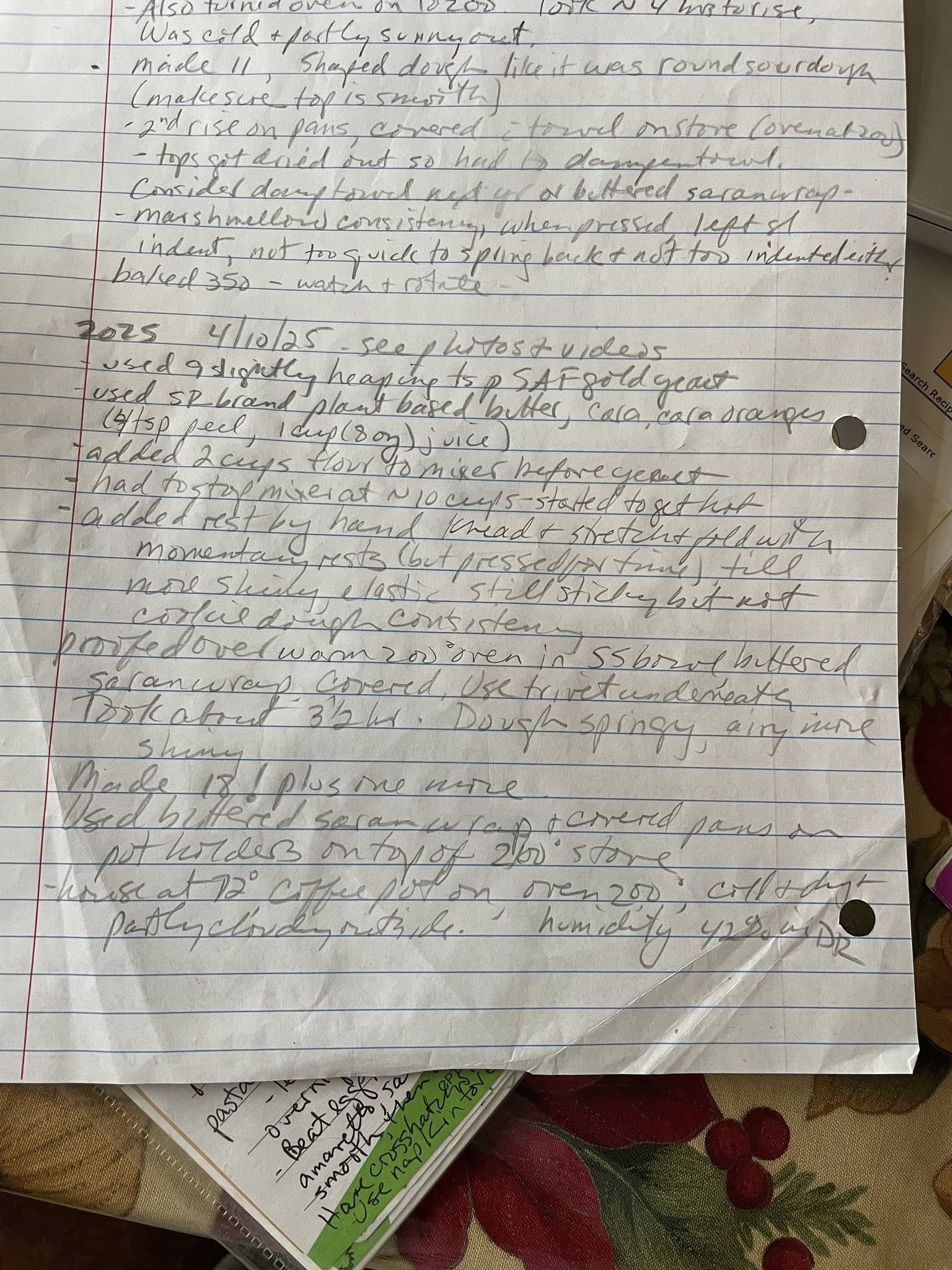
- About 12½ cups all-purpose flour in one documented batch, added gradually as needed
- Multicolored nonpareils for topping
The family notes describe several batches, including a later trial with plant-based butter. The ingredient list here follows the butter-and-oil version. The source gives no separate egg-wash formula.
How to Make Calabrese Italian Easter Bread
1. Mix the enriched dough base
Cream the softened butter and the 3 cups of sugar in a very large bowl. Add the eggs, then mix in the oil, orange extract, vanilla, salt, and grated orange peel. Use a bowl with room for the flour, since this nine-egg recipe makes a large batch.
2. Prepare the yeast mixture
Follow the handwritten method and stir the yeast and the additional 3 tablespoons of sugar into the cup of warm water, about 110°F. The baker used SAF Gold for her sweet dough. If you use another yeast, follow the package directions and allow for a different rise time.
3. Add the flour gradually
Mix some flour into the wet ingredients, then add the yeast mixture. Continue adding flour gradually until you have a soft dough that holds together. One batch took about 12½ cups. In another batch, the baker stopped using the mixer around the 10-cup mark and finished by hand. Keep the remaining flour nearby and add only as much as you need.
4. Knead until the dough becomes elastic
When the dough gets too heavy for the mixer, turn it out onto a work surface and knead by hand. The baker worked the dough with stretches and short pauses until it became more elastic and less shiny. It may feel sticky at first. Give the dough time to come together before adding more flour.
5. Let the dough rise
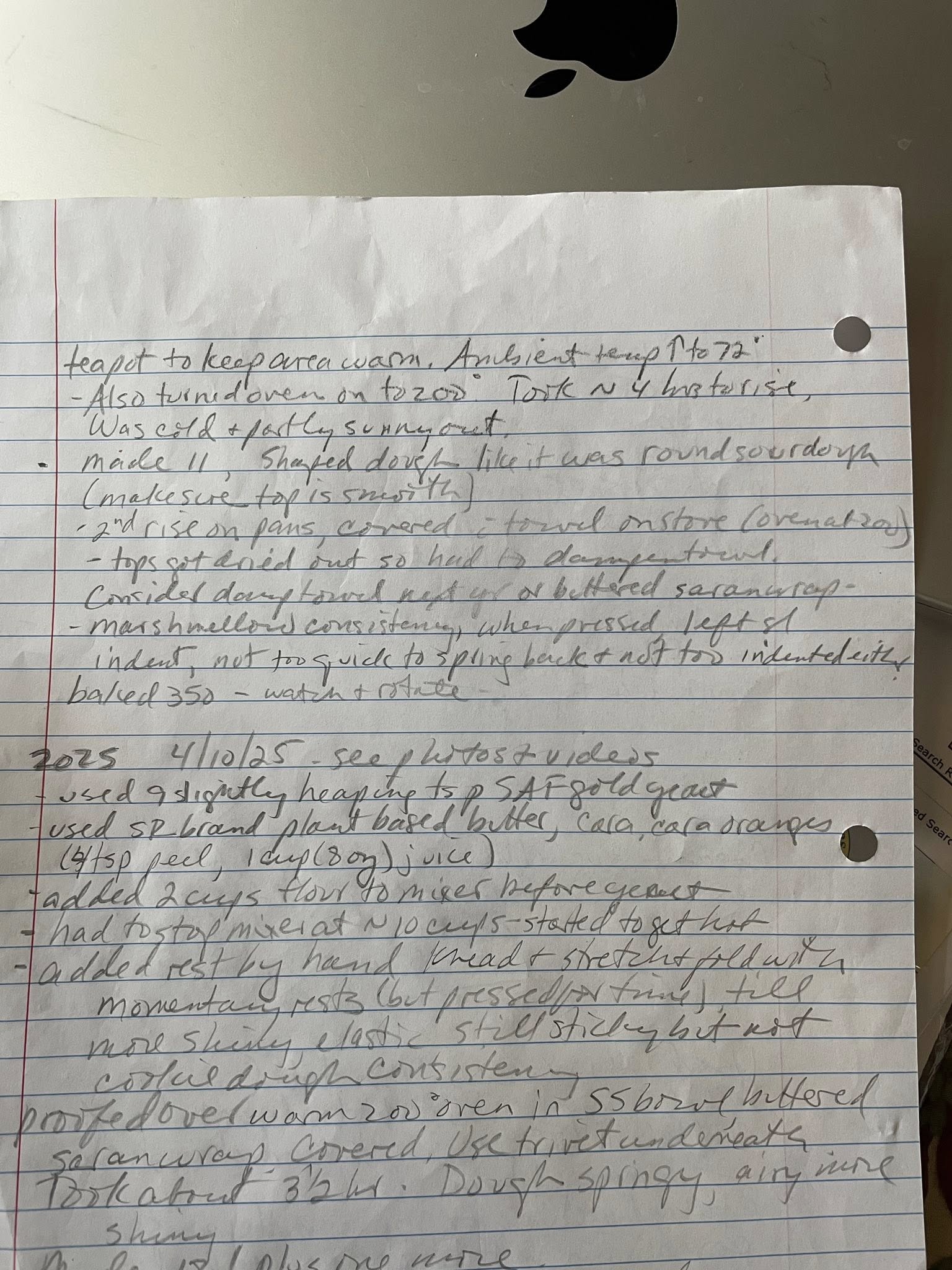
Put the dough in a large buttered bowl, cover it, and leave it in a comfortably warm place until noticeably puffy and expanded. One batch took roughly 3½ hours near 70°F, and another took longer. An enriched dough can rise slowly, so check the way it looks and feels as well as the time.
6. Shape the loaves and let them rise again
Divide the dough into evenly sized portions and shape each into a smooth round, tucking the seams underneath. Space the loaves on lined baking sheets and cover them to keep the tops from drying out. One second rise took about 1 hour and 20 minutes. The loaves should look airy and leave a slight indentation when gently pressed.
7. Add sprinkles and bake
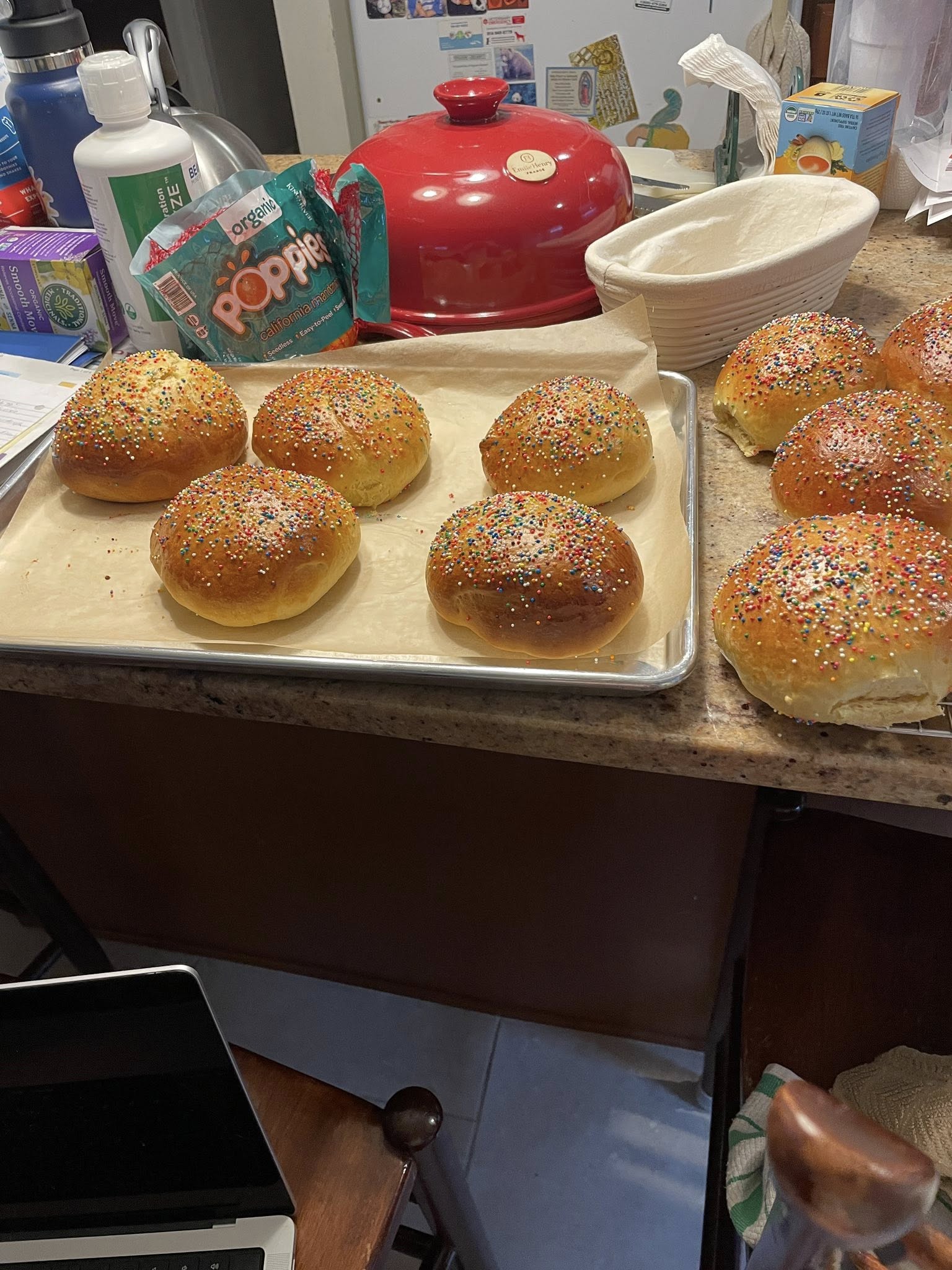
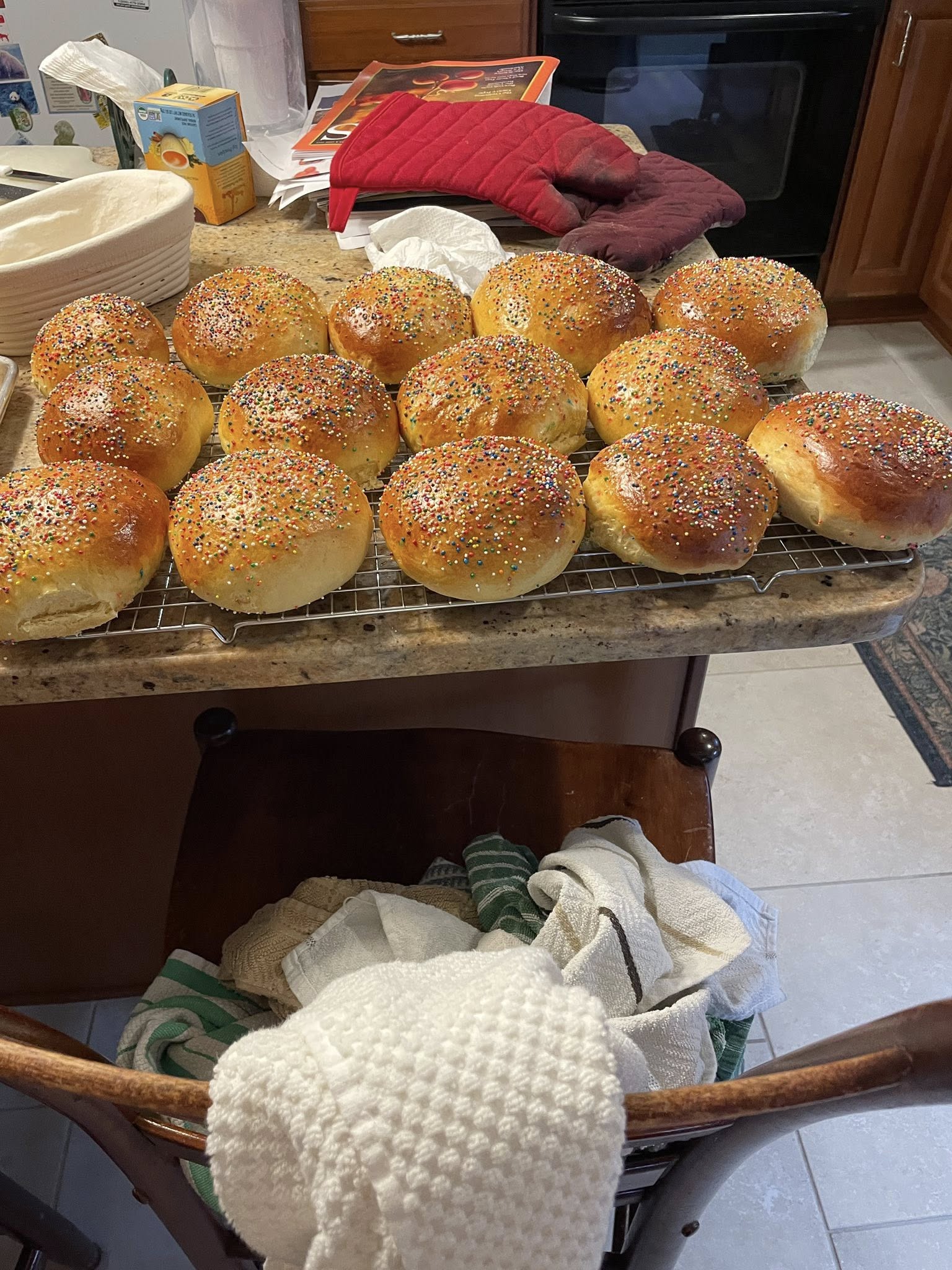
Heat the oven to 350°F. Add the nonpareils and bake until the loaves are golden and cooked through. The family notes emphasize that baking time depends on loaf size. Keep similar sizes together on each tray and check smaller loaves first. Transfer the bread to racks to cool before wrapping.
Tips for Even Loaves
Cover the rounds loosely while they rise so their tops stay supple. If some loaves are for gifting, shape those to a similar size and bake them together. Let each tray cool before wrapping the bread so steam can escape and the crust stays dry.
Serving and Freezing
Slice a loaf for Easter breakfast or serve it with coffee. The baker likes making smaller rounds because they fit more easily into a crowded freezer. Let each loaf cool completely, then wrap it tightly and place it in a freezer-safe bag or container. Thaw the bread while it is still wrapped at room temperature.
Frequently Asked Questions
How many loaves does the recipe make?
The baker made 18 loaves in one batch and 19 slightly smaller loaves in another. Your yield depends on how you divide the dough.
How much flour should I use?
Use 12½ cups as an approximate reference. Add it gradually and stop when the dough is soft, cohesive, and workable.
Does this version use decorated eggs?
This family shapes plain rounds and finishes them with sprinkles. The eggs in the ingredient list go into the dough.