Homemade Savoiardi (Italian Ladyfingers)
Homemade savoiardi are Italian ladyfingers with a light sponge center and a thin crust of powdered sugar. They’re the biscuits you dip in coffee for tiramisu, but a fresh batch is also lovely on its own with espresso or a bowl of berries. The shape comes from piping the batter onto parchment, and the rise comes from the air you beat into the eggs.
The recipe makes about two dozen ladyfingers. A batch takes about 25 minutes to prepare, and each tray bakes in 12 to 15 minutes. If you’re making them for tiramisu, plan enough time to let the biscuits cool and dry fully before dipping them. Freshly cooled ladyfingers are softer in the middle, which is just right when you’re serving them with coffee.
Ingredients for homemade savoiardi
You’ll need three large eggs, separated and at room temperature. The yolks make a rich base, while whipped whites give the biscuits their height and lightness. Divide half a cup of granulated sugar between the yolks and whites. Vanilla flavors the batter, and a pinch of salt balances the sweetness.
Sift three-quarters of a cup of all-purpose flour before adding it. Sifting breaks up lumps so you can fold the flour in with fewer strokes. A quarter teaspoon of cream of tartar is optional and helps the whipped whites hold their shape. Keep powdered sugar handy for dusting the piped cookies before baking and the cooled biscuits before serving.
How to make homemade Italian ladyfingers
1. Prepare the pans and beat the yolks
Heat the oven to 350°F. Line two baking sheets with parchment and fit a piping bag with a ½-inch round tip. Set up the pans before you mix the batter, since you’ll want to pipe it promptly once it’s folded together.
Beat the egg yolks with half the granulated sugar and the vanilla for 4 to 5 minutes. The mixture should turn pale and thick. Lift the beaters to check it. The batter should fall back into the bowl in a ribbon that briefly stays visible on the surface.
2. Whip the whites and fold the batter
With clean beaters and a clean bowl, whip the egg whites with the salt and optional cream of tartar until foamy. Gradually add the remaining sugar and keep beating until the whites form stiff, glossy peaks. Lift the beaters and check that the peak stands up. The whites should still look smooth and glossy.
Fold about a third of the whites into the yolk mixture to lighten it. Fold in half the sifted flour, then the remaining whites and finally the rest of the flour. Sweep a flexible spatula down through the center of the bowl and lift the batter from the bottom as you turn the bowl. As soon as you can no longer see streaks of flour or egg white, stop folding so the batter stays airy.
3. Pipe and dust the fingers
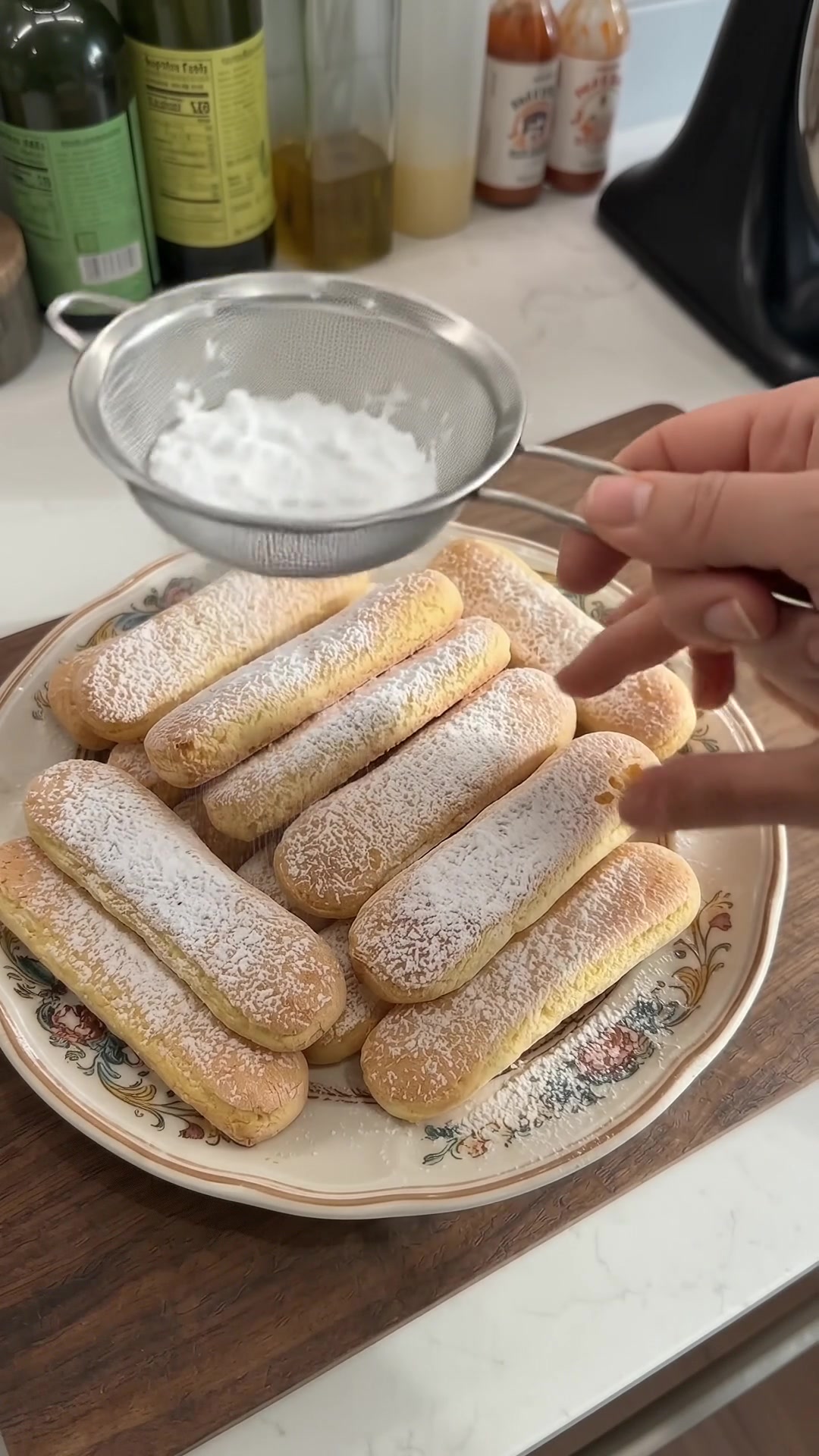
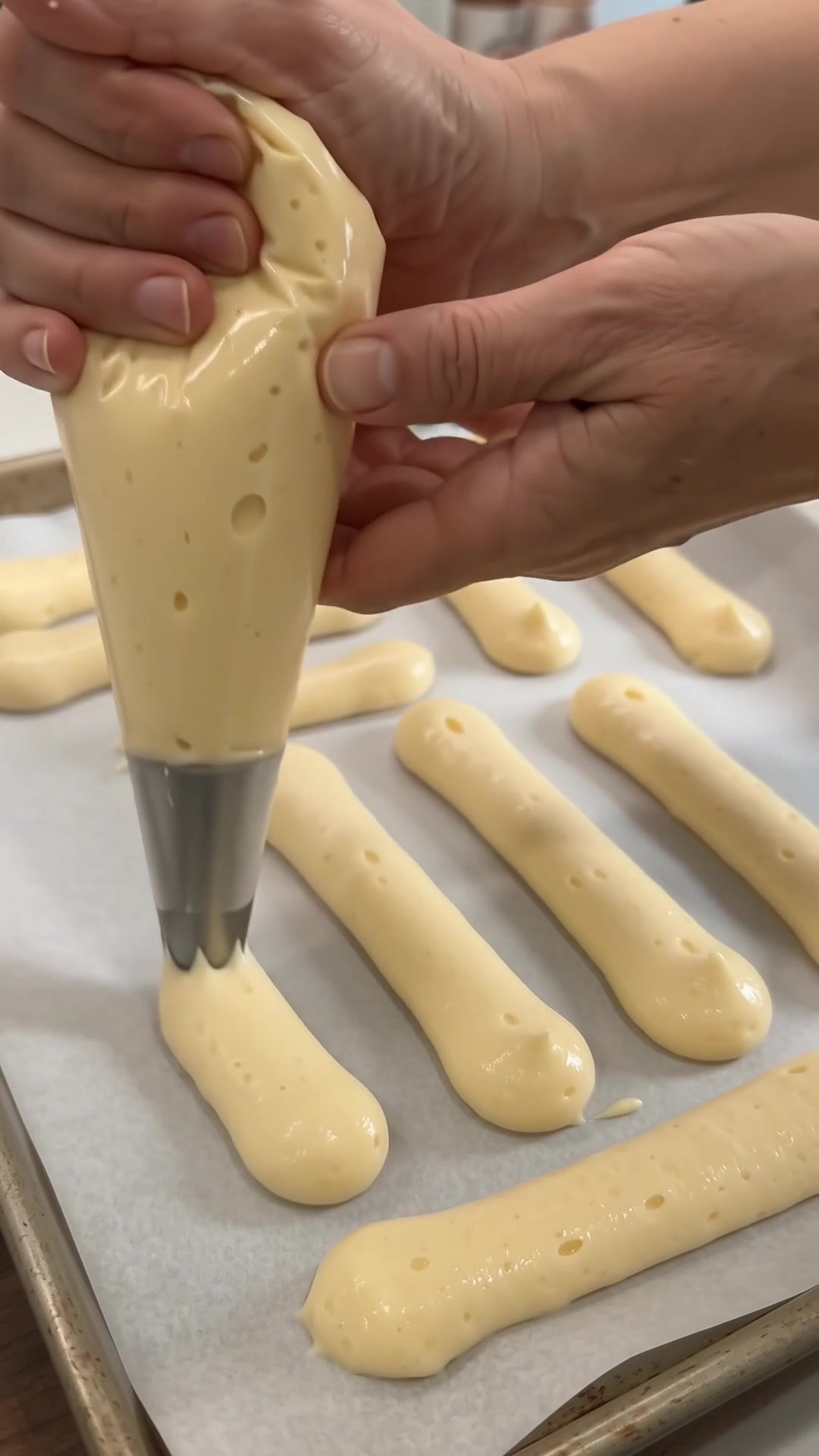
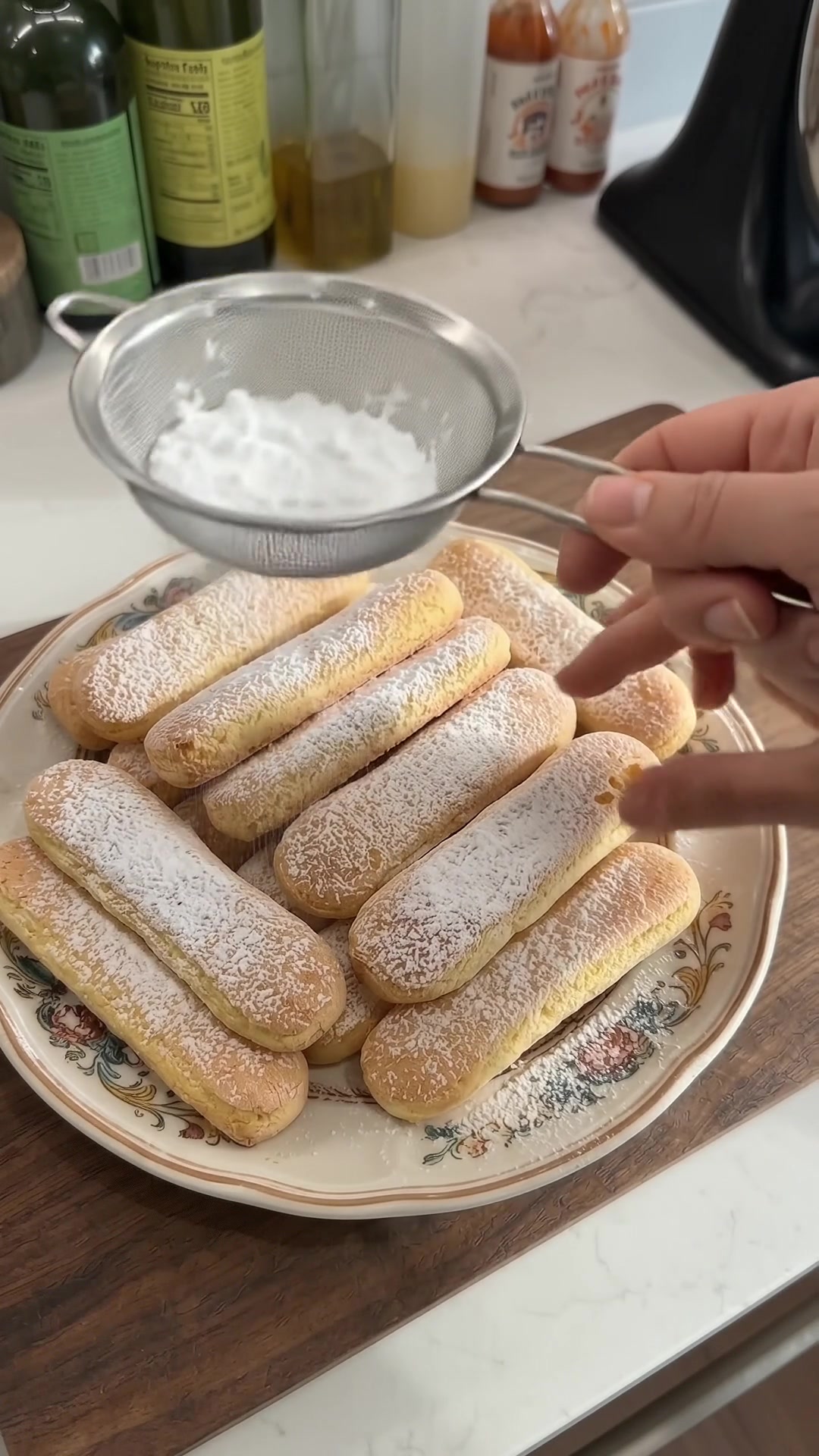
Transfer the batter to the prepared bag and pipe fingers about 4 inches long and 1 inch wide. Leave 1½ inches between them. Hold the bag at a steady angle and use even pressure so the ends are close to the same thickness as the middle. Dust them with powdered sugar, wait five minutes and dust them again. A small fine-mesh sieve helps spread the sugar evenly.
4. Bake and cool
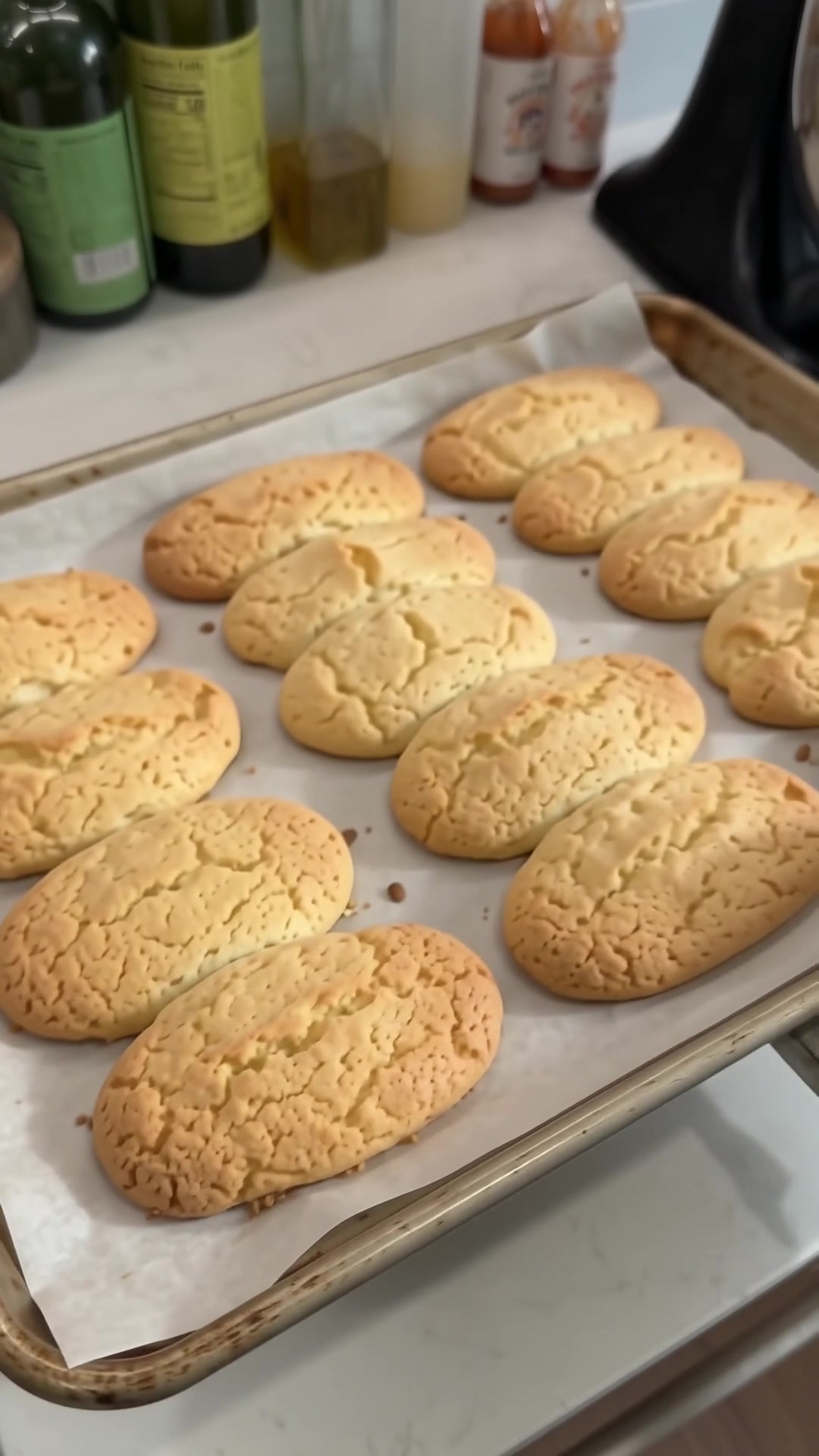
Bake for 12 to 15 minutes, until the ladyfingers are pale golden. Check near the earliest time, particularly if some fingers are narrower than others. Let them cool on the pan for five minutes, then move them to a wire rack. Cool them completely and add a fresh dusting of powdered sugar before serving.
Tips for light, evenly shaped savoiardi
Separate the eggs carefully so the whites go into a clean bowl. A little yolk or grease can make the whites harder to whip. If you’re using one set of beaters for both mixtures, wash and dry them before you start on the whites. Let the whipped whites and the folding do the work of keeping the batter light.
For uniform fingers, you can draw four-inch guides on a piece of parchment and turn it over before piping. Aim for a similar width from one biscuit to the next so they bake evenly. If the batter starts to lose some height while you work, finish piping without stirring it again.
Serving and storing ladyfingers
Serve the biscuits with coffee, fresh fruit or a spoonful of whipped cream. They also work in layered desserts such as a trifle or tiramisu. For tiramisu, allow the biscuits to dry fully so they hold up better when dipped. Dip one first to see how quickly it absorbs the coffee before assembling the rest of the dessert.
Let the ladyfingers cool completely before packing them, since steam trapped in a container can soften the sugar crust. Store fully dried biscuits in an airtight container for up to two weeks. Keep them whole until you’re ready to use them, especially if you want neat layers in a dessert dish.
Frequently asked questions
Can I skip the cream of tartar?
Yes. It helps support the whipped whites, and the recipe also works without it. Beat the whites in a clean bowl and add the sugar gradually.
Why did my ladyfingers spread?
The batter may have lost air while it was being folded or transferred to the piping bag. Use gentle strokes and pipe the fingers as soon as the batter is mixed.
Printable recipe
Ingredients
Method
- Preheat the oven to 350°F. Line two baking sheets with parchment and fit a piping bag with a ½-inch round tip.
- Beat the yolks with half the granulated sugar and the vanilla for 4–5 minutes, until pale and thick.
- Beat the whites with the salt and optional cream of tartar until foamy. Gradually add the remaining sugar and beat to stiff, glossy peaks.
- Fold one-third of the whites into the yolks, then half the flour, the remaining whites and the remaining flour. Stop when the streaks disappear.
- Pipe 4-inch by 1-inch fingers, spacing them 1½ inches apart.
- Dust with powdered sugar, wait 5 minutes and dust again.
- Bake for 12–15 minutes per batch, until pale golden.
- Cool on the pan for 5 minutes, then transfer to a rack. Dust again before serving. Dry fully before using in tiramisu.