Homemade Panettone Recipe (Traditional Holiday Bread)
Classic Homemade Holiday Panettone
The Crown Jewel of Holiday Baking
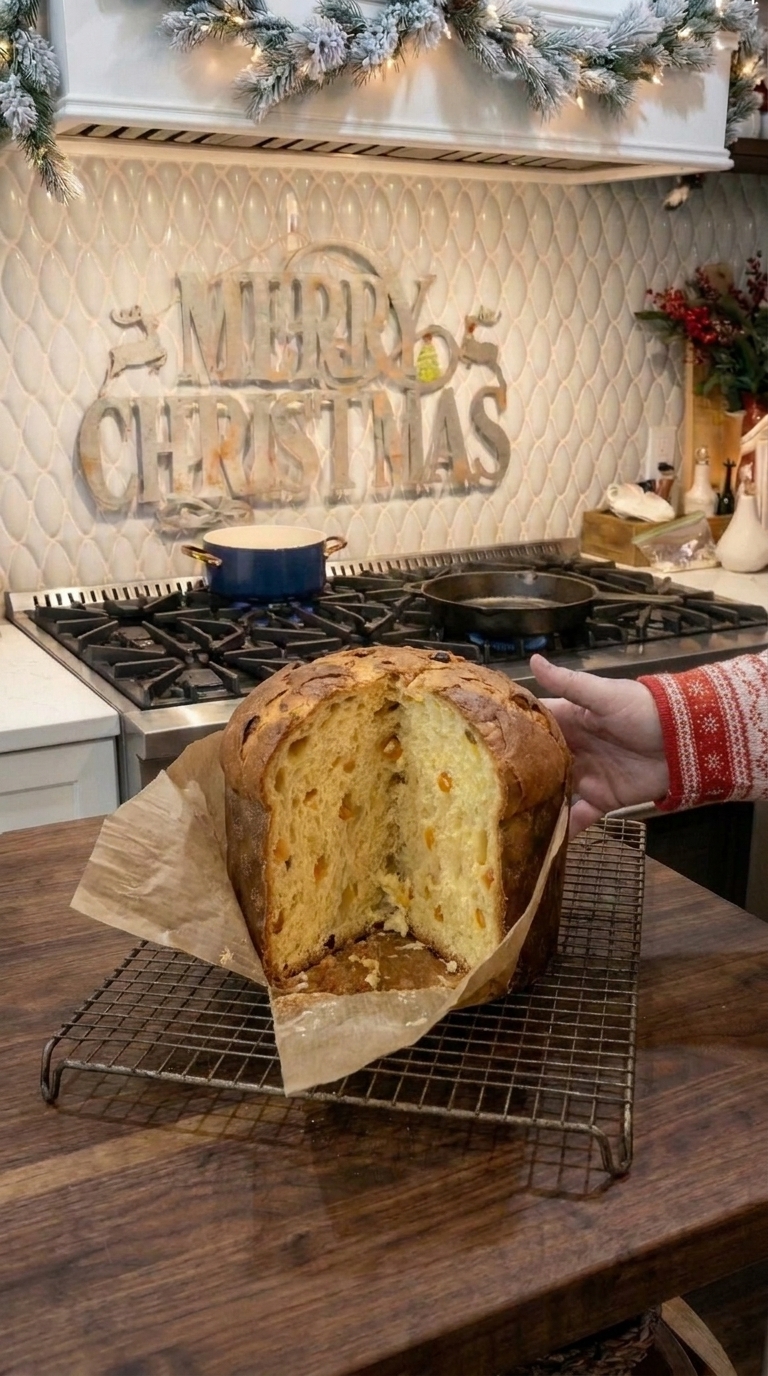
When the holiday season arrives, the kitchen transforms into a hub of warmth, nostalgia, and spectacular aromas. While cookies and pies are absolute staples, nothing quite captures the magic of festive baking like a towering, golden loaf of traditional Panettone. This iconic Italian sweet bread is a masterpiece of holiday baking, boasting a rich, impossibly soft, brioche-like texture that is generously studded with sweet raisins and vibrant candied orange peel.
While you can easily find beautiful boxes of Panettone lining supermarket aisles in December, baking it from scratch at home is an entirely different experience. The homemade version skips the artificial preservatives, resulting in a fresher, more deeply flavored loaf. The combination of active yeast, fresh orange and lemon zest, and rich butter creates an intoxicating aroma that fills the entire house. It has become a cherished seasonal tradition in our home; my husband and daughter are usually hovering around the oven, eagerly waiting for that first warm, buttery slice.
Creating this towering holiday bread does require a bit of patience, as the dough needs plenty of time to rise and develop its airy structure. However, the actual hands-on prep is surprisingly straightforward, especially if you let a stand mixer do the heavy lifting. Whether you serve it fresh on Christmas morning, give it as a stunning edible gift to neighbors, or use the leftovers to make the most decadent French toast of your life, this authentic Panettone will instantly elevate your holiday dessert table.

Why You’ll Love This Recipe
-
Spectacular Presentation: Baked in a traditional tall paper mold, this loaf looks like it came straight out of a high-end European bakery.
-
Incredible Aroma: The blend of fresh lemon zest, orange zest, and vanilla extract makes your kitchen smell absolutely heavenly.
-
Pillowy Texture: The slow rise and generous amount of butter create a crumb that is light, feathery, and melt-in-your-mouth soft.
-
Make-Ahead Friendly: The dough undergoes a slow, overnight rise in the refrigerator, allowing you to break up the prep work over two days.
-
The Ultimate Leftovers: Day-old Panettone makes the most incredible bread pudding or holiday French toast you will ever eat.
-
No Preservatives: Homemade means you know exactly what goes into the dough, resulting in a cleaner, fresher taste than store-bought boxes.
Ingredients
-
Warm Milk: A half cup of milk, warmed gently, acts as the liquid base to wake up the yeast.
-
Active Dry Yeast: One standard packet (2 ¼ teaspoons) provides the crucial lift for this tall, airy loaf.
-
Granulated Sugar: A third of a cup feeds the yeast and adds just the right amount of sweetness to the dough.
-
Eggs: Three large eggs at room temperature enrich the dough, giving it a beautiful golden color and a tender crumb.
-
Vanilla Extract: One teaspoon of pure vanilla extract for a warm, fragrant background note.
-
Citrus Zest: One tablespoon each of fresh orange zest and lemon zest. This is essential for that authentic, bright Panettone flavor.
-
All-Purpose Flour: Three and a half cups provide the structure. Measure carefully using the spoon-and-level method so the dough doesn’t become too dense.
-
Salt: One teaspoon to balance the sweetness and enhance the citrus flavors.
-
Unsalted Butter: A half cup (one stick), softened to room temperature. This is kneaded in gradually for a rich, brioche-like texture.
-
Raisins: One cup of plump raisins. You can soak them briefly in warm water or rum to make them extra juicy!
-
Candied Orange Peel: A half cup of high-quality candied orange peel brings signature pops of sweet, chewy citrus throughout the bread.
Step-by-Step Instructions
Step 1: Bloom the Yeast
In the bowl of your stand mixer, combine the warm milk, the packet of active dry yeast, and one teaspoon of the granulated sugar. Give it a gentle stir and let it sit undisturbed for about 10 minutes. The mixture should become visibly frothy and bubbly, which indicates the yeast is alive and active.
Step 2: Build the Dough Base
Once the yeast is bubbly, whisk in the remaining granulated sugar, the three room-temperature eggs, the vanilla extract, the orange zest, and the lemon zest. Add the all-purpose flour and the salt. Attach the dough hook to your stand mixer and mix on low speed until a shaggy, cohesive dough begins to form.
Step 3: Incorporate the Butter
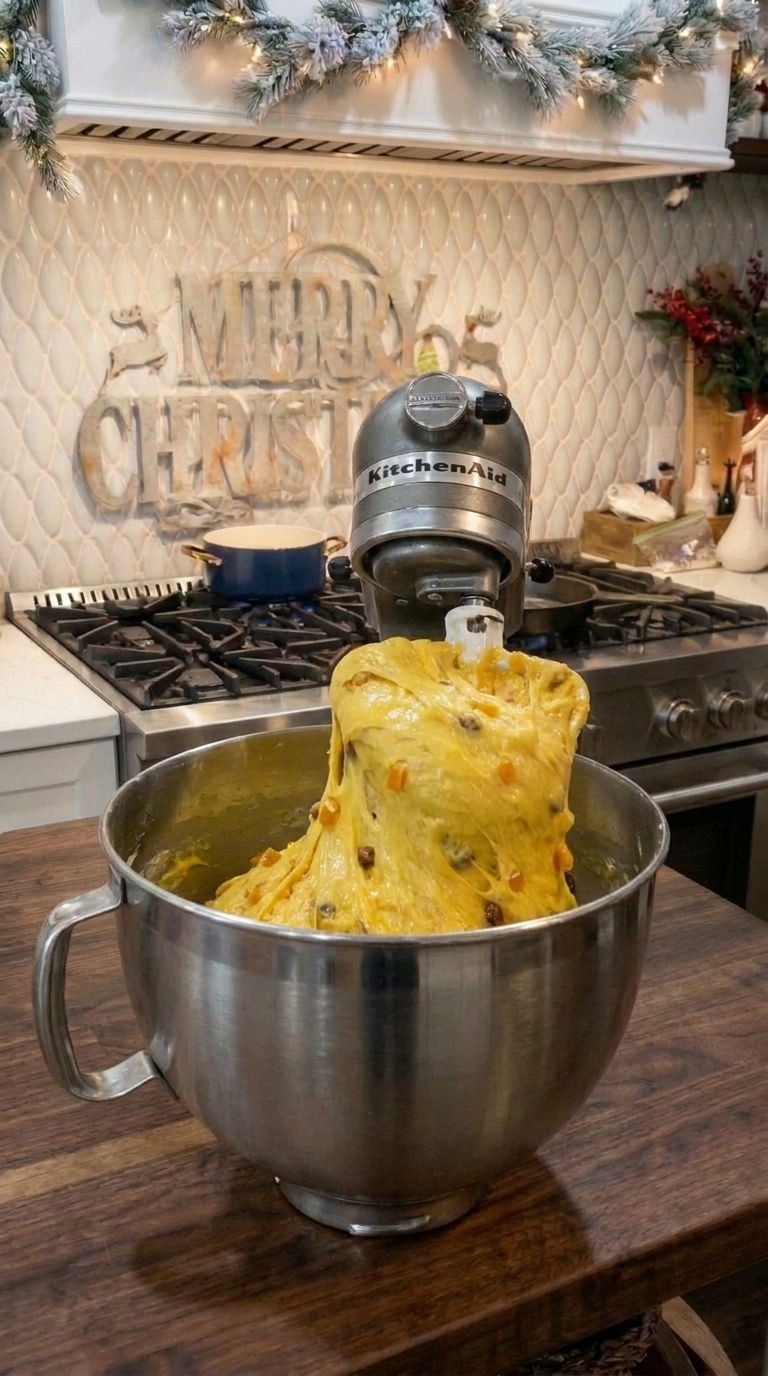
With the mixer running on low to medium speed, begin adding the softened unsalted butter one tablespoon at a time. Wait until each piece of butter is fully absorbed before adding the next. Once all the butter is incorporated, let the mixer knead the dough for a full 10 minutes. The dough will be quite soft and sticky, but it should become very elastic and pull away from the sides of the bowl.
Step 4: The Long Rise
Using a stainless steel spatula, scrape the dough out and transfer it to a large, lightly greased mixing bowl. Cover the bowl tightly with plastic wrap. For the absolute best flavor and texture development, let the dough rise overnight in the refrigerator. If you are in a rush, you can let it rise in a warm spot at room temperature for 3 hours instead.
Step 5: Fold in the Fruit
The next day, take the chilled dough out of the fridge and gently punch it down to release the air. Turn it out onto a lightly floured surface. Scatter the raisins and the candied orange peel over the top. Gently knead the dough by hand for a few minutes until the fruit is evenly distributed throughout.
Step 6: Shape and Mold
Gather the fruit-studded dough and shape it into a smooth, tight ball by tucking the edges underneath itself. Place the dough ball directly into a buttered Panettone paper mold (measuring 6 inches wide by 4 inches tall).
Step 7: The Final Proof
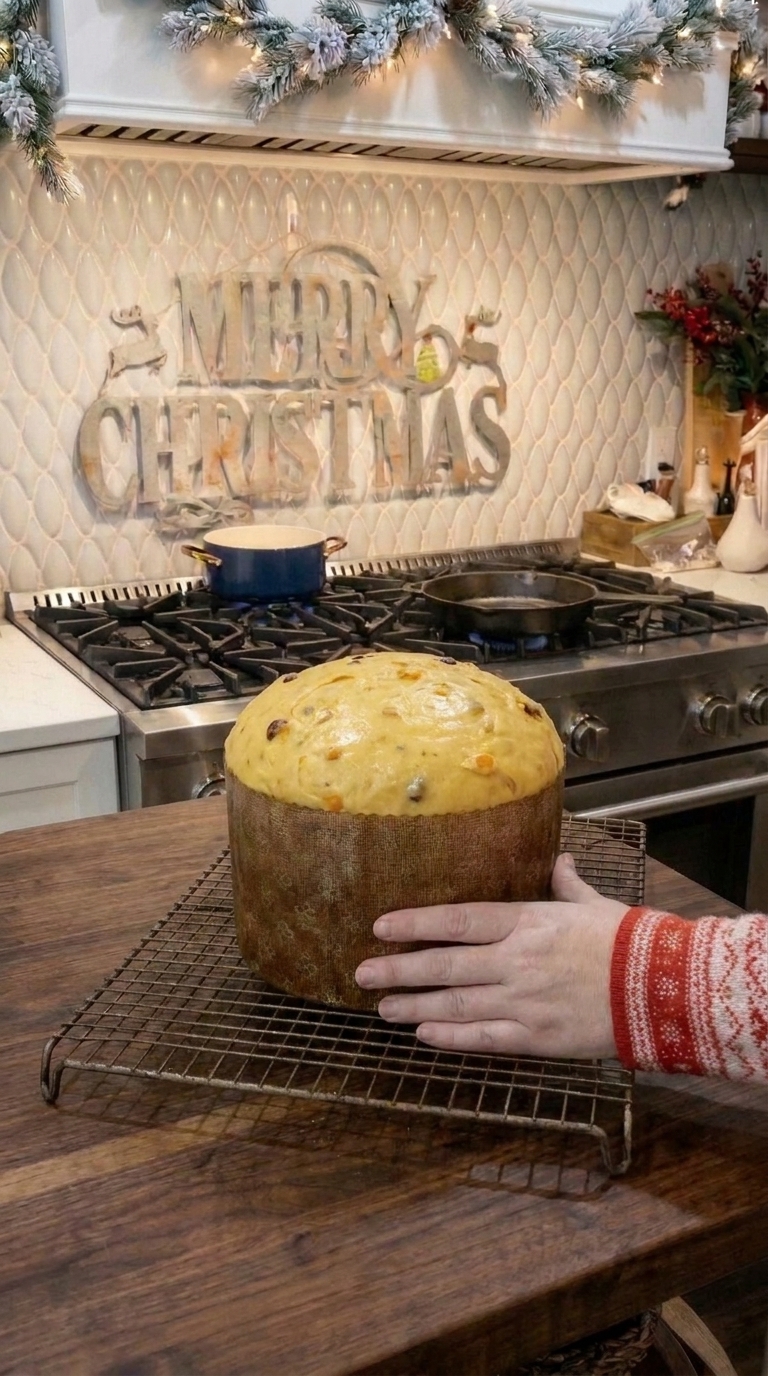
Cover the mold lightly with a clean kitchen towel or loosely draped plastic wrap. Place it in a warm, draft-free spot and let the dough rise for 2 to 3 hours. You want the dough to puff up significantly until it reaches the very top rim of the paper mold.
Step 8: Score, Butter, and Bake
Preheat your oven to 350°F (175°C). Take a very sharp knife or a razor blade and carefully cut a shallow “X” into the very top of the risen dough. Place a small, cold pat of butter directly in the center of the X. Bake on the center rack for 40 to 45 minutes. The loaf is done when it is a deep, rich golden brown and a wooden skewer inserted into the center comes out clean.
Step 9: Cool Completely
Remove the Panettone from the oven. To maintain its tall, airy structure, it must cool completely before you slice into it. Let it rest on a wire rack until it reaches room temperature.
Expert Cooking Tips
-
Patience is key: Panettone is a heavily enriched dough (meaning it contains a lot of butter and eggs), which inherently slows down yeast activity. Do not rush the rising times; focus on how the dough looks rather than strictly watching the clock.
-
Soak your fruit: For an even plumper, moister crumb, soak your raisins in warm water, apple juice, or dark rum for 30 minutes before folding them into the dough. Be sure to drain and pat them completely dry so you don’t add excess moisture.
-
Check the internal temperature: Because the loaf is so tall, the outside can look beautifully browned while the center is still raw. If you have an instant-read thermometer, the Panettone is perfectly baked when the center registers 190°F (88°C).
-
Tent with foil: If you notice the top of your loaf getting too dark around the 25-minute mark, gently tent it with a piece of aluminum foil to prevent burning while the center finishes baking.
-
Use the right butter temperature: The butter must be properly softened—pliable but not melting or greasy. If it is too warm, the dough will become a slick, oily mess that won’t hold its shape.
Variations to Try
-
Chocolate Chip Panettone: If you aren’t a fan of dried fruit, omit the raisins and candied peel entirely and substitute them with one and a half cups of high-quality dark chocolate chips or chocolate chunks.
-
Cranberry Almond: Swap the raisins for dried, sweetened cranberries, and fold in a half cup of toasted, slivered almonds for a wonderful textural crunch.
-
Spiced Holiday Loaf: Add a half teaspoon of ground cardamom, a half teaspoon of cinnamon, and a pinch of freshly grated nutmeg to the dry ingredients for a warmly spiced, aromatic variation.
What to Serve With Homemade Panettone
Panettone is a highly versatile holiday treat that can be enjoyed at any time of day. For a festive breakfast, serve thick, fluffy slices alongside a steaming mug of dark roast coffee, an espresso, or a rich hot chocolate. For an elegant after-dinner dessert, dust the top heavily with powdered sugar and serve it with a dollop of sweet mascarpone cream or a chilled glass of Prosecco or Moscato to complement the citrus flavors.
Storage & Reheating
Refrigerator
Panettone is best kept at room temperature. Storing bread in the refrigerator actually accelerates the staling process and will dry out your beautiful, feathery crumb very quickly.
Room Temperature
Once the loaf is completely cool, store it in an airtight container or wrap it very tightly in plastic wrap. Kept at room temperature, it will remain soft and fresh for about 3 to 4 days.
Freezer
This loaf freezes wonderfully! You can freeze the entire loaf tightly wrapped in multiple layers of plastic wrap and foil, or freeze individual slices in a zip-top bag for easy breakfasts. It will keep for up to 2 months. Thaw completely at room temperature before serving.
Reheating
While fresh Panettone is amazing at room temperature, warming it up makes the butter and citrus oils fragrant again. Lightly toast individual slices in a toaster or toaster oven, or warm them in the microwave for 10 seconds.
Frequently Asked Questions
Do I have to use a paper Panettone mold?
The tall paper mold is what gives Panettone its iconic, towering shape and helps the delicate dough climb upward as it bakes. You can find them easily online or at specialty baking stores. If you cannot find one, you can bake this in a clean, tall, buttered coffee can or a high-sided 6-inch cake pan lined with parchment paper that extends above the rim.
Why did my Panettone collapse after baking?
Enriched, towering breads are delicate. If it collapsed, it may have been slightly underbaked in the center, or the dough may have over-proofed during the final rise, weakening its structure. Traditional Italian bakers actually skewer the bottom of the baked loaf and hang it upside down to cool to prevent collapsing!
Can I make this without a stand mixer?
You can technically knead this by hand, but it is extremely difficult and messy. The dough is incredibly soft, sticky, and requires 10 full minutes of aggressive kneading to develop the gluten after the butter is added. A stand mixer is highly recommended.
Where can I find candied orange peel?
During the holiday season, you can usually find tubs of candied citrus peel in the baking aisle of most major grocery stores. You can also easily purchase it online or even make your own at home by simmering orange peels in a heavy sugar syrup until translucent.
What kind of flour is best for Panettone?
This recipe is designed for standard all-purpose flour, which yields a beautifully tender crumb. However, if you have bread flour on hand, you can absolutely use it! Bread flour has a higher protein content, which will give the tall loaf slightly better structure and a chewier texture.
Final Thoughts
Tackling a legendary, bakery-style holiday bread might seem intimidating, but the reward is absolutely worth the effort. There is a profound sense of pride that comes with pulling a towering, golden, citrus-scented Panettone out of your own oven. It embodies everything wonderful about holiday baking: patience, rich ingredients, and the joy of sharing something spectacular with your family. Grab your stand mixer, order those paper molds, and get ready to create a new, delicious holiday tradition!
Classic Homemade Holiday Panettone
A spectacular, towering Italian holiday bread! This beautifully soft, brioche-like Panettone is loaded with rich butter, sweet raisins, and bright candied citrus peel.
Ingredients
Method
- In the bowl of a stand mixer, combine the warm milk, active dry yeast, and 1 teaspoon of the granulated sugar. Let sit for 10 minutes until frothy and bubbly.
- Whisk the remaining sugar, eggs, vanilla extract, orange zest, and lemon zest into the yeast mixture.
- Add the flour and salt. Attach the dough hook and mix on low speed until combined.
- With the mixer running, add the softened butter one tablespoon at a time, waiting until each piece is absorbed. Knead for 10 minutes until the dough is smooth, elastic, and pulls away from the sides.
- Transfer the dough to a greased bowl, cover tightly, and let rise overnight in the refrigerator (or 3 hours at room temperature).
- Punch the dough down to deflate it. Turn it out and use a spatula to gently knead in the raisins and candied orange peel until evenly distributed.
- Shape the dough into a smooth ball and place it directly into a buttered Panettone paper mold (6x4 inches).
- Cover lightly and let rise in a warm, draft-free place for 2-3 hours, or until the dough reaches the top of the mold.
- Preheat your oven to 350°F (175°C). Use a sharp knife to cut a shallow "X" on the top of the dough. Place a small pat of butter in the center of the X.
- Bake for 40-45 minutes until the loaf is a deep golden brown and a skewer comes out clean. Cool completely on a wire rack before slicing.
Notes
Do not rush the rising times; the heavily enriched dough requires patience to climb the tall mold.
Ensure your butter is softened but not melted so the dough does not become greasy.
Store leftovers wrapped tightly at room temperature for up to 4 days, or freeze for up to 2 months.
Ensure your butter is softened but not melted so the dough does not become greasy.
Store leftovers wrapped tightly at room temperature for up to 4 days, or freeze for up to 2 months.