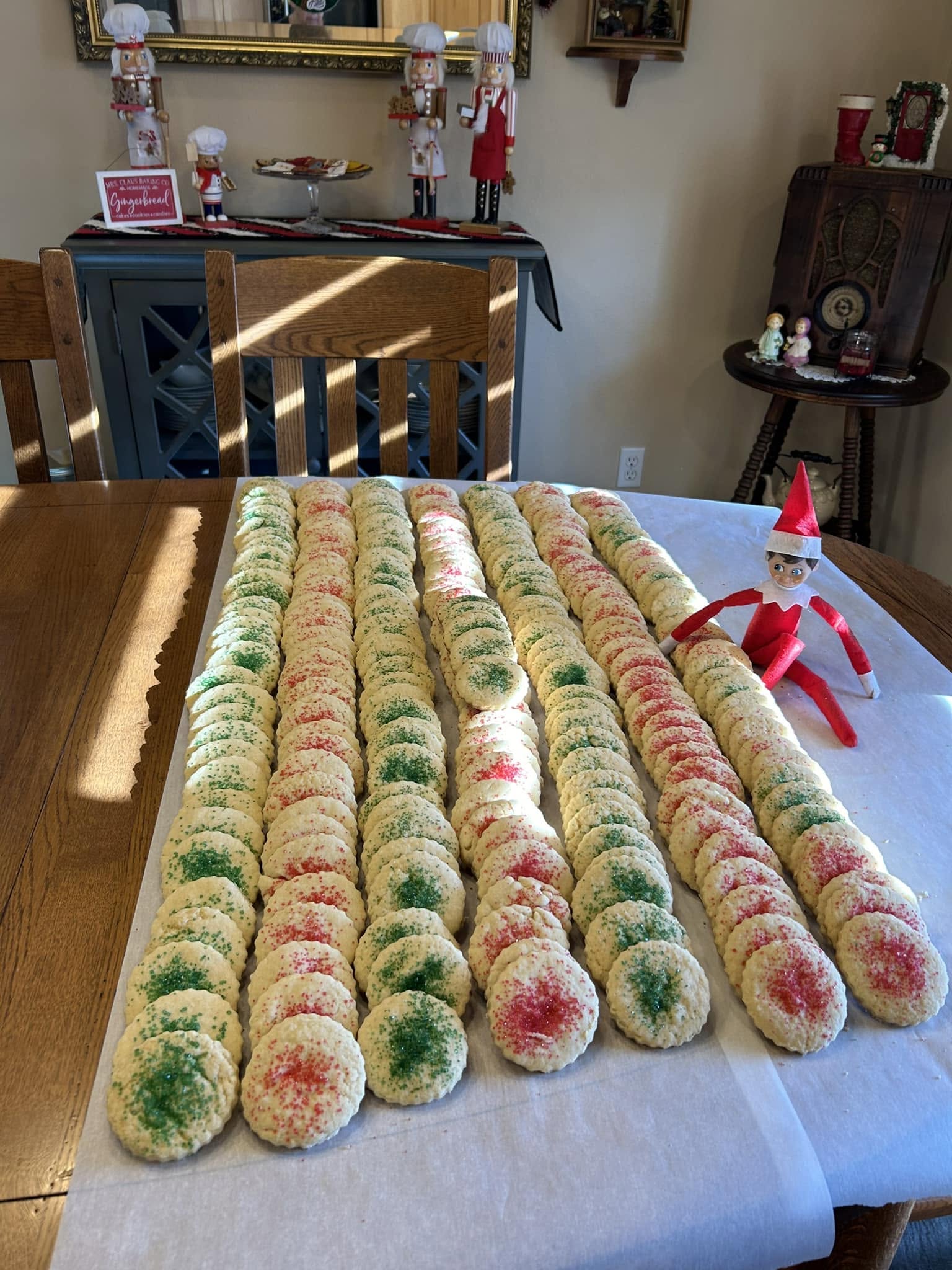
Old-Fashioned Sugar Cookies
These old-fashioned sugar cookies come from a family recipe traced to a Methodist cookbook. The cookbook was already in the family before the baker’s parents married in 1934, and the baker recalls making the cookies from about age 12. Now the family makes more than 20 dozen each Christmas, alongside batches of molasses cookies. In the supplied photo, rows of cookies are sprinkled with red and green sugar.
The recipe calls for melted shortening, two eggs, and a teaspoon of vanilla. A little cream of tartar and baking powder go into the flour, and the cookies bake just until the edges start to color. You can portion the dough with a spoon and decorate each mound right on the pan, a technique that comes in handy when you have several trays to fill.
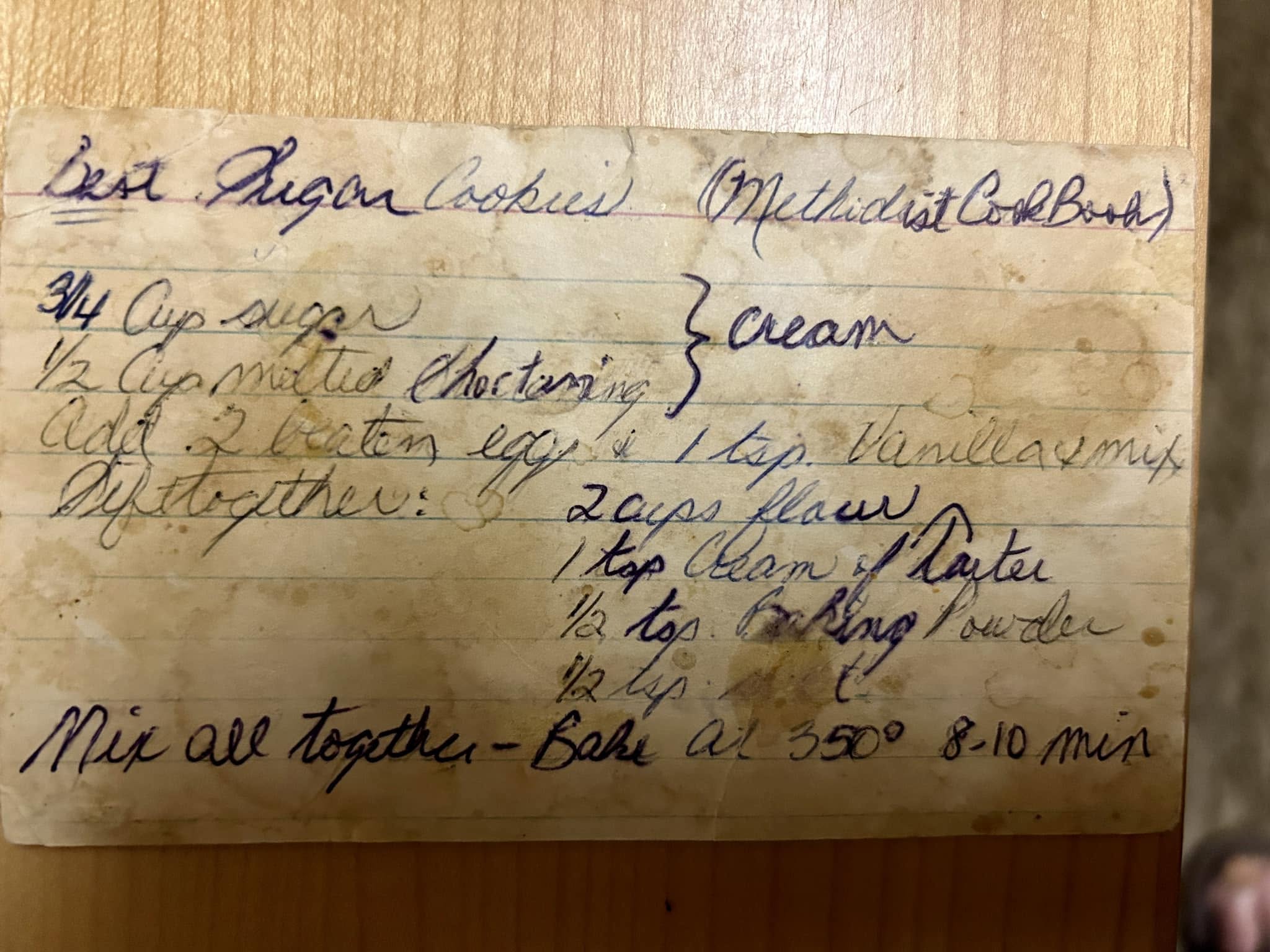
Ingredients for old-fashioned sugar cookies
- ¾ cup granulated sugar
- ½ cup melted shortening, cooled until just warm
- 2 large eggs, beaten
- 1 teaspoon vanilla extract
- 2 cups all-purpose flour
- 1 teaspoon cream of tartar
- ½ teaspoon baking powder
- ½ teaspoon salt
- Red and green sanding sugar, optional
Measure the flour by spooning it into the cup and leveling it off. Flour packed into the cup can make the dough stiffer and the cookies drier. For the family’s version, use shortening as written. You’ll want it liquid enough to stir into the sugar and cool enough to mix with the eggs.
How to make the sugar cookies
1. Heat the oven and mix the wet ingredients
Heat the oven to 350°F and line your baking sheets with parchment. Stir the granulated sugar and melted shortening together until evenly blended. Beat in the eggs and vanilla, then scrape the bowl so no pockets of sugar or shortening are left at the bottom. The mixture should look uniform before you add the flour.
2. Add the dry ingredients
In a separate bowl, whisk or sift the flour, cream of tartar, baking powder, and salt. Add them to the wet mixture and stir just until the streaks of flour disappear. If the dough is too sticky to scoop cleanly, cover it and chill briefly. A short chill is optional and is helpful if the kitchen is warm.
3. Portion and decorate
Scoop small, evenly sized mounds onto the prepared baking sheets, leaving room between them to spread. You can flatten each mound gently if you like a flatter cookie. Sprinkle the tops with colored sanding sugar while the dough is soft so the crystals stick. Use the same spoon or scoop for every cookie to help the tray finish evenly.
4. Bake and cool
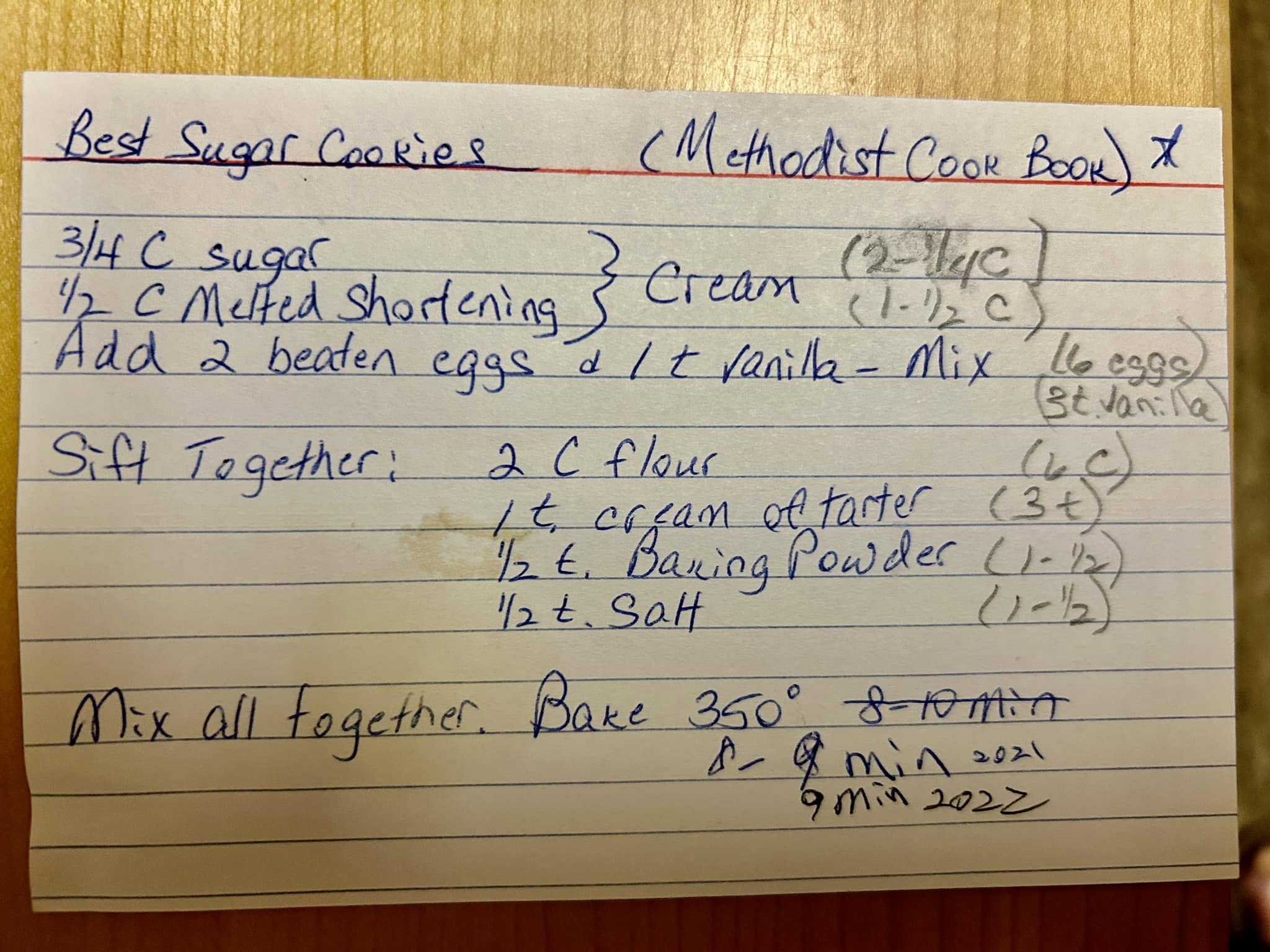
Bake for about 8 to 10 minutes. Begin checking at eight minutes. The tops should look set and the edges should just begin to turn golden. The rewritten family copy includes notes of eight to nine minutes in one year and nine minutes in another. Use the first tray to gauge how your oven and scoop size affect the timing. Let the cookies firm up on the sheet for a few minutes, then move them to a wire rack.
Tips for baking several trays
If you’re making cookies for a holiday exchange, bake one tray before portioning the entire bowl. Check how much the first batch spreads and adjust the spacing on the next pan if needed. Keep the scoop size consistent so you can use the same baking time as a starting point. Let used pans cool before scooping the next batch onto them, since a hot sheet can soften the dough before it reaches the oven.
Sanding sugar is easiest to apply before baking. For a mixed tray, sprinkle some cookies with red sugar and some with green. If you’ve got both colors out at once, pour a little of each into a separate bowl so you can decorate quickly without shaking sugar all over the pan.
Storing and sharing the cookies
Let the cookies cool completely before packing them so they stay dry in the tin. Store them in an airtight container at room temperature for about four to five days for best texture. Slip parchment between layers when packing them for a cookie exchange so the colored tops stay tidy. To freeze them, pack cooled cookies in a sealed freezer-safe container and thaw them at room temperature while still covered.
Frequently asked questions
Can I use butter instead of shortening?
Melted butter will change the flavor and may change how much the cookies spread. Use shortening to follow the family recipe.
Does the dough need to chill?
Chilling is optional. Scoop it right away if it holds its shape, or refrigerate it briefly if it sticks to the spoon or slumps on the tray.
How can I tell when the cookies are ready?
Look for set tops and just a little color at the edges. The cookies finish firming on the hot sheet, so give them a few minutes before moving them.