Easy No-Knead Dutch Oven Bread – 4-Ingredient Overnight Bread
Easy No-Knead Dutch Oven Bread – 4-Ingredient Overnight Bread
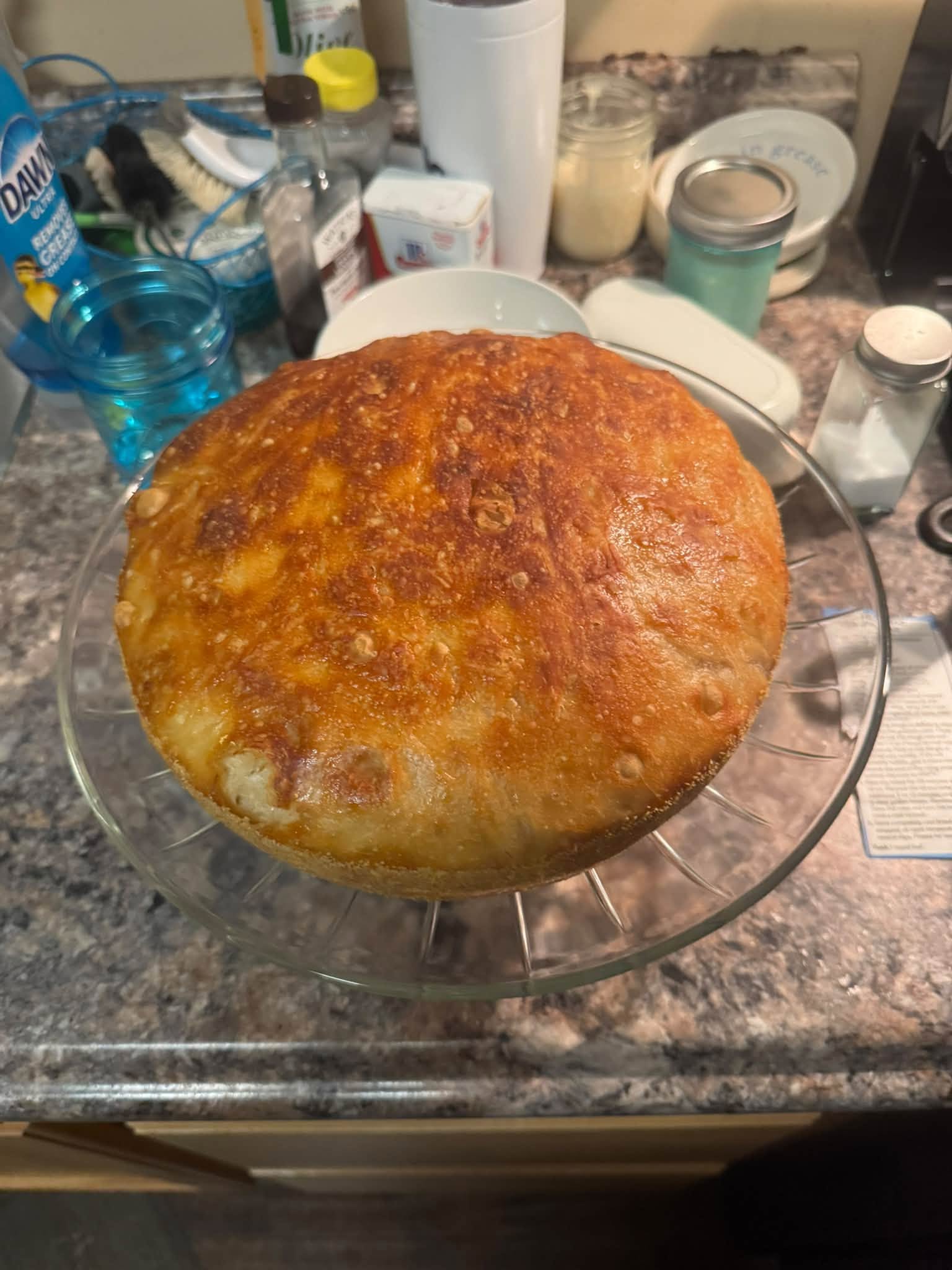
Easy No-Knead Dutch Oven Bread gives you a rustic loaf with a golden crust and a soft, chewy center, using four simple dough ingredients. Flour, yeast, salt, and water come together in one bowl, then a long overnight rest does the work that kneading would normally help accomplish.
This is a relaxed baking project to start in the evening and finish the following day. There is no mixer, no elaborate shaping, and no need to handle the sticky dough repeatedly. Serve thick slices with soup or stew, toast them for breakfast, or enjoy a cooled slice with butter and jam.
Recipe Information
- Prep time: 10 minutes
- First rise: 10–12 hours
- Second rise: Approximately 2 hours
- Bake time: Approximately 50 minutes
- Total time: Approximately 13–15 hours, plus cooling
- Yield: 1 large loaf, approximately 12 slices
Ingredients
For the Bread Dough
- 5 cups unbleached all-purpose flour or bread flour
- ¼ teaspoon instant yeast
- 2¼ teaspoons salt
- 2⅔ cups water
For Preparing the Pot
- Room-temperature butter, for greasing
- Cornmeal, for dusting
The four-ingredient description refers to the dough; butter and cornmeal are used to prepare the Dutch oven. Unbleached all-purpose flour works well, while bread flour can give a slightly chewier result. Use ordinary room-temperature water for the long rise rather than hot water intended to speed fermentation.
How to Make No-Knead Dutch Oven Bread
1. Mix the Dough
Combine the flour, instant yeast, salt, and water in a large mixing bowl. Stir with a sturdy spoon or spatula until a sticky dough forms and no loose pockets of flour remain. Scrape around the bottom and sides of the bowl to incorporate the dry ingredients.
The dough should look rough and feel wet. Resist the temptation to keep adding flour to make it resemble a kneaded dough. Cover the bowl, leaving enough room for the dough to expand.
2. Rest Overnight
Let the covered dough rest at a cool room temperature, approximately 70°F, for 10–12 hours or overnight. The small amount of yeast works gradually during this long rest, developing flavor and structure.
Choose a spot away from direct heat or a sunny window. A much warmer kitchen can change the timing, so check the dough’s progress rather than assuming every overnight rise behaves identically.
3. Prepare the Dutch Oven
Coat the inside of a Dutch oven with room-temperature butter. Sprinkle the bottom and sides lightly with cornmeal to help prevent sticking. Use a pot at least 4 inches deep with enough room for this large loaf to expand.
Check that the pot, lid, and any lid knob are rated for 450°F. This method starts the second rise in the prepared, unheated pot; it does not call for transferring dough into a preheated Dutch oven.
4. Transfer and Rise Again
Gently loosen the dough from the bowl with a spatula and transfer it to the prepared Dutch oven. Handle it as little as possible to preserve the air bubbles formed overnight. There is no need to knead or tightly shape it.
Place the lid on the pot and let the dough rest for approximately 2 hours. It should become puffy and bubbly on top. Near the end of this rest, preheat the oven to 450°F.
5. Bake Covered, Then Uncovered
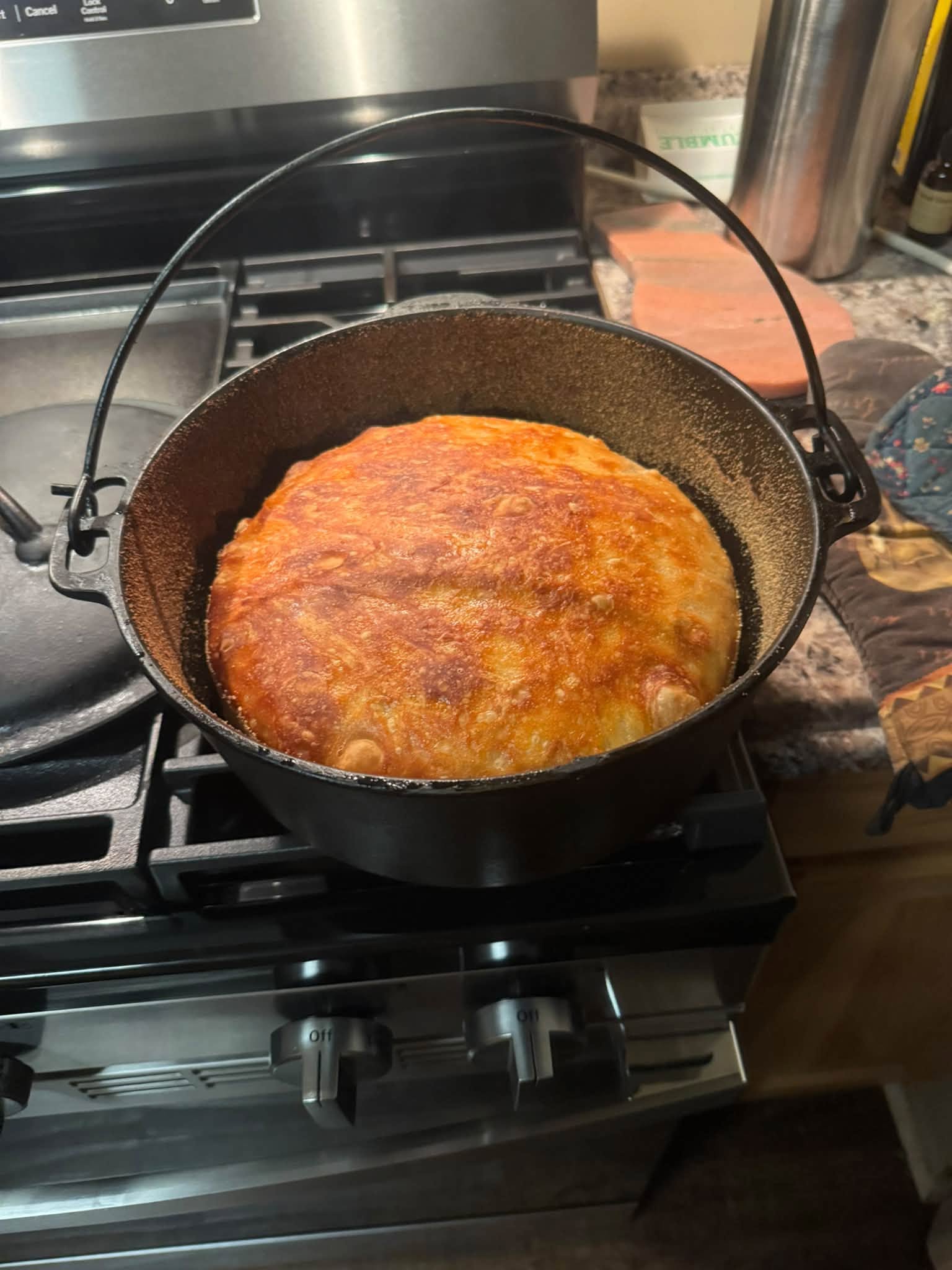
Place the covered Dutch oven in the preheated oven. Bake for 45 minutes with the lid on. Carefully remove the lid using oven mitts, keeping your hands and face away from the escaping steam.
Continue baking uncovered for approximately 5 minutes, until the crust is golden brown. If you prefer a deeper color, give it a few additional minutes while watching closely. Oven performance and pot shape can affect browning.
6. Cool Before Slicing
Carefully remove the loaf from the hot Dutch oven and transfer it to a cooling rack. Let it cool before slicing so the interior has time to settle. Cutting too early can make the crumb seem gummy even when the crust looks ready.
Use a serrated bread knife for clean slices. Enjoy with butter, honey, or jam, or serve alongside your favorite soup to catch every last bit of broth.
Tips for a Better Loaf
- Measure consistently: Spoon flour into measuring cups and level the tops rather than packing it tightly.
- Expect sticky dough: Its high moisture is part of this recipe’s method.
- Allow both rests: Plan ahead so you can give the dough its overnight rise and second rise.
- Prepare the pot thoroughly: Butter and cornmeal help with releasing the finished loaf.
- Cool on a rack: Air circulation helps prevent a damp bottom crust.
Storage and Reheating
Store cooled bread in a bread bag or wrapped in a clean kitchen towel at room temperature for up to 2–3 days. A towel helps preserve the crust, while a closed bag keeps the crumb softer but can soften the exterior.
For longer storage, slice the completely cooled loaf and freeze in an airtight freezer bag for up to 3 months. Separate portions if helpful so you can remove only what you need. Toast frozen or thawed slices, or warm them in the oven until lightly crisp.
Frequently Asked Questions
Can I use all-purpose flour instead of bread flour?
Yes. Unbleached all-purpose flour is included in this recipe. Bread flour is another option and may produce a slightly chewier texture.
Why is the dough so sticky?
This dough contains a relatively high amount of water. Stickiness is expected; use a spatula to transfer it rather than adding lots of extra flour.
Do I need to knead this bread?
No. Mix until the ingredients are incorporated, then allow the long rest to develop the dough’s structure.
Can the first rise last longer than 12 hours?
This recipe calls for 10–12 hours at about 70°F. A longer rise can lead to overproofing, especially in a warm room, so follow the suggested window.