
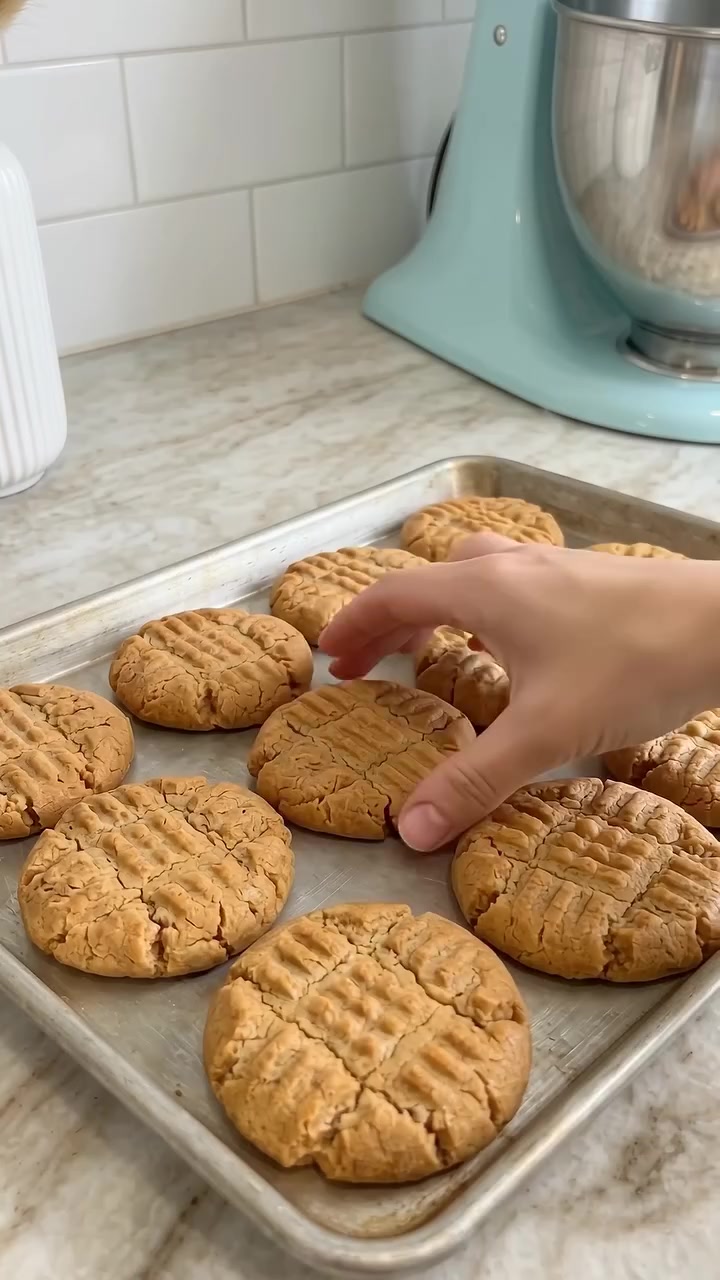
Easy 3-Ingredient Peanut Butter Cookies (Soft, Chewy & Flourless)
These 3-Ingredient Peanut Butter Cookies turn peanut butter, sugar, and one egg into a batch of golden homemade treats. With soft centers, lightly crisp edges, and the familiar fork crisscross pattern, they are an easy choice for an afternoon snack or a holiday cookie tray.
There is no flour, butter, or complicated mixing method involved. Everything comes together in one bowl with a spoon or spatula. The dough can go straight into the oven after shaping, making this a handy recipe when you want something sweet without a long preparation time.
Recipe Details
- Prep time: 10 minutes
- Bake time: 10–12 minutes
- Yield: Approximately 18 cookies, depending on portion size
- Oven temperature: 350°F (175°C)
Ingredients for 3-Ingredient Peanut Butter Cookies
- 1 cup (250 g) creamy peanut butter: Regular creamy peanut butter gives the most consistent texture.
- 1 cup (200 g) granulated sugar: Adds sweetness and helps create a slightly crisp exterior.
- 1 large egg: Binds the dough and helps the cookies hold their shape.
For the classic three-ingredient version, use only these ingredients. If desired, add ½ teaspoon vanilla extract or a pinch of salt for extra flavor, keeping in mind that either addition makes this more than a three-ingredient recipe.
Conventional creamy peanut butter is the simplest starting point. Natural peanut butter can sometimes produce an oily or crumbly dough. Measure carefully, especially when scooping the peanut butter, so the balance of sugar, fat, and egg stays consistent.
How to Make 3-Ingredient Peanut Butter Cookies
1. Preheat and Prepare the Baking Sheet
Preheat the oven to 350°F (175°C). Line a large baking sheet with parchment paper to help prevent sticking and make cleanup easier. Have a fork ready for flattening the dough.
2. Mix the Three Ingredients
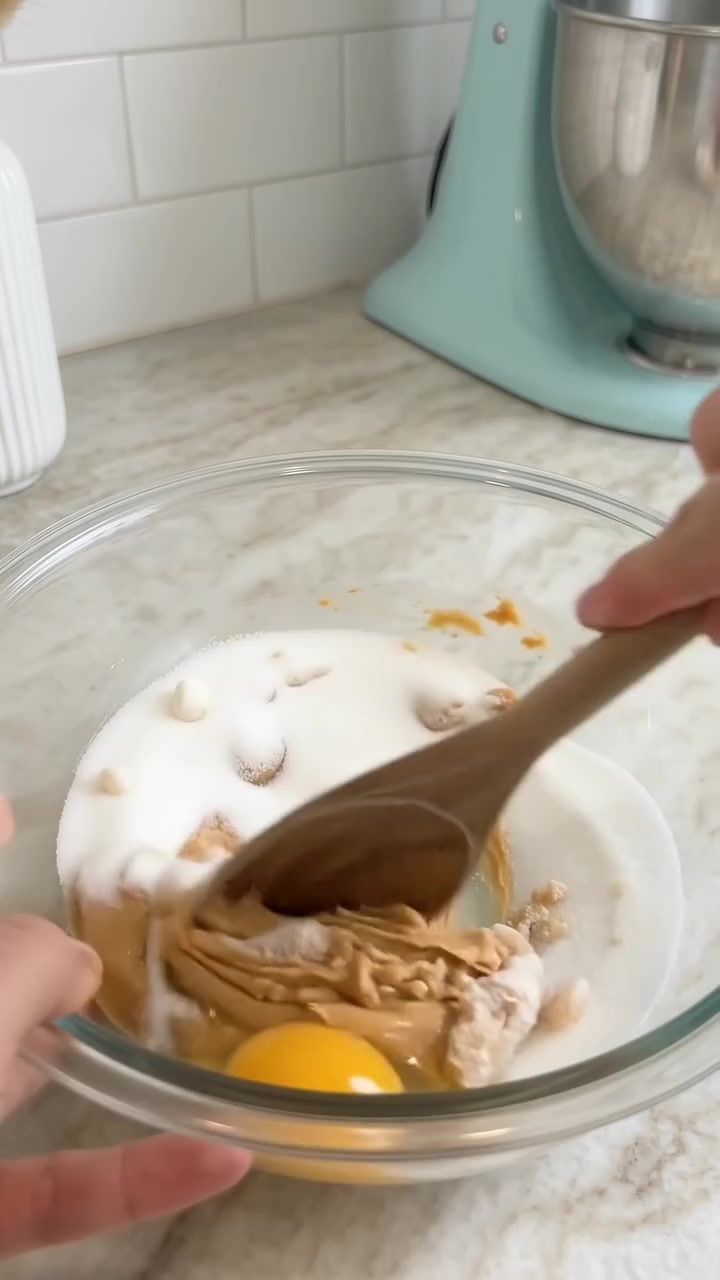
Add the peanut butter, granulated sugar, and egg to a medium mixing bowl. Stir with a wooden spoon or spatula until everything forms a thick, smooth cookie dough.
Scrape around the sides and bottom of the bowl to incorporate any pockets of egg or sugar. The finished dough should hold together and be soft enough to roll without falling apart. A stand mixer is not necessary.
3. Roll the Dough into Balls
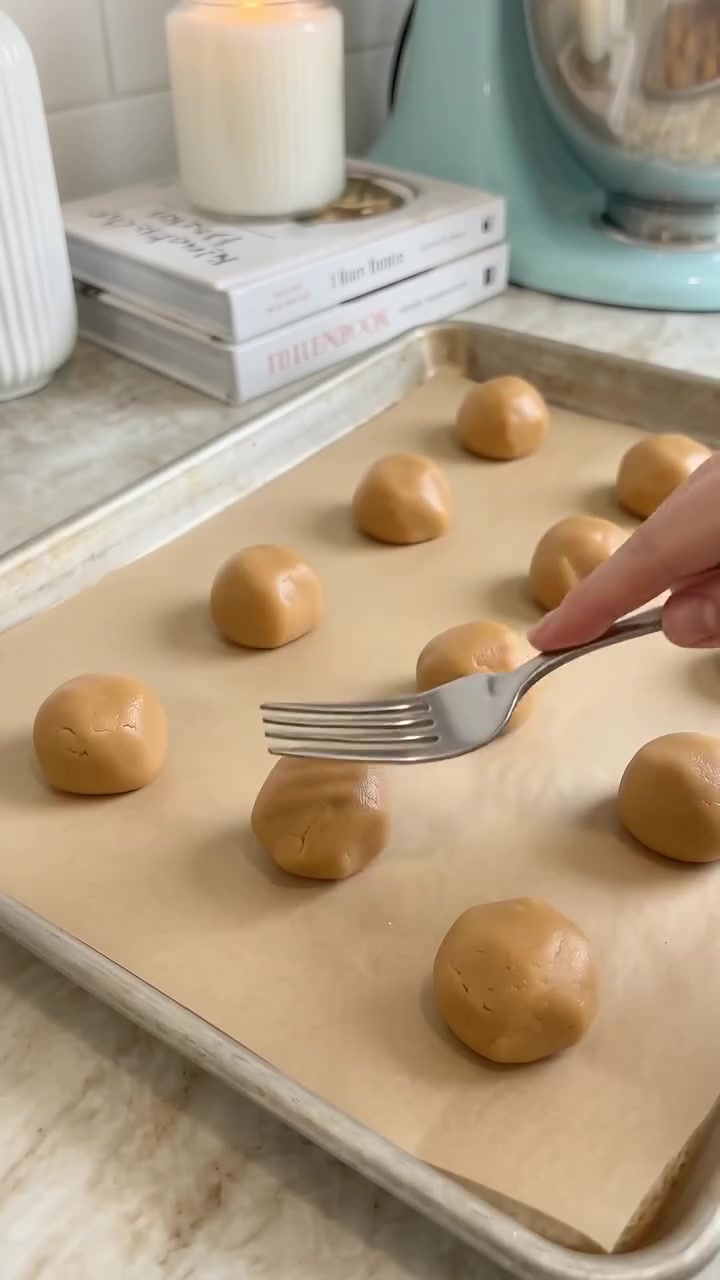
Scoop approximately 1 tablespoon of dough for each cookie and roll between your palms into evenly sized balls. Place on the prepared baking sheet, leaving approximately 2 inches between cookies.
The exact number will depend on how generously you portion the dough. Keep the balls similar in size so they bake evenly, and use another parchment-lined sheet if needed rather than crowding the first one.
4. Make the Fork Crisscross Pattern
Gently press each dough ball with the back of a fork. Rotate the fork 90 degrees and press again to create the classic crisscross pattern.
This step gives the cookies their recognizable appearance and flattens the dough for more even baking. Use light pressure and try to keep the cookies a similar thickness across the tray.
5. Bake Until Lightly Golden
Bake for approximately 10–12 minutes, until the edges are lightly golden and the centers look set. Check toward the beginning of the range, especially if your cookies are small.
Avoid overbaking while waiting for the centers to feel completely firm. The cookies continue to set as they cool, and extra oven time can make them crisper than intended.
6. Cool Before Moving
Remove the baking sheet from the oven and leave the cookies on it for at least 5–10 minutes. Freshly baked flourless peanut butter cookies are delicate, so lifting them too soon can cause them to break.
Transfer carefully to a wire rack once they are sturdy enough to move. Enjoy slightly warm or cool completely before storing.
Tips for Soft, Chewy Cookies
Use regular creamy peanut butter for predictable results and measure the sugar accurately. Flatten every cookie with a fork, avoid overbaking, and allow the full resting time on the baking sheet.
No chilling is required, but if the dough is too sticky to shape, refrigerate it for 15–20 minutes. This short pause can make rolling easier without changing the basic method.
The recipe is flourless. If you need to avoid gluten, check the ingredient labels and use appropriately certified products when necessary. Flourless does not replace checking packaged ingredients and preparation conditions.
Optional Variations
For extra texture, replace creamy peanut butter with crunchy peanut butter. Chocolate chips, a chocolate kiss added to each warm cookie, or festive sprinkles offer other ways to customize the batch. These decorations add ingredients beyond the basic three.
You can also spread chocolate frosting between two completely cooled cookies for a sandwich-style treat. Cool them thoroughly first so the filling does not soften and slide.
Storage and Freezing
Store completely cooled cookies in an airtight container at room temperature for up to 5 days, away from heat and direct sunlight. Alternatively, refrigerate for up to 1 week and bring to room temperature before serving.
Freeze baked cookies for up to 3 months in a freezer-safe container, separating layers with parchment. Thaw at room temperature. For unbaked dough, freeze the rolled balls until firm, then bag and freeze for up to 2 months. Before baking, soften just enough to flatten with a fork. Bake at 350°F (175°C), allowing an additional 1–2 minutes if needed.
Frequently Asked Questions
Why are my peanut butter cookies falling apart?
They are delicate while hot. Let them cool on the baking sheet before moving, and check your ingredient measurements.
Can I use brown sugar instead of white sugar?
Yes. Brown sugar produces a slightly softer cookie with a richer, caramel-like flavor.
Do I need to refrigerate the dough?
No. Bake immediately, or chill for 15–20 minutes if the dough is too soft or sticky to shape.
Can I make these cookies without an egg?
The egg provides structure. Replacing it requires a different recipe formulation and can significantly change the texture.