Old-Fashioned Shortbread Fingers
Old-fashioned shortbread fingers are buttery, crisp-edged cookies cut into neat little bars and baked until pale gold. This family recipe uses salted butter, granulated sugar, and all-purpose flour, with a short chill that helps the dough hold its shape in the pan. The ingredient list is simple, so good butter and careful baking make a noticeable difference.
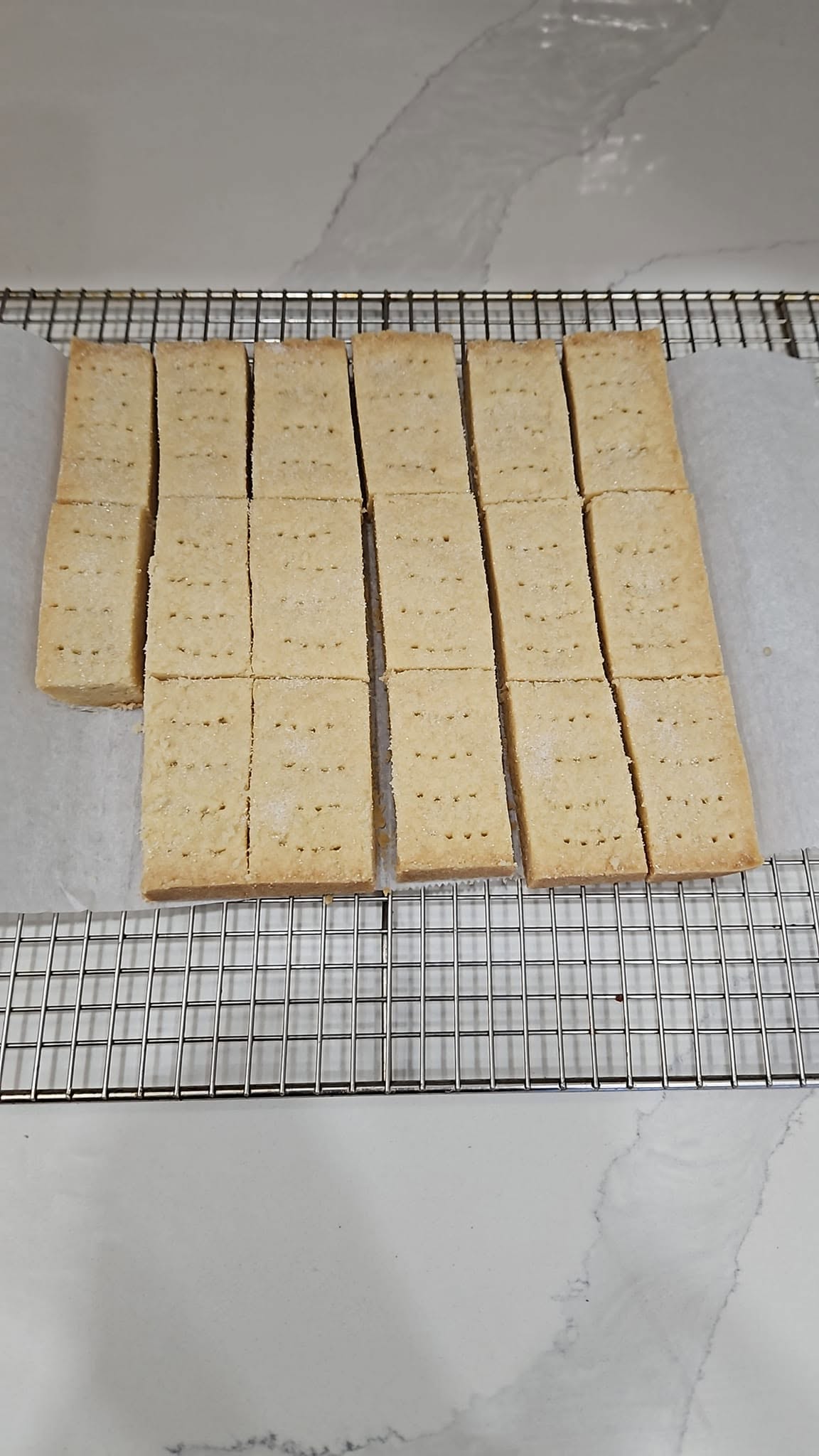
The original baker described these as the best shortbread she had ever made. Her method presses the dough into an 8-inch square pan, chills it, and bakes it slowly. The edges should turn lightly golden while the centers stay pale and tender. Score the slab before baking so the cookies break or cut into clean fingers after they cool.
Ingredients
- 1 cup (2 sticks) salted butter, softened
- 1/2 cup granulated sugar
- 2 3/4 cups all-purpose flour
Salted butter gives the shortbread its savory-sweet balance. If you only have unsalted butter, add 1/4 teaspoon fine salt. Use butter that is soft enough to mix but still cool; melted butter can make the dough greasy. Measure flour by spooning it into the cup and leveling the top, rather than packing it down.
How to make shortbread fingers
- Prepare the pan. Line an 8-inch square baking pan with parchment, leaving a little overhang on two sides. This makes it easier to lift out the baked slab. Heat the oven to 325°F.
- Cream the butter and sugar. Beat the softened butter and granulated sugar until creamy and smooth. Scrape the bowl so there are no unmixed pockets of butter.
- Add the flour. Mix in the flour gradually on low speed, just until a soft, crumbly dough forms. The dough may look sandy at first; continue mixing gently until it starts to hold together when pressed. Avoid overmixing, which can make shortbread tough.
- Press into the pan. Transfer the dough to the lined pan. Press it into an even layer, paying attention to the corners. Use the flat bottom of a measuring cup or your fingertips to smooth the surface. Prick the dough lightly with a fork so steam can escape.
- Chill the dough. Refrigerate for 20 to 30 minutes. Chilling firms the butter and helps the shortbread keep its clean edges while it bakes.
- Score and bake. Use a sharp knife to score the chilled dough into finger-shaped bars without cutting all the way through. Bake for 40 to 50 minutes, checking at 40 minutes. The top should remain light, with the edges just turning golden. If the center still looks wet or doughy, return the pan to the oven in 5-minute increments.
- Cool and cut. Let the shortbread cool in the pan until warm rather than hot. Follow the score lines with a sharp knife, then let the fingers cool completely before lifting them out.
Tips for tender shortbread
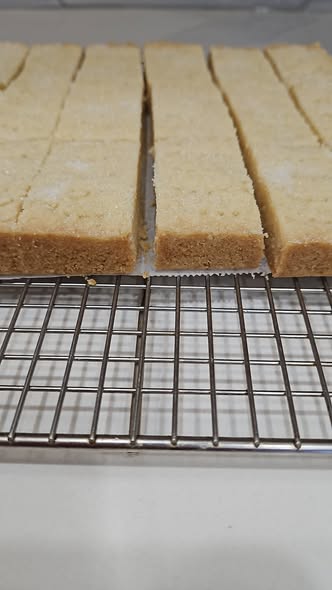
Shortbread has few ingredients, so mixing matters. Once the flour is incorporated, stop as soon as the dough holds together. Press evenly so thin spots do not overbake before the center is ready. For straighter edges, use the parchment overhang to lift the cooled slab onto a cutting board before slicing along the score marks.
Do not wait for the entire top to become brown. Shortbread tastes best when it is baked through but still pale. A light golden edge is a better cue than a dark surface. If your pan is dark metal, begin checking earlier because it may brown faster than a light-colored pan.
Serving and storage
Serve shortbread fingers with coffee, tea, or hot chocolate. They are also easy to tuck into a cookie tin because they travel well once completely cool. Store in an airtight container at room temperature for up to a week. Separate layers with parchment to prevent scuffs. For longer storage, freeze the baked cookies in a sealed container for up to two months and thaw at room temperature.
Frequently asked questions
Can I make the dough ahead?
Yes. Press it into the pan, cover it, and chill it for several hours or overnight. Let the pan stand briefly at room temperature if the dough becomes very firm before scoring.
Why is my shortbread crumbly?
It may need a little more mixing to come together, or the flour may have been packed into the cup. Press the dough firmly and evenly into the pan before chilling.
Can I add flavoring?
The supplied recipe keeps the flavor simple. A small amount of vanilla or citrus zest can be added as a variation, but try the original once first so the butter flavor stands out.
How many fingers does the pan make?
The recipe does not specify a yield. Cutting the 8-inch square into narrow bars will make more pieces than cutting it into wider shortbread wedges.
With a cool dough, a slow bake, and a light golden edge, these shortbread fingers are an easy classic to return to year after year. Let the slab cool before cutting, then keep the crisp, buttery bars sealed until you are ready to share them.
Ingredients
Method
- Heat the oven to 325°F. Line an 8-inch square baking pan with parchment.
- Beat the softened salted butter and sugar until creamy.
- Mix in the flour gradually on low speed just until a soft dough forms.
- Press the dough evenly into the pan and prick lightly with a fork. Chill for 20 to 30 minutes.
- Score into finger-shaped bars. Bake 40 to 50 minutes, checking at 40 minutes, until the edges are lightly golden and the center is set.
- Cool until warm, cut along the score lines, and cool completely.