Old-Fashioned Lady Locks (Clothespin Cookies)
Lady locks cookies are flaky spirals of puff pastry filled with cream and dusted with powdered sugar. Also called clothespin cookies, they fit right in on a Christmas cookie tray. The thin pastry layers make a delicate shell that breaks easily when you bite into it, and the filling gives every piece a creamy center.
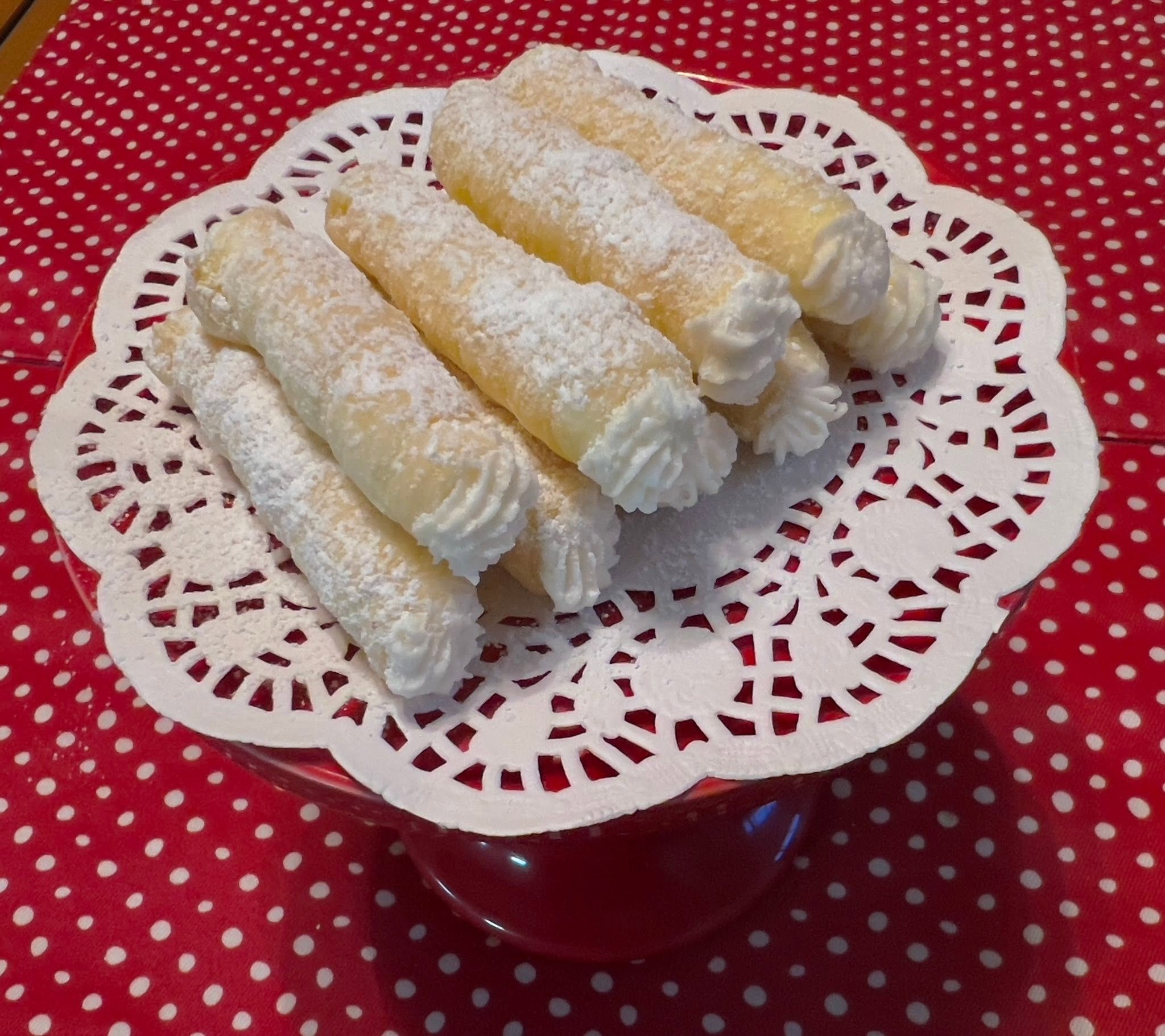
The shaping is easier to understand when you see it in stages. This version uses store-bought puff pastry and reusable metal forms, so most of the work is in rolling, cutting, and winding the strips. Start by wrapping two or three forms and check how they look before you finish the tray. If you can see bare metal between turns, overlap the next strip a little more.
Ingredients and equipment
- Puff pastry sheets, thawed but chilled
- Buttercream or your preferred filling
- Powdered sugar, for dusting
You’ll also need metal lady lock forms, baking sheets, parchment paper, a pizza cutter or sharp knife, and a rolling pin or pasta roller. A piping bag makes it easier to fill the narrow shells. Check how many sheets are in your box when planning a batch. The baker who shared this method gets about 20 or more strips per sheet.
How to make Lady Locks cookies
1. Roll the chilled pastry
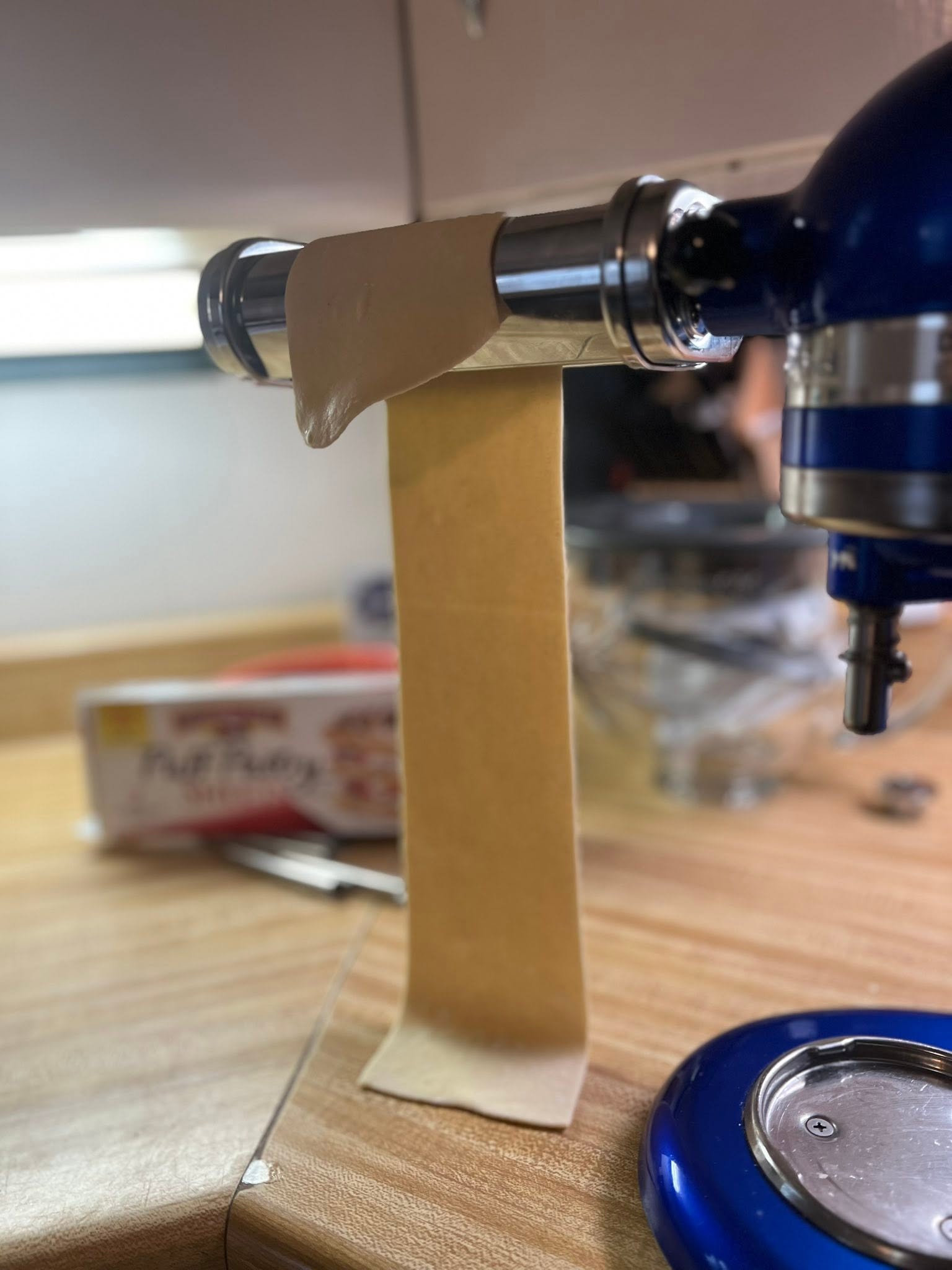
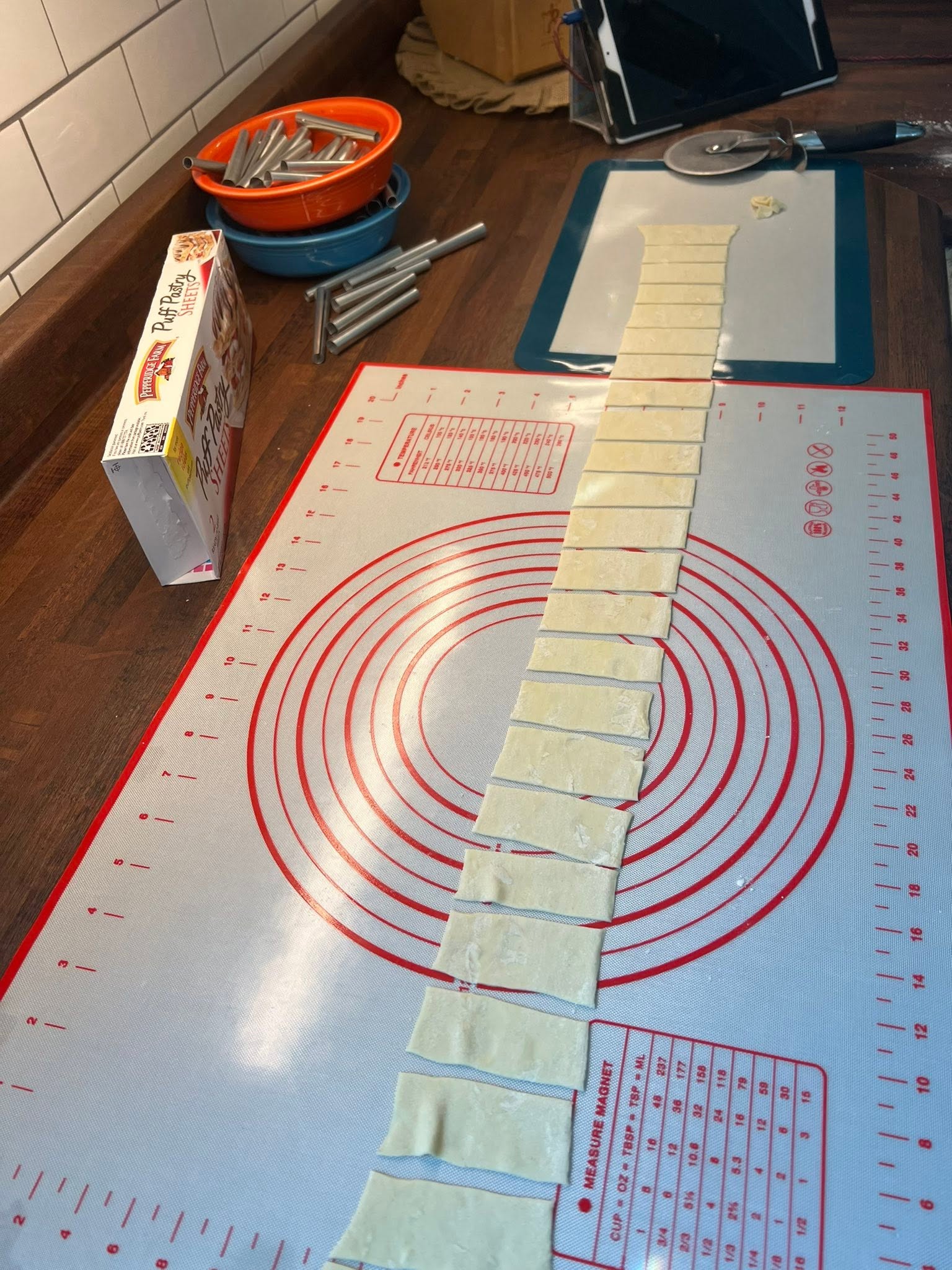
Work with one sheet of thawed but chilled puff pastry at a time. Keep the rest in a zip-top bag in the refrigerator so the edges stay pliable. The original baker runs each sheet through her pasta roller twice on setting 2 and twice on setting 4. Roller settings vary, so use the photo as a guide. If you use a rolling pin, roll with light, even pressure and ease the pastry into a thin sheet.
2. Cut strips about 1¼ inches wide
Gently stretch the sheet out on the counter and press it just enough to keep it from sliding. Cut it into strips about 1¼ inches wide with a pizza cutter. The original baker estimates the width by eye and gets about 20 or more strips from each sheet. Your yield will depend on the size of your pastry sheet and how thinly you roll it.
3. Anchor each strip at the wide end
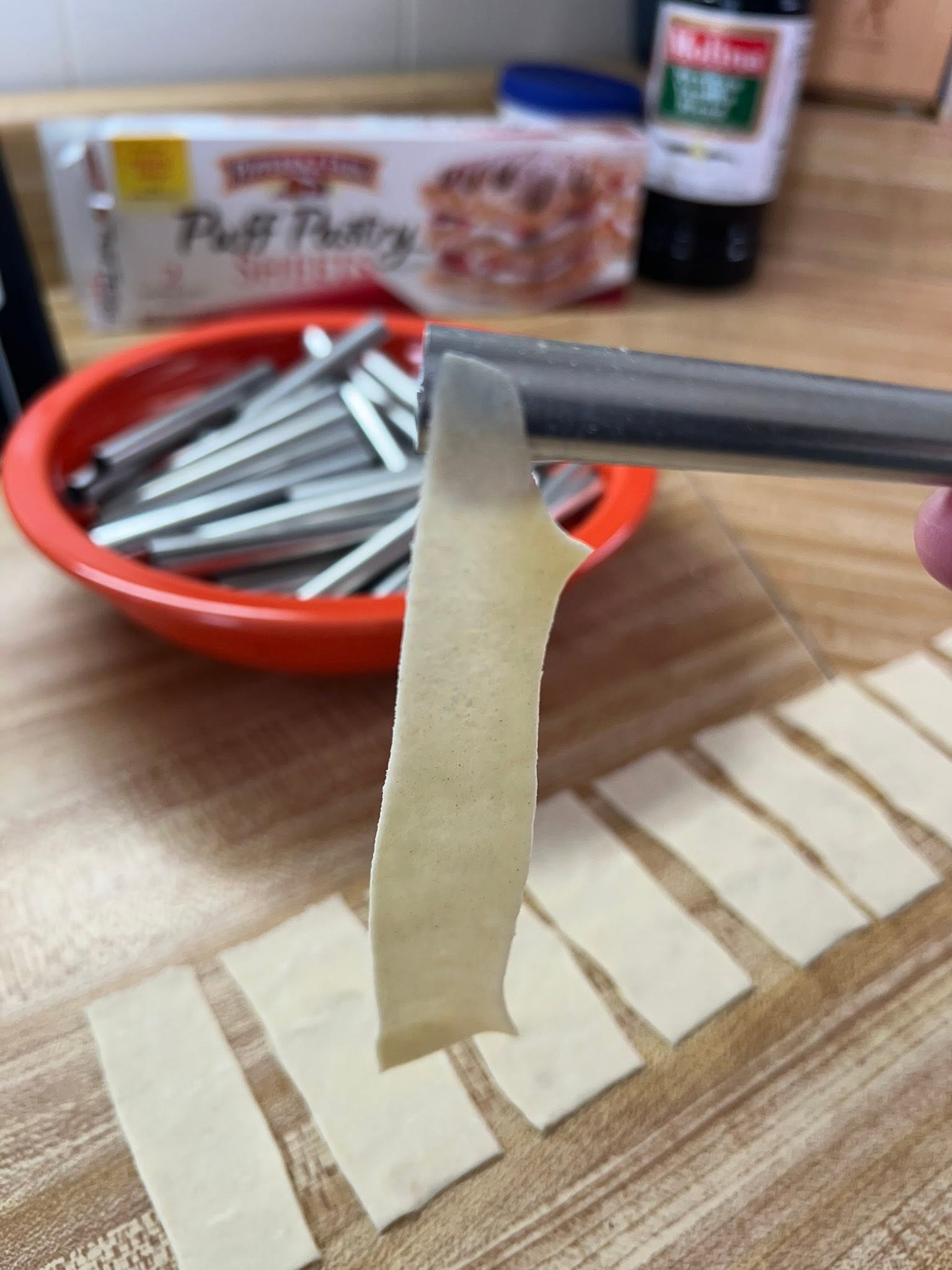
Pick up one strip and attach its upper-left corner to the wide end of a metal lady lock form. Hold the narrow end of the form in your right hand and turn it clockwise. Keep the strip under light tension with your other hand as you start the first turn.
4. Overlap the pastry as you turn
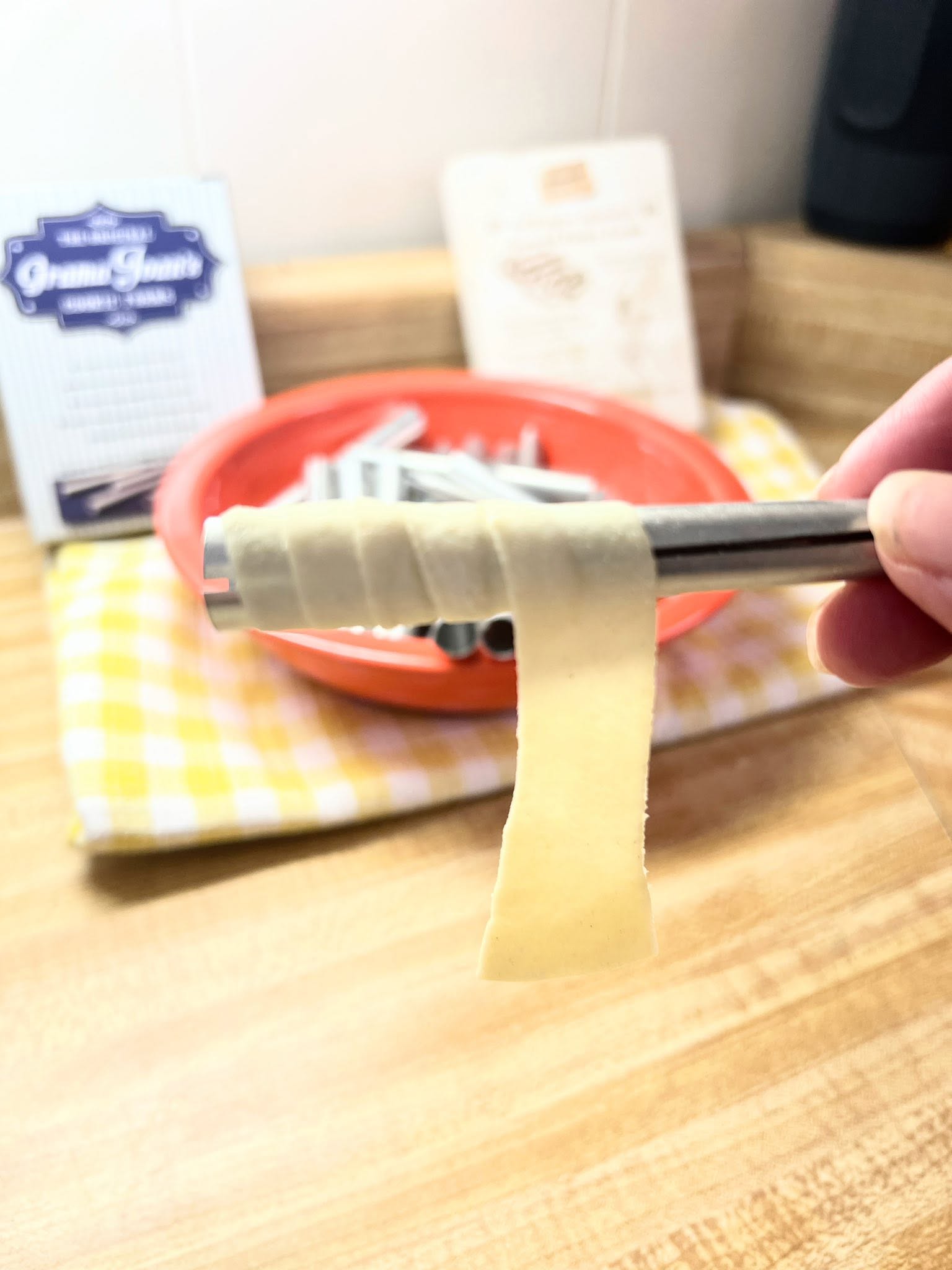
Gently stretch the strip while you rotate the form. Let each turn overlap the preceding one so the pastry makes a continuous shell. Keep the overlap even all the way down. Press the loose end firmly against the form to secure it. The original baker seals it with pressure alone.
5. Bake on a parchment-lined tray
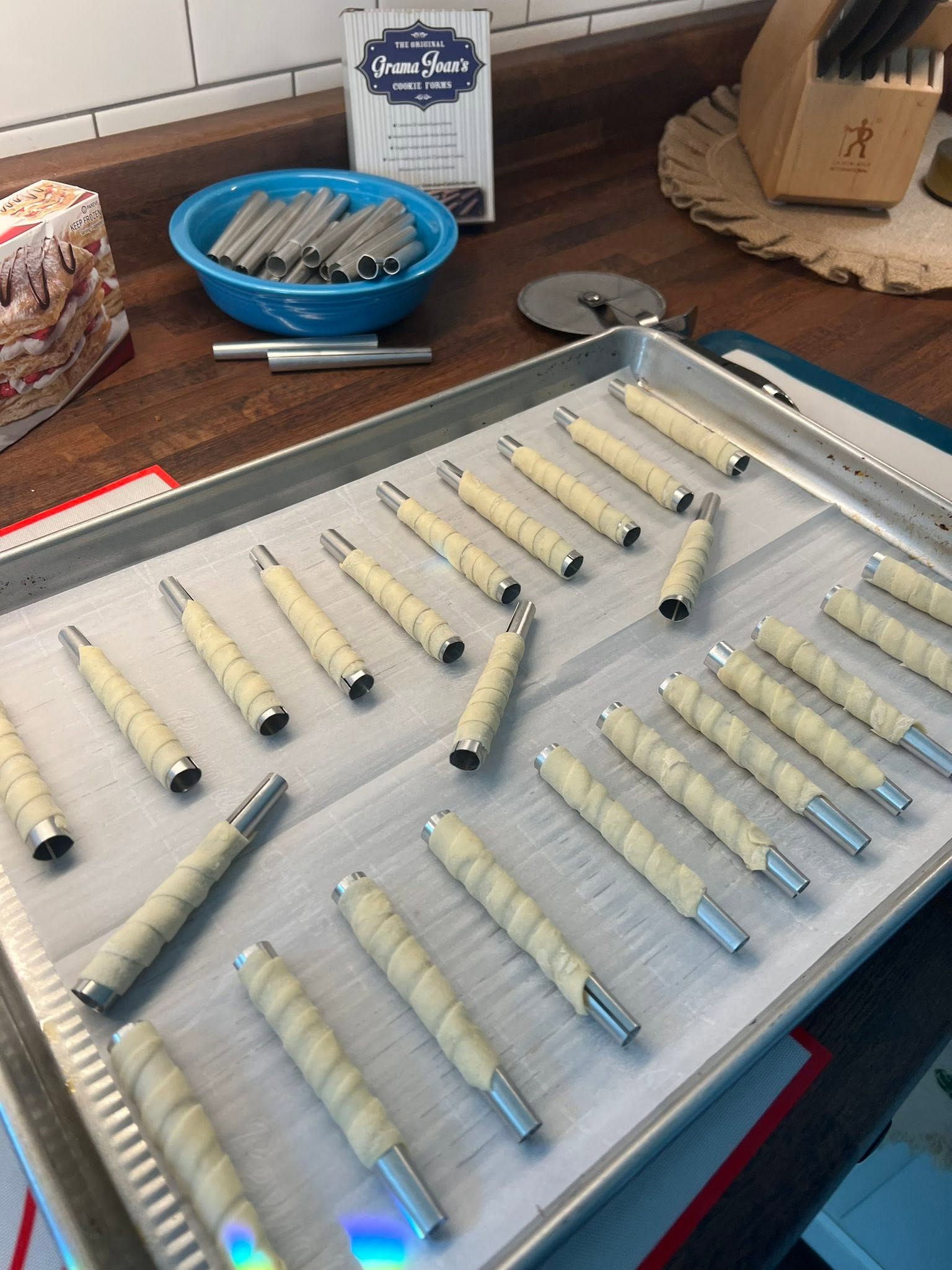
Arrange the wrapped forms on a parchment-lined baking sheet without crowding them. Bake in a preheated convection oven at 350°F for about 10 minutes. Check the first tray near the end and look for the undersides to turn lightly golden. Bake time can vary by oven and how thinly the strips were rolled.
6. Release the shells and let them cool
Let the shells cool until you can comfortably handle the forms. On the slotted metal forms shown here, gently squeeze the narrow end and twist to loosen the pastry. Support the shell with your other hand and slide it off. Let the empty shells cool completely before you fill them.
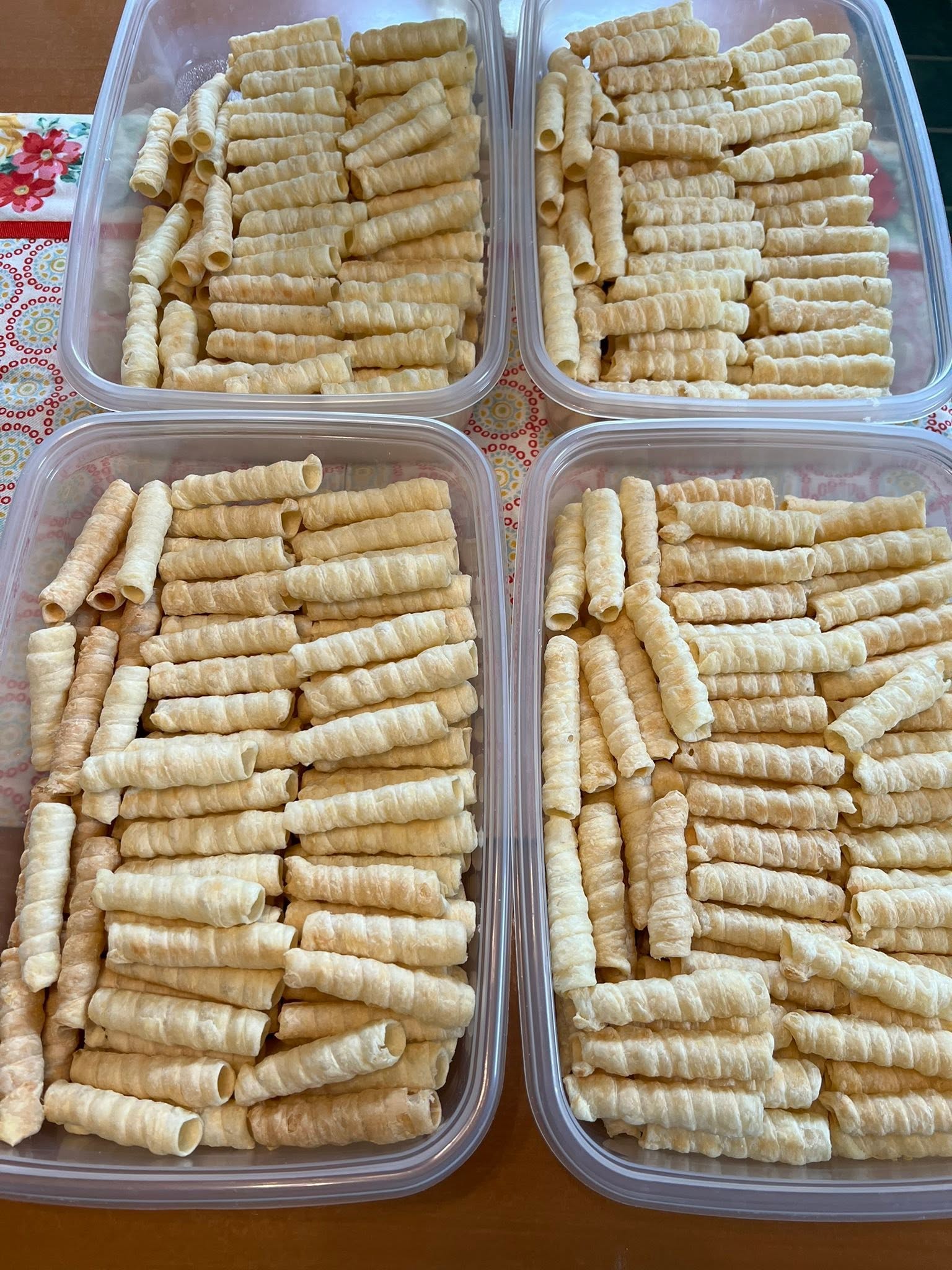
7. Pipe the filling and dust with sugar
Pipe buttercream or a filling of your choice into the cooled shells. Use steady pressure and let the filling reach toward the narrow end before you pull the piping tip out. Dust the filled cookies with powdered sugar. The original baker prefers buttercream, and this recipe uses your choice of filling.
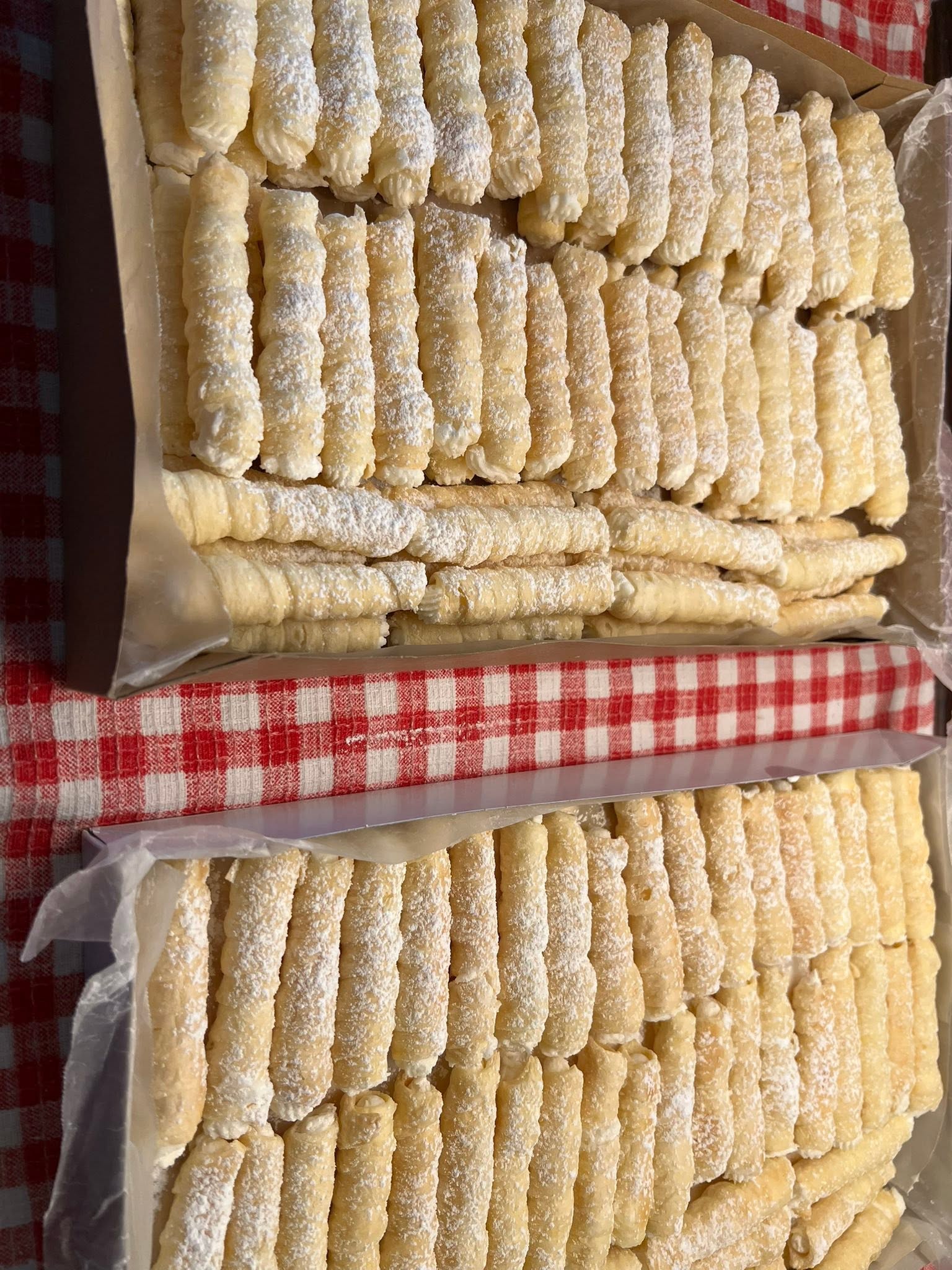
Tips for even, flaky shells
Cold pastry is easier to cut in clean strips. If a sheet becomes soft and hard to lift, cover it and chill it briefly before you continue. If a strip tears, handle the next one with a lighter stretch and let the turning motion do most of the work.
Try to keep the same amount of overlap on every turn. A gap leaves a weak spot in the shell, while a very thick overlap can leave the seam softer than the rest. Press the final tail against the form before transferring it to the tray. If you’re reusing the forms between batches, let them cool before winding on fresh pastry.
Making the cookies ahead
You can bake the shells ahead and fill them when you’re ready. Let them cool completely before putting them in a container so moisture from the warm pastry doesn’t collect inside. If you plan to freeze filled cookies, use a freezer-safe container and separate the layers with wax paper. Follow the storage directions for whichever filling you choose and thaw refrigerated fillings in the refrigerator.
Frequently asked questions
Can I roll the pastry by hand?
Yes. A rolling pin works well. Work with one chilled sheet at a time and use the rolling photo as a guide to the thickness.
Why did the ends lift during baking?
The last tail may have been loose. Press the end firmly after the final turn and check that it stays in position when you move the form to the tray.
Can I use a different filling?
Yes. Choose a filling that pipes easily and holds its shape in the shell. Wait until the shells are completely cool before filling so the pastry stays crisp.
Ingredients
Method
- Roll one thawed but chilled puff pastry sheet thinly. Keep any remaining sheets covered and chilled.
- Cut the pastry into strips about 1¼ inches wide.
- Anchor one corner at the wide end of a metal lady lock form. Turn the form clockwise while gently stretching and overlapping the strip. Press the final end securely against the form.
- Put the wrapped forms on a parchment-lined sheet. Bake in a preheated convection oven at 350°F for about 10 minutes, until the bottoms are lightly golden.
- Cool until the forms are comfortable to handle. With slotted forms, gently squeeze and twist the narrow end to release the shells. Cool the pastry completely.
- Pipe in buttercream or another filling of your choice. Dust with powdered sugar.