
Cuccidati Italian Fig Cookies: Traditional Filled Christmas Cookies
Cuccidati, also called Italian fig cookies or Sicilian fig cookies, are the kind of holiday treat that turns a cookie platter into a family tradition. Each bite has a tender pastry shell and a chewy center of figs, dates, raisins, and almonds. Lemon glaze and rainbow nonpareils give the cookies their familiar festive look. Shaping them takes a little time, but you can make the dough and filling ahead and assemble the cookies the next day.
The ingredients come from a supplied screenshot of Caroline’s Cooking’s Cuccidati (Italian fig cookies). The screenshot shows only part of the directions. The method below was reconstructed using the preparation photos, and the oven temperature and baking time are suggested starting points.
Why These Italian Fig Cookies Are Special
The figs bring a deep, jam-like sweetness, while dates and raisins soften the filling and almonds add texture. A little chocolate gives the fruit mixture richness, and marmalade and cinnamon round it out. Once the glaze has dried, the compact cookies fit neatly into a holiday tin alongside biscotti and pizzelle.
Ingredients
For the cookie dough
- 1 cup all-purpose flour, plus a little extra for rolling
- 3 tablespoons sugar
- ¼ teaspoon baking powder
- ¼ teaspoon salt
- 2 ounces (4 tablespoons) unsalted butter, cool and cut into pieces
- ½ teaspoon vanilla extract
- 1 large egg
- 1 tablespoon milk
For the fig filling
- ½ cup dried figs (approximately 3½ ounces in the source)
- ¼ cup dates
- ¼ cup raisins
- 2 tablespoons chopped blanched almonds
- 1 tablespoon chocolate chips
- 1½ tablespoons honey
- 2 tablespoons orange or apricot marmalade
- 1 tablespoon brandy, whiskey, or Marsala
- ¼ teaspoon ground cinnamon
For the lemon glaze
- ¼ cup confectioners’ sugar
- ½ tablespoon lemon juice
- 1 tablespoon rainbow nonpareils, or as needed
How to Make Cuccidati Italian Fig Cookies
Step 1. Make and chill the dough
Pulse the flour, sugar, baking powder, and salt in a food processor. Add the butter and pulse until the mixture looks like fine crumbs. Add the vanilla, egg, and milk and pulse just until the dough starts to come together. To mix by hand, cut the butter into the dry ingredients and then stir in the liquids. Shape the dough into a disk, wrap it, and refrigerate for about an hour or until firm enough to roll.
Step 2. Prepare the fig filling
Remove tough stems from the figs and any pits from the dates. Pulse the figs, dates, raisins, almonds, and chocolate chips until finely chopped. Add the honey, marmalade, spirit, and cinnamon. Pulse until the fruit forms a thick paste that you can shape into a rope. If the fruit is especially dry, give the mixture a few minutes to absorb moisture before shaping.
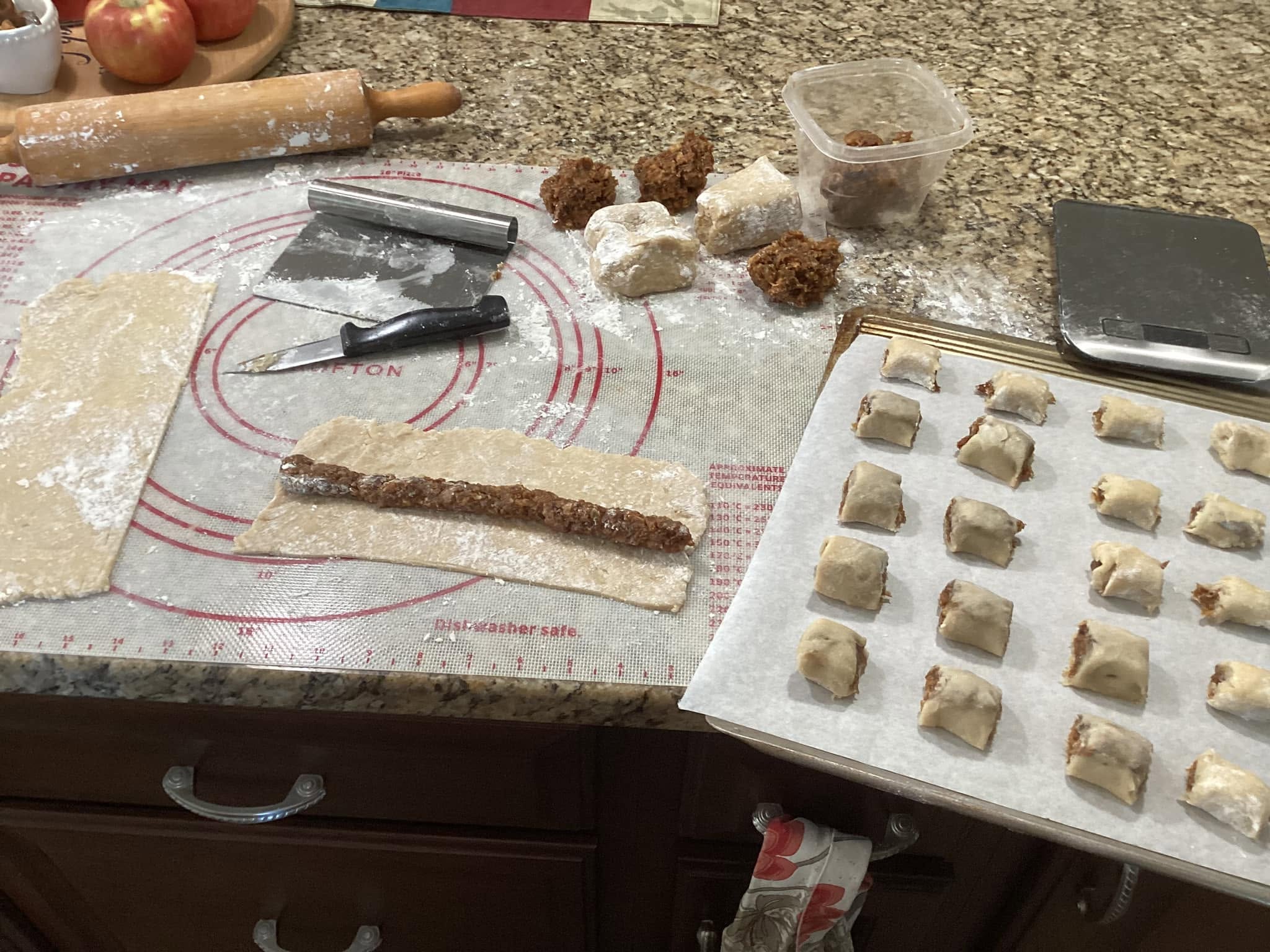
Step 3. Roll the pastry and add the filling
Lightly flour the work surface and rolling pin. Working with one portion of dough at a time, roll it into a narrow rectangle about ⅛ inch thick. Keep the remaining dough chilled. Shape some filling into a slender rope and lay it lengthwise along the middle. Aim for an even line so each cookie gets a similar amount.
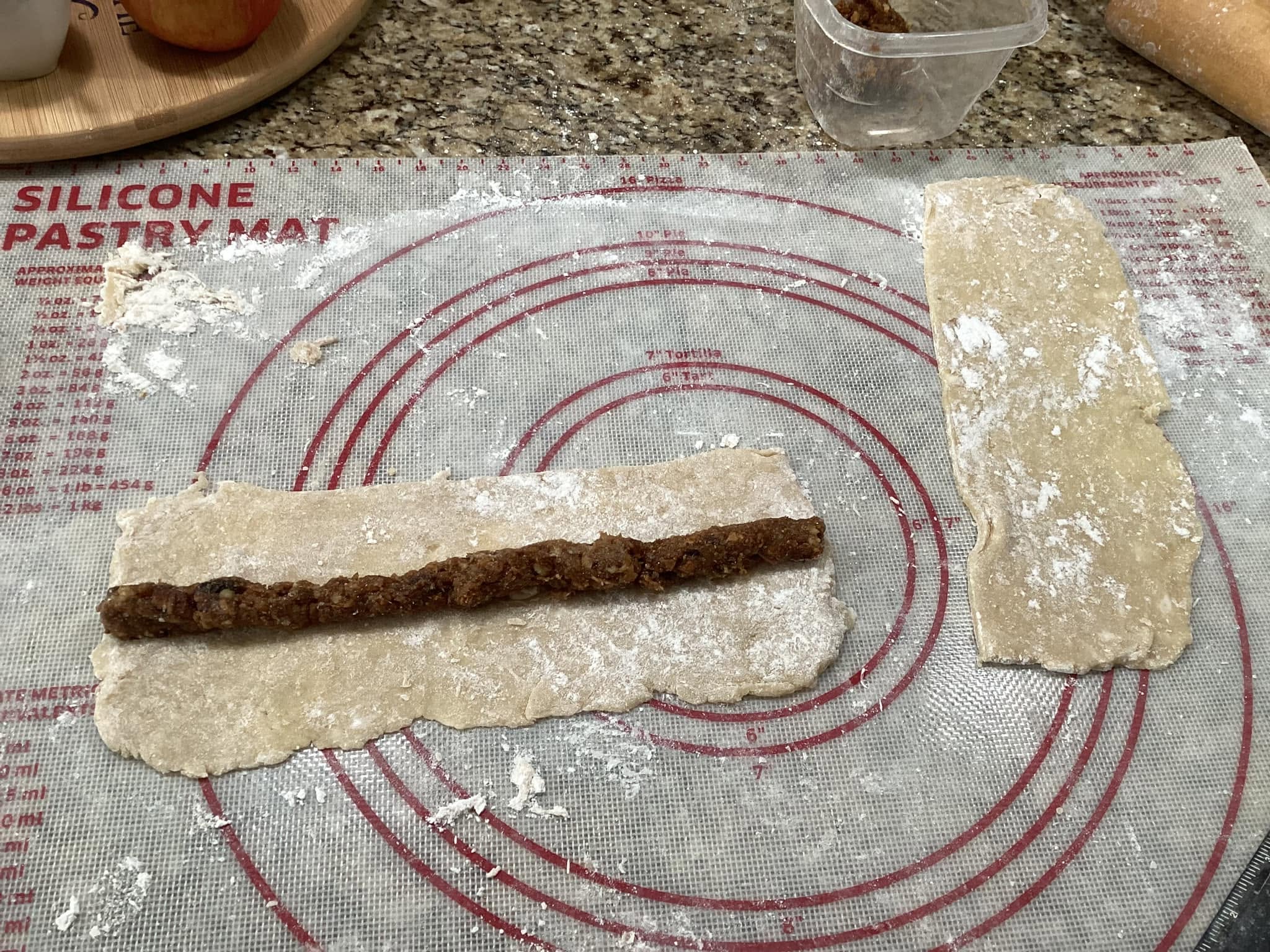
Step 4. Seal and cut the cookies
Bring the long sides of the pastry up over the filling and pinch the seam closed. Turn the log seam-side down. If it feels too soft to slice cleanly, chill it briefly. Cut the log into pieces about 1 to 1½ inches long and space them slightly apart on a parchment-lined baking sheet.
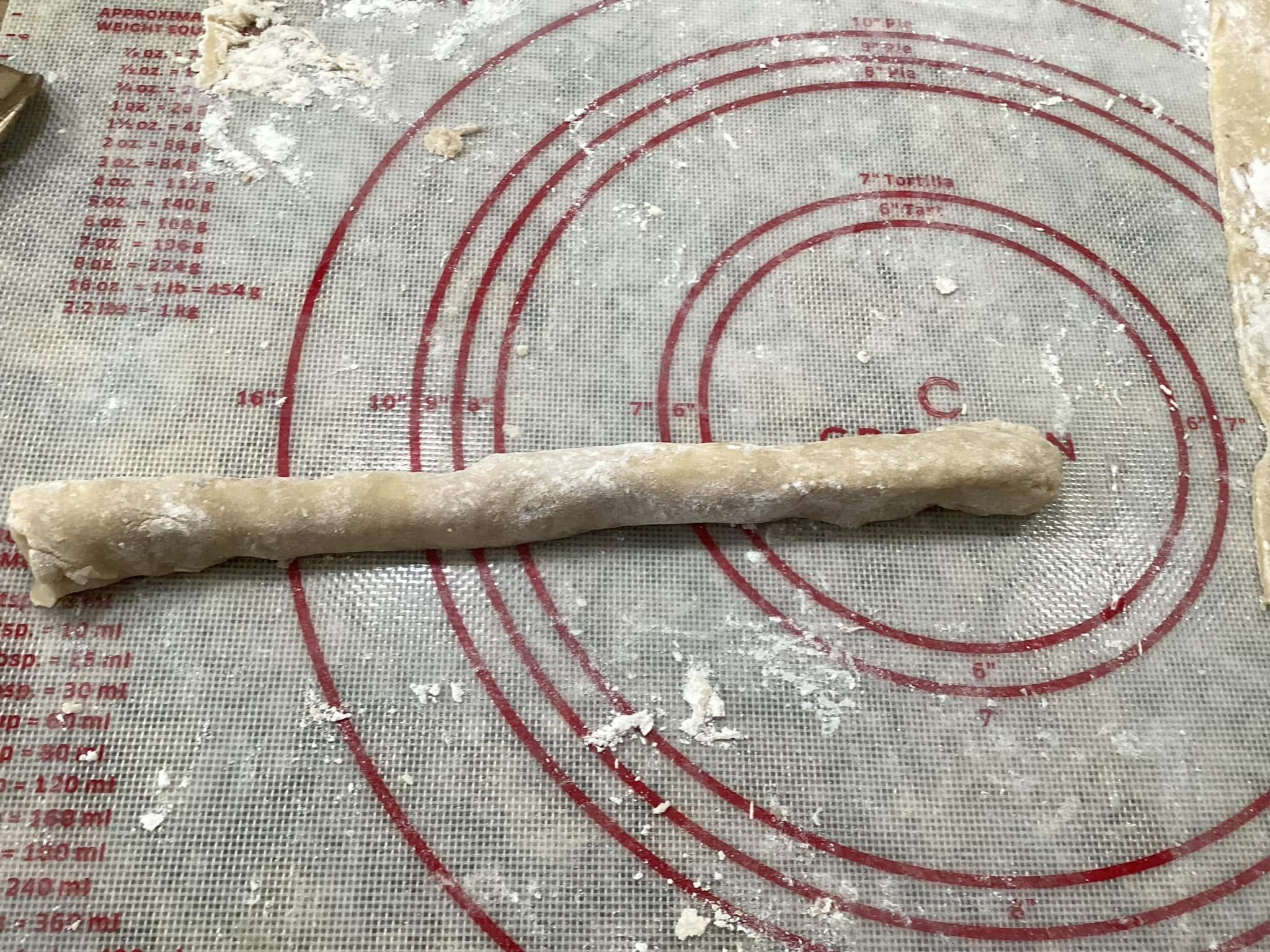
Step 5. Bake until lightly golden
For the reconstructed method, heat the oven to 350°F and bake for about 12–18 minutes. Check early and look for set pastry with lightly golden edges. Timing will vary with the size of the pieces. Transfer the cookies to a rack and cool them completely before glazing.
Step 6. Add the lemon glaze and sprinkles
Stir the confectioners’ sugar and lemon juice until smooth. If needed, add a few more drops of juice to make the glaze spreadable. Spoon or brush a little onto each cooled cookie and scatter nonpareils over it while the glaze is wet. Leave the cookies on the rack until the icing is dry. Parchment beneath the rack makes cleanup easier.
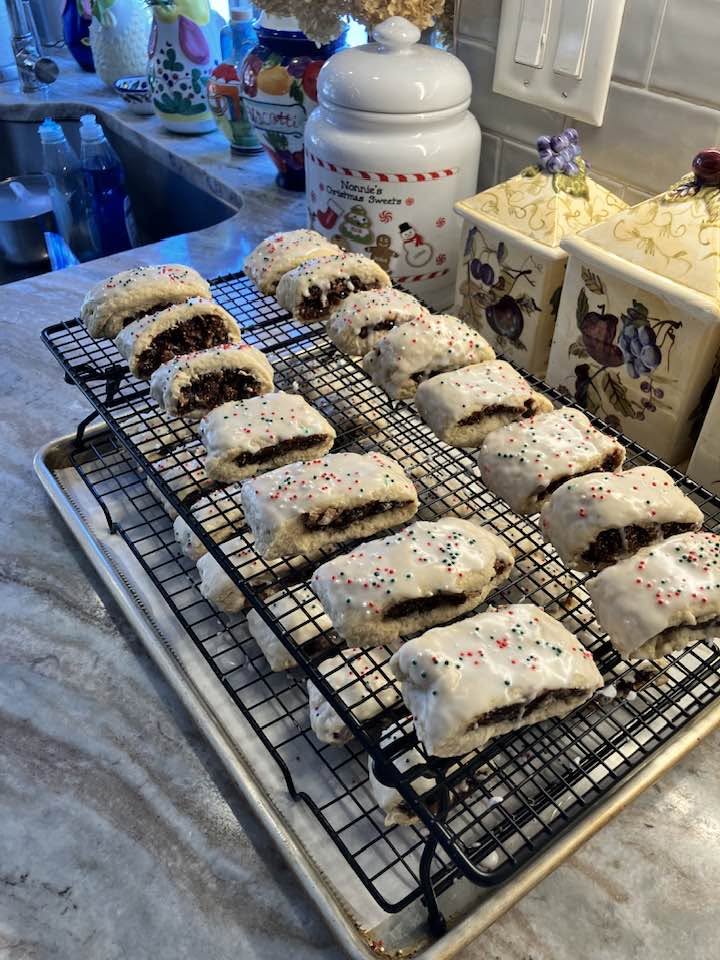
Tips for Success
Keep the dough cool while you work. If it starts sticking, return it to the refrigerator for 10–15 minutes. Chop the filling finely so it rolls easily, and start with a narrow rope to keep the seam from bursting. Set the sealed log seam-side down before slicing. Give the icing plenty of time to dry before packing the cookies.
Easy Variations
Add orange zest to bring out the marmalade, or add a little lemon zest to the glaze. Walnuts can replace the almonds, and orange juice can replace the tablespoon of spirit if you prefer an alcohol-free filling. You can also cut longer bars or curve the logs. Keep the pieces similar in thickness so they finish baking at about the same time.
How to Store and Freeze Cuccidati
Once the icing sets, store the cookies in an airtight container in a cool spot, with parchment between the layers. For longer storage, freeze the cooled, unglazed cookies in an airtight container for up to about two months. Thaw them while still wrapped, then glaze at room temperature. You can also make the dough and filling ahead and refrigerate them separately until shaping.
Frequently Asked Questions
Are cuccidati the same as Italian fig cookies?
Yes. Cuccidati is a common name for Sicilian-style fig-filled pastry cookies. Families often use different nuts, spices, or shapes.
Why is the dough cracking?
It may be too cold to roll. Let it soften for a few minutes at room temperature and try again.
Why did the filling leak out?
Too much filling or a seam that opened can cause leaks. Use a slender rope of filling and pinch the seam firmly before placing the log seam-side down.
Can I make them ahead for Christmas?
Yes. Chill the dough and filling separately, or bake and freeze the cookies unglazed. Add the lemon icing and sprinkles closer to serving.