Butter and Syrup for Soppin’ Biscuits (Southern Tradition)
Old-Fashioned Butter and Syrup for Soppin’ Biscuits
The Nostalgic Art of the Soppin’ Biscuit
There are certain food traditions that instantly transport you back to a simpler time, and a plate of butter and syrup for soppin’ biscuits is undoubtedly one of them. For generations, the ultimate way to finish off a hearty Southern meal was to save one large, fluffy bite of a biscuit specifically for cleaning your plate. It was an unspoken rule of the dinner table. You never let a single drop of gravy or sweet syrup go to waste.
If you grew up in a household that honored this tradition, you know that saving that last piece of biscuit was essential. It was the only acceptable way to ensure your plate was practically sparkling before you excused yourself from the table. If you accidentally ate your entire biscuit too soon, it was perfectly acceptable to pinch off a piece from a fresh one. Biscuits were communal, and tearing off a piece to sop up the rest of your meal was a celebrated practice.
This simple combination of butter and syrup is more than just a way to clean a plate; it is a standalone treat. A freshly mashed plate of butter and syrup can easily transform a leftover breakfast biscuit into a deeply satisfying afternoon snack or a quick, sweet lunch. It takes less than a minute to prepare, requires only two basic ingredients, and delivers an incredible amount of old-fashioned comfort in every single bite.
Why You’ll Love This Recipe
-
Incredibly Quick: It takes mere seconds to put together, making it the perfect instant fix for a sweet craving.
-
Zero Waste: It is the absolute best way to breathe new life into day-old or leftover biscuits from breakfast.
-
Deeply Nostalgic: Every bite offers a comforting taste of classic, old-school country cooking.
-
Highly Customizable: You can adjust the butter-to-syrup ratio to perfectly match your personal preference.
-
Kid-Friendly: Children absolutely love the fun, hands-on process of tearing bread and dipping it into a sweet puddle.
Ingredients
-
Butter: 2 thick slices (pats) of real butter. Salted butter is highly recommended here, as the salt perfectly cuts through the intense sweetness of the syrup.
-
Syrup: 1 generous tablespoon of your favorite syrup. Traditional cane syrup (like the classic Johnnie Fair brand) provides the most authentic flavor, but any rich pancake or maple syrup will work beautifully.
-
Biscuits: 1 large, fluffy biscuit for dipping. Whether it is a freshly baked buttermilk biscuit or a warmed-up leftover, ensure it has a good crumb for soaking up the mixture.
Step-by-Step Instructions
Step 1: Plate the Butter
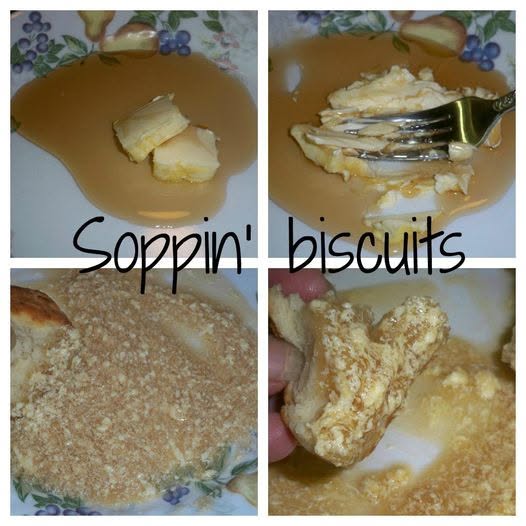
Start with a standard dinner plate or a wide, shallow bowl. Cut two thick slices of butter directly from the stick and place them right in the center of the plate. It helps immensely if the butter is slightly softened or at room temperature, as cold butter is much harder to mash.
Step 2: Add the Syrup
Take your preferred syrup and pour a generous tablespoon directly over the top of the sliced butter. The syrup should pool around the butter, creating a sweet, sticky base on the plate. Do not be afraid to add a little extra if you prefer a sweeter dip.
Step 3: Smash and Stir
Using a sturdy dinner fork, press down firmly on the butter slices to smash them into the plate. Begin vigorously stirring and scraping the smashed butter into the pool of syrup. Keep mixing until the butter and syrup combine into a thick, cloudy, sweet emulsion.
Step 4: Sop it Up
Take your biscuit and tear off a hearty, bite-sized chunk. Press the bread directly into the butter and syrup mixture, dragging it through the plate to soak up as much of the sweet spread as possible. Eat immediately and repeat until the plate is completely clean.
Expert Cooking Tips
-
Temperature Matters: For the easiest mixing, allow your butter to sit on the counter for a few minutes before starting. Softened butter blends seamlessly with the syrup, creating a smooth, creamy texture rather than a lumpy one.
-
Warm Your Syrup: If you are using a very thick cane or sorghum syrup, microwaving it for just five to ten seconds will loosen it up, making it much easier to whip together with the butter.
-
Toast the Biscuit: If you are using a leftover biscuit from the day before, slice it in half and toast it lightly in a skillet or toaster oven. The crispy edges will hold up perfectly to the heavy syrup mixture.
-
Use Real Butter: Skip the margarine or oil-based spreads. Because there are only two ingredients in this treat, the rich, dairy flavor of real butter is absolutely essential for the best taste.
-
The Right Tool: A standard fork is the best tool for this job. The tines easily cut through the solid butter, allowing the syrup to incorporate much faster than if you used a spoon or a butter knife.
Variations to Try
-
Honey Butter Twist: Swap out the traditional cane syrup for a heavy drizzle of raw, local honey. This creates a thicker, stickier dip with beautiful floral notes.
-
Maple Cinnamon: Use pure maple syrup and sprinkle a tiny pinch of ground cinnamon over the top before smashing it with the fork for a warm, cozy flavor profile.
-
Sorghum and Salt: Use authentic Southern sorghum syrup and finish the mixed plate with a tiny pinch of flaky sea salt to enhance the complex, molasses-like flavor.
What to Serve With Soppin’ Biscuits
While a biscuit dipped in butter and syrup is often enjoyed entirely on its own as a quick snack, it also makes a fantastic addition to a larger country breakfast. Serve it alongside a plate of crispy, thick-cut bacon or savory breakfast sausage, as the salty meat provides a wonderful contrast to the sweet syrup. It also pairs perfectly with a steaming hot mug of black coffee or a tall glass of ice-cold whole milk.
Storage & Reheating
Refrigerator
This specific “recipe” is meant to be made and consumed immediately directly on the plate, so storing the mixed butter and syrup is not recommended. However, you can store leftover baked biscuits in an airtight container or zip-top bag in the refrigerator for up to 4 days.
Freezer
Do not attempt to freeze the butter and syrup mixture. You can, however, freeze your leftover biscuits! Wrap them tightly in plastic wrap and aluminum foil, and store them in the freezer for up to 2 months.
Reheating
When you are ready for a snack, revive a leftover biscuit by wrapping it in a slightly damp paper towel and microwaving it for 10 to 15 seconds. This creates steam that perfectly softens the bread, making it soft, pliable, and ready to soak up a fresh batch of butter and syrup.
Frequently Asked Questions
What exactly does “soppin'” mean?
“Soppin'” is a classic Southern term derived from the word “sop,” which means to soak up liquid using a piece of bread. In country cooking, a biscuit is the ultimate tool for sopping up gravy, pot liquor, or sweet syrup from a plate.
What kind of syrup is best for this?
Traditional cane syrup is the nostalgic favorite for this practice. It has a rich, deep, slightly toasted flavor that pairs beautifully with savory biscuits. However, standard pancake syrup, golden syrup, or pure maple syrup are all excellent substitutes.
Do I have to use homemade biscuits?
Not at all! While a scratch-made buttermilk biscuit is wonderful, this method works perfectly with canned refrigerated dough biscuits, frozen biscuits, or even a slice of thick, toasted sandwich bread in a pinch.
Why not just spread the butter on the biscuit?
Smashing the butter and syrup together on the plate creates a unique, creamy emulsion that has a completely different texture and flavor than simply spreading butter and pouring syrup on top. It also allows you to control exactly how much sweetness is in every single bite.
Is it okay to use unsalted butter?
You can use unsalted butter if you are watching your sodium intake, but it will result in a very sweet bite. The salt in salted butter is highly recommended because it perfectly balances the intense sugar content of the syrup.
Final Thoughts
Sometimes the most satisfying culinary experiences are not found in complicated, multi-step recipes, but in the simple, humble traditions passed down through families. A plate of freshly mashed butter and syrup paired with a warm, fluffy biscuit is the epitome of comfort food. It is a wonderful way to prevent food waste, clean your plate, and enjoy a sweet, satisfying moment. Grab a fork, tear off a piece of bread, and enjoy some country cooking at its finest!
Old-Fashioned Butter and Syrup for Soppin' Biscuits
Ingredients
Method
- Place the two slices of butter in the center of a shallow plate or wide bowl.
- Pour the tablespoon of syrup directly over the butter.
- Using a sturdy dinner fork, firmly smash the butter slices into the plate.
- Vigorously stir and scrape the mashed butter and syrup together until they form a cloudy, thickened emulsion. Add more syrup if you prefer a thinner consistency.
- Tear off a bite-sized piece of a warm biscuit.
- Press the biscuit directly into the mixture, dragging it to soak up the butter and syrup.
- Eat immediately and repeat until the plate is completely clean!
Notes